
Loading…
Loading…
your mission is to go beyond exploration and start a whole new chapter in human history by establishing the very first Martian community. Think of yourselves as community builders, building a place to thrive on this distant red world, just as the explorers once established communities along the Oregon Trail many years ago.
Introduction
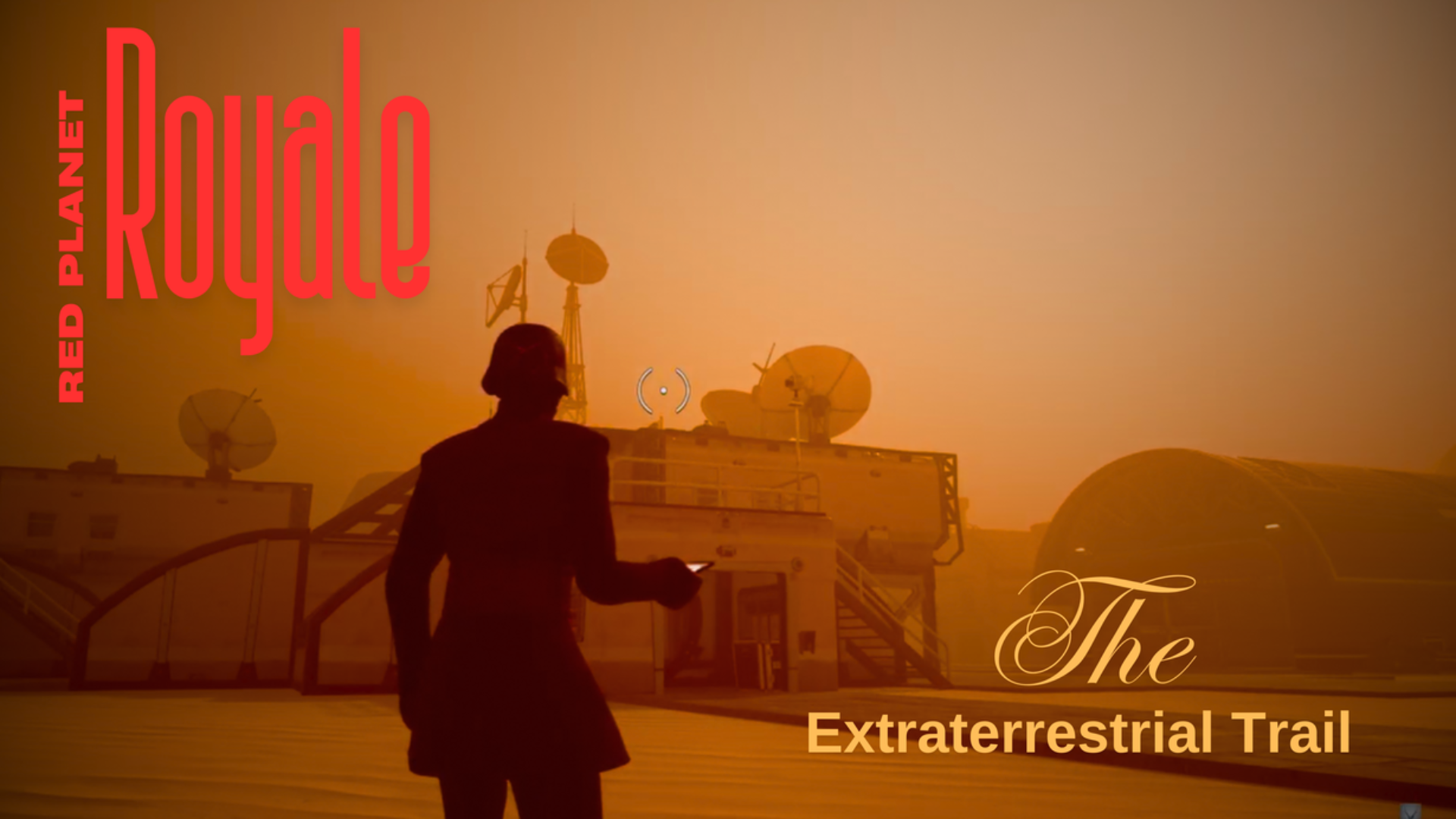
Attention, intrepid travelers of the Extra-Terrestrial Trail! Welcome to the Red Planet Royale, an extraordinary journey much like the famous Oregon Trail, but with a cosmic twist. Just like the brave pioneers who explored new lands in the past, you are now the space pioneers who have successfully made it to Mars. Congratulations!
Now, your mission is to go beyond exploration and start a whole new chapter in human history by establishing the very first Martian community. Think of yourselves as community builders, building a place to thrive on this distant red world, just as the explorers once established communities along the Oregon Trail many years ago.
In this thrilling Fortnite Creative challenge, you'll work individually or together as a team, utilizing your creative skills and problem-solving abilities to design and construct a flourishing community. You'll need to plan how to set up buildings and travel, manage resources wisely, and ensure the well-being of your future Martian residents.
Remember, just like the pioneers of old, you're forging a path into the unknown. Challenges will come your way, but fear not, for you have the spirit of adventure and discovery within you. Embrace the excitement and let your imaginations soar as you create the very first chapter of human life on Mars.
Educator / Student Walkthrough Video

Living on Mars and exploring other extraterrestrial destinations is crucial for scientific advancement and the future of humanity. As we venture beyond Earth, we unlock a wealth of scientific knowledge about the cosmos and our place in it.
Understanding other planets and celestial bodies provides valuable insights into planetary formation, evolution, and the potential for life beyond Earth. Studying Mars can offer clues about the early history of our solar system and whether life could have emerged elsewhere (NASA, 2021).
From a practical standpoint, establishing human communities on other planets, like Mars, acts as a crucial step in ensuring the long-term survival of our species. Earth is the only known habitable planet, and as we face various challenges such as climate change, overpopulation, and potential catastrophic events, having a backup location becomes increasingly important. By becoming a multi-planetary species, we can significantly reduce the risk of human extinction and preserve our culture, knowledge, and achievements for generations to come (SpaceX, 2017).
Furthermore, venturing to other planets pushes the boundaries of technology and innovation. The challenges of space travel and colonization drive us to develop new solutions and technologies that have practical applications on Earth, from renewable energy sources to advanced life support systems. The expertise gained from space exploration can lead to ground-breaking discoveries and improve our daily lives, ultimately benefitting humanity as a whole (European Space Agency, 2021).
Establishing a presence on Mars and exploring other extraterrestrial destinations is essential for advancing scientific understanding, securing the future of humanity, and propelling technological progress. By expanding our presence beyond Earth, we embrace the spirit of exploration and discovery that has defined our species for millennia. Together, as spacefaring pioneers, we open the door to a promising future where the cosmos becomes a canvas for human ingenuity and aspirations.

Use the provided planning document in this lesson plan (or document of your own) to map your Mars community on the Wasteland Island template. Review the list of suggested locations and community aspects to consider when designing your layout.
Enter Fortnite Creative, choose the Wasteland Template Island, and use the lighting, time of day, and fog settings to create a Mars atmosphere. See screen capture in this lesson plan or in the Educator and Student Video. You can do this step last if you wish to build without visual distraction.
Remove the rare vegetation from the perimeter of the Wasteland Template Island.Begin building your Mars community based on your plan. If you change your design, be able to speak to why you chose the changes.
Present your finished Mars Community and be able to speak to why you added, and why you didn’t add certain aspects.
Optional: Educators, share online with the Unreal Education Team and/or with LogicsAcademy using #LogicsAcademy and #EpicGames hashtags.

How can we design a sustainable and self-sufficient community on Mars that can provide for our basic needs, like food, water, and shelter?
What innovative technologies and solutions can we use to overcome the challenges of living in a harsh Martian environment, such as extreme temperatures and thin atmosphere?
How can we ensure the safety and well-being of the Martian community members, considering the potential risks of space travel and the psychological impact of living far from Earth?
How can we create an inclusive and diverse community on Mars, where everyone's unique skills and perspectives are valued and celebrated?
How can we work as a team, communicating effectively and collaborating with one another, to successfully build and sustain our Martian community in the face of various obstacles?

Research and Inquiry Skills: Students will demonstrate the ability to conduct thorough research about Mars, including its geology, atmosphere, and potential for community growth. They will engage in inquiry-based learning to explore various aspects of designing a Martian community, drawing from scientific sources and credible research.
Critical Thinking and Problem-Solving: Throughout the project, students will apply critical thinking and problem-solving skills to address the challenges of Martian community building. They will design solutions and make informed decisions to create a sustainable and efficient community on the Red Planet.
Collaboration and Teamwork: Students will work collaboratively as a team, pooling their skills and expertise to plan, design, and build their Martian outpost. They will communicate effectively, share ideas, and respect diverse perspectives to achieve common goals.
Creative Design and Innovation: As architects and engineers of the Martian community, students will unleash their creativity and innovation, devising unique solutions for habitat design, resource management, and space exploration technologies.
Effective Communication and Presentation: At the culmination of the project, students will present their community designs, sharing their research findings, problem-solving processes, and innovative ideas with the class. They will communicate their vision for the Martian habitat effectively, engaging their peers with compelling and well-structured presentations.
Title: NASA Mars Exploration Program
Description: The official website of NASA's Mars Exploration Program, providing a wealth of information about ongoing missions, discoveries, and plans for future exploration and colonization of Mars.
Website: https://mars.nasa.gov/
2. Title: SpaceX - Mars
Description: Visit SpaceX's dedicated page on their plans for Mars colonization. Get insights into Elon Musk's vision and see the latest updates on SpaceX's efforts to make humans a multi-planetary species.
Website: https://www.spacex.com/mars
3. Title: Canadian Space Agency - Mars Exploration
Description: Explore the Canadian Space Agency's contributions to Mars missions and research, learning about their role in international efforts to explore the Red Planet.
Website: https://www.asc-csa.gc.ca/eng/astronomy/mars/
4. Title: European Space Agency (ESA) - Mars Exploration
Description: Discover ESA's involvement in Martian exploration and gain access to updates, scientific findings, and future plans for exploring Mars.
Website: https://exploration.esa.int/web/mars/
5. Title: NASA Mars Science Laboratory - Curiosity Rover
Description: Dive into the detailed information about NASA's Curiosity Rover mission, a robotic explorer currently active on Mars, and learn about its scientific discoveries.
Website: https://mars.nasa.gov/msl/
NGSS: MS-ESS1-1 Standard: Develop and use a model of the Earth-sun-moon system to describe the cyclic patterns of lunar phases, eclipses of the sun and moon, and seasons. Relevance: Understanding the Earth-sun-moon system is essential for students as they explore similarities and differences between Earth and Mars, especially in terms of day-night cycles and seasonal variations on both planets.
NGSS: MS-ESS1-2 Standard: Develop and use a model to describe the role of gravity in the motions within galaxies and the solar system. Relevance: Gravity is a critical factor in space travel and Martian colonization. Students can explore how gravity affects objects on Mars, the importance of gravity in maintaining a habitable environment, and how it influences space travel to and from the Red Planet.
NGSS: MS-ETS1-1 Standard: Define the criteria and constraints of a design problem with sufficient precision to ensure a successful solution, taking into account relevant scientific principles and potential impacts on people and the natural environment that may limit possible solutions. Relevance: This standard connects directly to the task of designing a sustainable and self-sufficient Martian community. Students will need to consider scientific principles and environmental constraints while developing their community plans.
NGSS: MS-ETS1-2 Standard: Evaluate competing design solutions using a systematic process to determine how well they meet the criteria and constraints of the problem. Relevance: During the lesson, students will analyze and compare different community designs to determine the most effective and feasible solutions for creating a successful Martian outpost.
NGSS: MS-ETS1-3 Standard: Analyze data from tests to determine similarities and differences among several design solutions to identify the best characteristics of each that can be combined into a new solution to better meet the criteria for success. Relevance: Students will assess data and feedback from their community prototypes, making informed decisions on how to optimize and improve their designs for the Martian habitat.
ISTE Standard 1: Empowered Learner
How it's satisfied: Students will use technology and virtual platforms like Fortnite Creative to design and prototype their Martian community, showcasing their creativity and critical thinking skills.
ISTE Standard 2: Digital Citizen
How it's satisfied: Throughout the lesson, students will engage in collaborative discussions and virtual teamwork, practicing responsible and respectful digital communication.
ISTE Standard 4: Innovative Designer
How it's satisfied: By addressing the challenges of creating a sustainable and inclusive Martian community, students will demonstrate their ability to think innovatively and develop creative solutions.
ISTE Standard 5: Computational Thinker
How it's satisfied: As students plan and design their community, they'll apply computational thinking, breaking down complex problems into smaller manageable tasks and using logic to structure their solutions.
ISTE Standard 6: Creative Communicator
How it's satisfied: Students will present their community designs and share their ideas with the class, utilizing digital tools and media to effectively communicate their vision for the Martian settlement.
ISTE Standard 7: Global Collaborator
How it's satisfied: Through the virtual collaboration and teamwork required in Fortnite Creative, students will learn to work with peers from diverse backgrounds to achieve common goals.

