
Loading…
Loading…
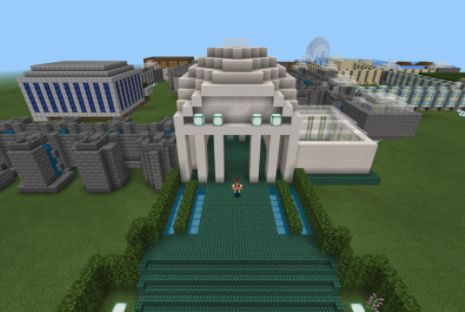
In this lesson, students will walk through a maze while they write and build creatively. Students will be able to develop techniques for descriptive writing as well as revise writing to include sensory details.
Welcome to this Minecraft: Education Edition lesson! Before you begin, take a few moments to let us know your thoughts or feedback on how we can improve this lesson in order to better enhance the learning experience that is delivered in your classroom!
Click here or follow the form below to complete the feedback survey once you've completed this lesson. Thank you!
Click and watch this teacher preparation video to help you understand how to teach this lesson.
Here is a YouTube link of the teacher video for your reference: https://youtu.be/HpwqVEL0pHQ
Start Here: Teacher Preparation Video
Students develop techniques for descriptive writing.
Students revise writing to include sensory details.
Communication
Creativity
How does the use of sensory details support descriptive writing?
What are some ways professional poetry inspires creative technique?
How might the use of questions and repetition lead to effective revision?
Teacher Preparation and Notes:
Ask students to identify and object or image for description, either in written work in progress, or as the focus of a new work.
Talk with students about how reading poetry closely can support the development of writing craft.
Students will explore a maze in order to find 6 rooms, each with a different descriptive technique.
Students will encounter non-player characters (NPCs) who prompt them to read mentor text poems and to respond to those in notes.
Students will write in response to in-game prompts to develop sensory details.
After visiting the 6 rooms and practicing the descriptive techniques, students can write poems or build creative descriptions in the game inspired by the maze.
Students have evidence of practicing 6 techniques
Students use professional poems to support their practice with description
Students compose creatively after completing all techniques
Check out the Tips & Tricks video playlist that will help you and your students better use Minecraft: Education Edition in the classroom:
https://youtube.com/playlist?list=PLkh9rrdH-ARER03ojhFYtmoFDVuACYJLa
More videos added periodically so make sure you check often for more content!
Click and watch the student pause and play video with your class, pausing and playing as needed. This will help your students understand how to navigate through this lesson and Minecraft world and complete the activities located within them. Enjoy!
Check out the YouTube link for your reference: https://youtu.be/Yc55B5E2Yl8
Student 'Pause & Play' Video
Access and integrate information and ideas from a variety of sources and from prior knowledge to build understanding
Consider different purposes, audiences, and perspectives in exploring texts
Apply a variety of thinking skills to gain meaning from texts
Respond to text in personal and creative ways
Exchange ideas and perspectives to build shared understanding
Use writing and design processes to plan, develop, and create texts for a variety of purposes and audiences
Use language in creative and playful ways to develop style
Communicate in sentences and paragraphs, applying conventions of Canadian spelling, grammar, and punctuation
Develop and apply expanding word knowledge
Transform ideas and information to create original texts
Access information and ideas from a variety of sources and from prior knowledge to build understanding
Use a variety of comprehension strategies before, during, and after reading, listening, or viewing to guide inquiry and deepen understanding of text
Synthesize ideas from a variety of sources to build understanding
Consider different purposes, audiences, and perspectives in exploring texts
Apply a variety of thinking skills to gain meaning from texts
Respond to text in personal and creative ways
Exchange ideas and perspectives to build shared understanding
Use writing and design processes to plan, develop, and create texts for a variety of purposes and audiences
Use language in creative and playful ways to develop style
Communicate in writing using paragraphs and applying conventions of Canadian spelling, grammar, and punctuation
Develop and apply expanding word knowledge
Transform ideas and information to create original texts
Access information and ideas for diverse purposes and from a variety of sources and evaluate their relevance, accuracy, and reliability
Apply appropriate strategies to comprehend written, oral, and visual texts, guide inquiry, and extend thinking
Synthesize ideas from a variety of sources to build understanding
Recognize and appreciate how different features, forms, and genres of texts reflect various purposes, audiences, and messages
Think critically, creatively, and reflectively to explore ideas within, between, and beyond texts
Respond to text in personal, creative, and critical ways
Exchange ideas and viewpoints to build shared understanding and extend thinking
Use writing and design processes to plan, develop, and create engaging and meaningful literary and informational texts for a variety of purposes and audiences
Assess and refine texts to improve their clarity, effectiveness, and impact according to purpose, audience, and message
Use an increasing repertoire of conventions of Canadian spelling, grammar, and punctuation
Select and use appropriate features, forms, and genres according to audience, purpose, and message
Transform ideas and information to create original texts
Access information and ideas for diverse purposes and from a variety of sources and evaluate their relevance, accuracy, and reliability
Apply appropriate strategies to comprehend written, oral, and visual texts, guide inquiry, and extend thinking
Synthesize ideas from a variety of sources to build understanding
Recognize and appreciate how different features, forms, and genres of texts reflect different purposes, audiences, and messages
Think critically, creatively, and reflectively to explore ideas within, between, and beyond texts
Respond to text in personal, creative, and critical ways
Exchange ideas and viewpoints to build shared understanding and extend thinking
Use writing and design processes to plan, develop, and create engaging and meaningful literary and informational texts for a variety of purposes and audiences
Assess and refine texts to improve their clarity, effectiveness, and impact according to purpose, audience, and message
Use an increasing repertoire of conventions of Canadian spelling, grammar, and punctuation
Select and use appropriate features, forms, and genres according to audience, purpose, and message
Transform ideas and information to create original texts
Access information and ideas for diverse purposes and from a variety of sources and evaluate their relevance, accuracy, and reliability
Apply appropriate strategies to comprehend written, oral, and visual texts, guide inquiry, and extend thinking
Synthesize ideas from a variety of sources to build understanding
Recognize and appreciate how different features, forms, and genres of texts reflect different purposes, audiences, and messages
Respond to text in personal, creative, and critical ways
Exchange ideas and viewpoints to build shared understanding and extend thinking
Use writing and design processes to plan, develop, and create engaging and meaningful literary and informational texts for a variety of purposes and audiences
Assess and refine texts to improve their clarity, effectiveness, and impact according to purpose, audience, and message
Use an increasing repertoire of conventions of Canadian spelling, grammar, and punctuation
Select and use appropriate features, forms, and genres according to audience, purpose, and message
Transform ideas and information to create original texts.
1.1 Discover and Explore
Express ideas and develop understanding
compare new ideas, information and experiences to prior knowledge and experiences
Express preferences
select preferred forms from a variety of oral, print and other media texts
2.4 Create Original Text
Generate ideas
use a variety of strategies for generating and organizing ideas and experiences in oral, print and other media texts
GCO 4: Students will listen, speak, read, write, view and represent to enhance the clarity and artistry of communication.
4.2 - Attend to Conventions
4.3 Present and Share
present to peers ideas and information on a topic of interest, in a well-organized form
add interest to presentations through the use of props, such as pictures, overheads and artifacts
GCO 4: Students will listen, speak, read, write, view and represent to enhance the clarity and artistry of communication.
4.2 - Attend to Conventions
Oral Communication
2. Speaking to Communicate
2.1 identify a variety of purposes for speaking (e.g., to entertain a wider school audience; to establish positive personal and learning relationships with peers; to ask questions or explore solutions to problems in small-group and paired activities; to solicit opinions and react to information and ideas in a discussion or dialogue group; to explain to another person how something works; to summarize and comment on an event or oral text for the class; to clarify and organize thinking in order to contribute to understanding in large and small groups)
2.3 communicate in a clear, coherent manner, presenting ideas, opinions, and information in a readily understandable form (e.g., respond in an appropriate order to multi-part, higher-level questions in a student-teacher conference or a group discussion; explain the results of research in an oral presentation, including a statement of the research focus, the procedures followed, and the conclusions reached; use an organizational pattern such as chronological order or cause and effect to present ideas in a dialogue or discussion)
2.4 use appropriate words and phrases from the full range of their vocabulary, including inclusive and non-discriminatory terms, and appropriate elements of style, to communicate their meaning accurately and engage the interest of their audience (e.g., use evaluative terms to clarify opinions and for emphasis; use descriptive words to give specificity and detail to personal anecdotes; use humour or emotive language to engage the audience’s interest or sympathy)
Reading
1. Reading for Meaning
1.1 read a variety of texts from diverse cultures, including literary texts (e.g., myths, plays, short stories, chapter books, letters, diaries, poetry), graphic texts (e.g., graphic novels, diagrams, brochures, graphs and graphic organizers, charts and tables, maps), and informational texts (e.g., textbooks, non-fiction books on a range of topics, print and online newspaper and magazine articles or reviews, print and online encyclopedias and atlases, electronic texts such as e-mails or zines)
1.2 identify a variety of purposes for reading and choose reading materials appropriate for those purposes (e.g., letters and diaries for information and new ideas, leisure/hobby books and magazines for recreation and interest, print and online magazine or newspaper articles to research a current issue, instructions or information about how to play a computer game)
Writing
1. Developing and Organizing Content
1.1 identify the topic, purpose, and audience for a variety of writing forms (e.g., a cinquain or shape poem modelled on the structures and style of poems read, to contribute to a student poetry anthology for the school library; a set of directions to complete a science experiment on pulleys and gears, for a class presentation; a timeline of significant events in the writer’s life, to accompany a biography for a class collection)
1.2 generate ideas about a potential topic using a variety of strategies and resources (e.g., brainstorm; formulate and ask questions to identify personal experiences, prior knowledge, and information needs)
1.3 gather information to support ideas for writing using a variety of strategies and oral, print, and electronic sources (e.g., identify key words to help narrow their searches; cluster ideas; develop a plan for locating information; scan texts for specific information, including teacher readalouds, mentor texts, reference texts, shared-, guided-, and independent-reading texts, and media texts)
2. Using Knowledge of Form and Style in Writing
2.2 establish a personal voice in their writing, with a focus on using words and stylistic elements that convey a specific mood such as amusement (e.g., use simple irony to poke fun at themselves: “Lucky me. I got to do the dishes.”)
2.3 use specific words and phrases to create an intended impression (e.g., comparative adjectives such as faster; words that create specific effects through sound, as in alliteration for emphasis: rotten rain)
2.5 identify their point of view and other possible points of view on the topic, and determine whether their information sufficiently supports their own view
Oral Communication
2. Speaking to Communicate
2.3 communicate orally in a clear, coherent manner, presenting ideas, opinions, and information in a readily understandable form (e.g., present an argument that has a clearly stated purpose, point-by-point development, and relevant supporting details)
2.4 use appropriate words and phrases from the full range of their vocabulary, including inclusive and non-discriminatory language, and stylistic devices suited to the purpose, to communicate their meaning accurately and engage the interest of their audience (e.g., use evocative images, personal anecdotes, quotations, vocabulary from curriculum subject areas, and appropriate technical terminology to achieve particular effects)
Reading
1. Reading for Meaning
1.1 read a variety of texts from diverse cultures, including literary texts (e.g., short stories, poetry, myths, culturally focused legends, plays, biographies, novels), graphic texts (e.g., graphic novels, hobby or sports magazines, advertisements, logos, atlases, graphic organizers, charts and tables), and informational texts (e.g., editorials, reports, biographies, textbooks and other non-fiction materials, print and online articles, personal electronic and online texts such as e-mails)
1.2 identify a variety of purposes for reading and choose reading materials appropriate for those purposes (e.g., an online or print encyclopedia article for background information, dictionaries to clarify word meanings, biographies for information about authors or historical figures, print and online newspapers/magazines for information on current issues, e-mail and text messages from friends)
Writing
1. Developing and Organizing Content
1.1 Purpose and Audience 1.1 identify the topic, purpose, and audience for a variety of writing forms (e.g., a poem or song on a social issue for performance by the class; a formal letter to the teacher outlining their opinion on eliminating soft drinks from the school vending machine; an article explaining the water cycle and including a flow chart, for an online student encyclopedia)
1.2 generate ideas about a potential topic and identify those most appropriate for the purpose
1.3 gather information to support ideas for writing, using a variety of strategies and a range of print and electronic resources (e.g., interview people with knowledge of the topic; identify and use graphic and multimedia sources; keep a record of sources used and information gathered)
2. Using Knowledge of Form and Style in Writing
2.2 establish an appropriate voice in their writing, with a focus on modifying language and tone to suit different circumstances or audiences (e.g., use a serious tone in a letter to the editor, a humorous tone in a letter to a friend)
2.3 use some vivid and/or figurative language and innovative expressions to add interest (e.g., some comparative adjectives; similes or personification; comparative adverbs: more slowly)
2.5 identify their point of view and other possible points of view, and determine, when appropriate, if their own view is balanced and supported by evidence
Oral Communication
2. Speaking to Communicate
2.1 identify a variety of purposes for speaking and explain how the purpose and intended audience influence the choice of form (e.g., to clarify thinking through dialogue; to explore different points of view through drama and role playing; to present information to a group)
2.3 communicate orally in a clear, coherent manner, using appropriate organizing strategies and formats to link and sequence ideas and information (e.g., present an argument in favour of one point of view on an issue, with an opening statement, sequence of points with supporting evidence, and summary/conclusion)
2.4 use appropriate words and phrases from the full range of their vocabulary including inclusive and non-discriminatory language, and stylistic devices appropriate to the purpose and context, to communicate their meaning accurately and engage the interest of their intended audience (e.g., use similes, personification, and comparative adjectives and adverbs to achieve a desired effect)
Reading
1. Reading for Meaning
1.1 read a wide variety of texts from diverse cultures, including literary texts (e.g., short stories, poetry, myths, legends, fantasies, novels, plays), graphic texts (e.g., graphic novels, advertisements, atlases, graphic organizers, charts and tables), and informational texts (e.g., biographies, textbooks, and other non-fiction materials; articles and reports; print and online editorials, various electronic texts, webquest texts)
1.2 identify a variety of purposes for reading and choose reading materials appropriate for those purposes (e.g., online and print sources to compare different approaches to the same topic; webquest texts for information on a historical topic; graphic organizers, charts, and tables for specific information; a novel or a nonfiction book on a favourite topic for personal enjoyment)
Writing
1. Developing and Organizing Content
1.1 identify the topic, purpose, and audience for a variety of writing forms (e.g., an original poem, with an invented structure or based on a model such as a haiku, about a topic of personal interest, to share with the class; a persuasive letter asking the school principal to look at a specific issue from a new point of view; a description of the procedure for constructing a three-dimensional model, to share with Grade 3 students; a script on a topic of current interest for a mock television broadcast for a general audience)
1.2 generate ideas about a potential topic and identify those most appropriate for the purpose
1.3 gather information to support ideas for writing, using a variety of strategies and a range of print and electronic resources (e.g., identify the steps required to gather information; interview people with knowledge of the topic; identify and use graphic and multimedia resources; record sources used and information gathered in a form that makes it easy to understand and retrieve)
2. Using Knowledge of Form and Style in Writing
2.2 establish a distinctive voice in their writing appropriate to the subject and audience (e.g., use punctuation, dialogue, and vivid language to create a particular mood or tone)
2.3 use some vivid and/or figurative language and innovative expressions to enhance interest (e.g., strong verbs; concrete, specific nouns; unusual adjectives; unexpected word order)
2.5 identify their point of view and other possible points of view; determine, when appropriate, if their own view is balanced and supported by the evidence; and adjust their thinking and expression if appropriate (e.g., revise writing focusing on the use of inclusive language, such as police officer instead of policeman)
2. Speaking to Communicate
2.1 identify a range of purposes for speaking and explain how the purpose and intended audience might influence the choice of speaking strategies (e.g., to present conclusions about a research project through dramatization, a role play, or a monologue; to interest classmates in a social issue through a debate; to solve problems or investigate issues and ideas through a group brainstorming session)
2.3 communicate orally in a clear, coherent manner, using a structure and style appropriate to both the topic and the intended audience (e.g., use a formal structure of opening statement, enumeration of points, and summary/conclusion, and a straightforward, impersonal style, to present a position statement on an issue)
2.4 use appropriate words, phrases, and terminology from the full range of their vocabulary, including inclusive and non-discriminatory language, and a range of stylistic devices, to communicate their meaning accurately and engage the interest of their intended audience (e.g., use the technical vocabulary of the subject area during a scientific investigation in a group setting; incorporate literary language and structures into personal anecdotes or imaginative narratives; use emotive language in a persuasive appeal to a large group)
Reading
1. Reading for Meaning
1.1 read a wide variety of increasingly complex or difficult texts from diverse cultures, including literary texts (e.g., short stories, poetry, novels, mysteries, historical fiction, autobiographies, scripts, lyrics), graphic texts (e.g., graphs and graphic organizers, charts and tables, diagrams, surveys, maps), and informational texts (e.g., print and online encyclopedias, manuals, and magazine and newspaper articles; magazines in their first languages, where appropriate; electronic texts, textbooks, and non-fiction materials; a variety of dictionaries, thesauri, and websites)
1.2 identify a variety of purposes for reading and choose reading materials appropriate for those purposes (e.g., an electronic database listing magazines, newspapers, and journals to verify information; a national, local, or community newspaper for coverage of a specific/current issue; scripts and lyrics for enjoyment, recreation, and interest; an online or print encyclopedia article for background information)
Writing
1. Developing and Organizing Content
1.1 identify the topic, purpose, and audience for more complex writing forms (e.g., a rap poem or jingle, to express a personal view to the class; a report for a community newspaper about a public meeting on an environmental issue affecting local neighbourhoods; an autobiography for a youth magazine, web page, blog, or zine)
1.2 generate ideas about more challenging topics and identify those most appropriate for the purpose
1.3 gather information to support ideas for writing, using a variety of strategies and a wide range of print and electronic resources (e.g., use a timeline to organize research tasks; interview people with knowledge of the topic; identify and use appropriate graphic and multimedia resources; record sources used and information gathered in a form that makes it easy to understand and retrieve)
1.6 determine whether the ideas and information they have gathered are relevant, appropriate, and sufficiently specific for the purpose, and do more research if necessary (e.g., check for errors or omissions in information using a T-chart)
2. Using Knowledge of Form and Style in Writing
2.2 establish a distinctive voice in their writing appropriate to the subject and audience (e.g., use language that communicates their “stance”or point of view on an issue and identify the words and/or phrases that help them achieve this goal)
2.3 regularly use vivid and/or figurative language and innovative expressions in their writing (e.g., a wide variety of adjectives and adverbs; similes, metaphors, and other rhetorical devices such as exaggeration or personification)
2.5 identify their point of view and other possible points of view, evaluate other points of view, and find ways to acknowledge other points of view, if appropriate
Oral Communication
2. Speaking to Communicate
2.1 identify a range of purposes for speaking in a variety of situations, both straightforward and more complex, and explain how the purpose and intended audience might influence the choice of speaking strategies (e.g., to introduce a speaker; to support the resolution in a debate; to dramatize a favourite poem; to explain a complex procedure to an individual or group; to work towards the solution to a problem with a partner)
2.3 communicate in a clear, coherent manner, using a structure and style appropriate to the purpose, the subject matter, and the intended audience (e.g., combine logic with an appeal to emotion in a charity fund-raising speech; use a cause-andeffect structure in a report on the rise of a political movement or the emergence of a contentious Aboriginal issue)
2.4 use appropriate words, phrases, and terminology from the full range of their vocabulary, including inclusive and non-discriminatory language, and a range of stylistic devices, to communicate their meaning effectively and engage the interest of their intended audience (e.g., use imagery, figurative language such as similes and analogies, and other stylistic elements such as idioms and onomatopoeia to evoke a particular mood in a dramatic monologue or an appeal for support)
Reading
1. Reading for Meaning
1.1 read a wide variety of increasingly complex or difficult texts from diverse cultures, including literary texts (e.g., short stories, novels, poetry, essays, science fiction, memoirs, scripts, satire), graphic texts (e.g., graphs and graphic organizers, charts and tables, surveys, maps, spreadsheets), and informational texts (e.g., essays, Canadian and global print and online sources, electronic texts, textbooks, dictionaries, thesauri, websites, transcripts)
1.2 identify a variety of purposes for reading and choose increasingly complex or difficult reading materials appropriate for those purposes (e.g., several online or print articles by the same author to identify consistency or change in the author ’s point of view; websites for information on a topic from different sources; stories from different cultures, including Aboriginal cultures, to compare treatments of similar themes)
Writing
1. Developing and Organizing Content
1.1 identify the topic, purpose, and audience for more complex writing forms (e.g., a personal memoir about the school experience to share with classmates, family, and friends at graduation; a report on a topic of current interest in the style of a newspaper article, including headlines, for a school or community newspaper; a campaign flyer or brochure to promote a candidate for school government)
1.2 generate ideas about more challenging topics and identify those most appropriate to the purpose
1.3 gather information to support ideas for writing, using a variety of strategies and a wide range of print and electronic sources (e.g., produce a plan and timeline for carrying out research tasks; interview people with knowledge of the topic; identify and use graphic and multimedia resources; record sources used and information gathered in a form that makes it easy to understand and retrieve)
1.4 sort and classify ideas and information for their writing in a variety of ways that allow them to manipulate information and see different combinations and relationships in their data (e.g., by using electronic graphic organizers, tables, charts)
1.6 determine whether the ideas and information they have gathered are relevant, appropriate, and sufficiently specific for the purpose, and do more planning and research if necessary (e.g., check for depth and breadth of coverage of the topic)
2. Using Knowledge of Form and Style in Writing
2.2 establish a distinctive voice in their writing appropriate to the subject and audience, (e.g., use emotive language to persuade the audience to share their feelings, and explain the effect they think it will have on the audience)
2.3 regularly use vivid and/or figurative language and innovative expressions in their writing (e.g., adjective phrases: The car with the fluorescent red racing stripe; adverb phrases: He walked with the gait of a sailor; specialized vocabulary and terminology; analogies and idioms)
2.5 identify their point of view and other possible points of view, evaluate other points of view, and find ways to respond to other points of view, if appropriate.
CR4.1 Comprehend and respond to a variety of grade-level texts (including contemporary and traditional visual, oral, written, and multimedia texts) that address: identity (e.g., Expressing Myself), community (e.g., Building Community), social responsibility (e.g., Preserving a Habitat) and support response with evidence from text and from own experiences.
a. View, listen to, read, and respond to a variety of texts that reflect diverse personal identities, world views, and backgrounds (e.g., culture, age, gender, language) including First Nations and Métis texts.
CR4.3 Listen, summarize, paraphrase, and evaluate what was heard and draw conclusions.
g. Follow multi-step directions and instructions independently.
CR4.4 Read for various purposes and demonstrate comprehension of grade appropriate fiction (including stories and novels), scripts, poetry, and non-fiction (including magazines, reports, instructions, and procedures) from various cultures including First Nations and Métis and countries (including Canada).
e. Read for information in content area resources and reference materials and recognize the variety of expository text structures including compare-contrast, problem-solution, cause and effect, time sequence, and description.
f. Compare information on the same topic after reading several passages or articles.
g. Follow multi-step written instructions and procedures in basic technical or how-to manuals (e.g., how to play a video game).
h. Read and use grade four reference texts (e.g., dictionary, encyclopedia, how-to, explanations, biography) for in
CC4.1 Compose and create a range of visual, multimedia, oral, and written texts that explore: identity (e.g., Expressing Myself), community (e.g., Celebrating and Honouring Others), social responsibility (e.g., Within My Circle) through personal experiences and inquiry.
a. Create spoken, written, and other representations that include: a specific message, a coherent organization of ideas,ideas and information which are clear and complete, appropriate use of language and conventions.
b. Compose and communicate findings and conclusions about problems, questions, or issues in a clear visual, oral, and written format.
c. Use inquiry to explore authentic problems, questions, and issues associated with identity, community, and social responsibility including: asking general and specific inquiry questions on topics using predetermined categories; recording, selecting, and sharing relevant personal knowledge and understanding of a topic or questions and considering purpose for individual and group inquiry or research; selecting and using a plan for gathering ideas and information; assessing the usefulness, authenticity, and reliability of information for inquiry or research needs using pre-established criteria; using a variety of tools (including indices, maps, atlases, charts, electronic sources) and resources to access ideas and information; organizing ideas and information in logical sequences; making notes and citing authors and titles of sources alphabetically; examining collected information to identify categories or aspects of a topic that need more research; sharing findings and conclusions in a clear visual, oral, and written format; using the language of inquiry (e.g., “I want to know if .…”, ”I wonder about ….”).
CC4.2 Create a variety of clear representations that communicate straightforward ideas and information relevant to the topic and purpose, including short, illustrated reports, dramatizations, posters, and other visuals such as displays and drawings.
a. Use a variety of visuals (e.g., chart, diagram) to communicate essential information when making an oral presentation.
c. Understand and apply cues and conventions including pragmatic, textual, syntactical, semantic/lexical/morphological, graphophonic, and others to communicate meaning when using other forms of representing.
d. Organize information and ideas in visual and multimedia texts that are clear, meaningful, logical, and illustrative of the topic and are properly labelled and captioned.
f. Use visual aids (e.g., pictograms, graphs, charts, tables, diagrams, maps, illustrations, movement) to enhance spoken or written products.
g. Experiment with different ways of representing ideas and sharing them with others (e.g., drama, mime, tableau, dance, music, models, painting).
CC4.3 Speak to present and express a range of ideas and information in formal and informal speaking situations (including giving oral explanations, delivering brief reports or speeches, demonstrating and describing procedures) for differing audiences and purposes.
a. Adapt language and presentation style to the purpose and needs of the audience, and guide the listener to understand important ideas by using proper phrasing, pitch, and modulation.
e. Make narrative presentations that relate ideas, observations, or recollections about an event or experience, provide a context that enables the listener to imagine the circumstances of the event or experience, and provide insight into why the selected event or experience is memorable.
g. Make informational presentations that frame a key question, include facts and details that help listeners to focus, and incorporate more than one source of information (e.g., interviews, books, newspaper articles, and television or radio reports).
CC4.4 Use a writing process to produce descriptive, narrative, and expository compositions that focus on a central idea, have a logical order, explain point of view, and give reasons or evidence.
a. Work through the stages of a writing process (e.g., pre-writing, drafting, revising successive versions).
b. Select and use pertinent before, during, and after strategies to construct meaning when writing.
c. Understand and apply cues and conventions including pragmatic, textual, syntactical, semantic/lexical/morphological, graphophonic, and others to communicate meaning when writing.
d. Write clear, coherent sentences and paragraphs that develop a central idea.
f. Write descriptions and narratives (3-5 paragraphs) that relate observations and recollections of an event or experience and use sensory details.
j. Communicate and demonstrate understanding by creating original texts (e.g., poem, play, letter, journal entry) and by writing responses to texts, supporting judgements through references to both the text and prior knowledge.
CR5.1 Analyze and respond to a variety of grade-level texts (including contemporary and traditional visual, oral, written, and multimedia texts) that address: identity (e.g., Exploring Heritage), community (e.g., Teamwork), social responsibility (e.g., What is Fair?).
a. View, listen to, read and respond to a variety of visual, multimedia, oral, and print texts that examine the diverse range of personal identities, perspectives, and backgrounds (e.g., appearance, culture, socio-economic status, abilities, age, gender, sexual orientation, language, career path) including First Nations and Métis texts.
c. Describe and build upon connections between previous experiences, prior knowledge, and a variety of texts. d. Compare the challenges and situations encountered in daily life with those experienced by people in other times, places, and cultures as portrayed in a variety of texts including First Nations and Métis texts.
CR5.2 View and evaluate, critically, visual and multimedia texts identifying the persuasive techniques including promises, flattery, and comparisons used to influence or persuade an audience.
a. Gather information from a variety of media (e.g., photographs, web sites, maps, diagrams, posters, videos, advertising, double bar graphs, maps, videos).
CR5.4 Read and demonstrate comprehension of a range of contemporary and classical grade-appropriate fiction, script, poetry, and non-fiction (including magazines, reports, instructions, and procedures) from various cultures including First Nations, Métis, and Inuit and countries (including Canada).
e. Distinguish among facts, supported inferences, and opinions in informational texts.
f. Read and use grade-five appropriate informational and reference texts (e.g., dictionary, encyclopedia, how-to, explanations, biography) to identify main ideas, details, opinions, and reasons.
CC5.1 Compose and create a range of visual, multimedia, oral, and written texts that explore: identity (e.g., What Should I Do), community (e.g., This is Our Planet), social responsibility (e.g., Teamwork) and express personal thoughts shaped through inquiry.
a. Create spoken, written, and other representations that include: • a clear and specific message • a logical and coherent organization of ideas • a competent use of language and conventions.
b. Express and explain findings on a topic, question, problem, or issue in an appropriate visual, multimedia, oral, and written format using inquiry.
c. Use inquiry to explore a problem, question, or issue related to a topic being studied in English language arts or a topic of personal interest including: • summarizing personal knowledge and understanding of a selected topic to help formulate relevant questions appropriate to a specific audience and purpose for group or individual inquiry or research • gathering and recording ideas and information using a plan • answering inquiry or research questions using a variety of sources such as newspapers, diaries, Elders, interviews, and field trips • determining the usefulness of ideas and information for inquiry or research purpose and focus using pre-established criteria • using a variety of tools to access ideas and information • organizing ideas and information into categories (e.g., what, where, when, how, so what) • making notes using own words and providing publication dates and authorship of sources • assessing knowledge gained through inquiry or research • forming personal conclusions and generating new questions for further inquiry or research • explaining findings from inquiry or research on a topic, question, problem, or issue in an appropriate visual, oral, and written format.
CC5.2 Demonstrate a variety of ways to communicate understanding and response including illustrated reports, dramatizations, posters, timelines, multimedia presentations, and summary charts.
a. Consider which form (e.g., drama, drawings, dance, diagrams, music, three-dimensional objects, posters, cartoons, maps, graphs, photographs, pictures, charts, and videos) is most appropriate for various tasks and identified purposes.
e. Prepare a clearly organized multimedia presentation using pre-established organizers and criteria.
f. Integrate a variety of representations including illustrations, graphs, maps, and graphics into written and oral presentations.
g. Present information clearly and appropriately for each medium and recognize that the conventions of language and the medium are designed to help the audience understand what is said or presented.
CC5.3 Speak to express and support a range of ideas and information in formal and informal speaking situations (e.g., giving oral presentations and reports, retelling a narrative, explaining a display to others, working in groups) for particular audiences and purposes.
a. Deliver focused and coherent presentations that engage the audience with appropriate verbal cues, facial expressions, and gestures; that convey ideas clearly; and that relate to the background and interests of the audiences.
d. Select a focus, organizational structure, and point of view for an oral presentation; decide what to say and how to say it; clarify and support spoken ideas with evidence and examples.
e. Deliver narrative presentations that establish a situation, plot, point of view, and setting with descriptive words and phrases and show the listeners, through the explanations and narration, what happens.
f. Deliver informative presentations about an important idea, issue, or event by framing questions to guide listeners, establishing a central idea or topic, and developing the topic with simple facts, details, examples, and explanations.
CC5.4 Use a writing process to experiment with and produce multi-paragraph narrative (including stories that contain dialogue), expository (including reports, explanations, letters, and requests), and persuasive (including letters) compositions that clearly develop topic and provide transitions for the reader.
b. Select and flexibly use appropriate strategies (before, during, and after) to communicate meaning when writing.
c. Understand and apply relevant pragmatic, textual, syntactical, semantic/lexical/morphological, graphophonic, and other cues and conventions to communicate meaning when writing.
d. Write narrative compositions that develop a situation or plot and point of view, describe the setting, and present an ending.
h. Create documents by using electronic media and employing computer features (e.g., topic searches, thesaurus, spell checks).
j. Experiment with different forms including poems, short scripts, and journal entries to communicate and demonstrate understanding.
CR6.1 View, listen to, read, comprehend, and respond to a variety of texts that address identity (e.g., Growing Up), social responsibility (e.g., Going the Distance), and efficacy (e.g., Making Our Community More Peaceful).
a. View, listen to, read, and respond to a variety of visual, multimedia (including digital), oral, and print texts that address the grade-level themes and issues related to identity, social responsibility, and efficacy including those that reflect diverse personal identities, world views, and backgrounds (e.g., appearance, culture, socio-economic status, ability, age, gender, sexual orientation, language, career pathway).
d. Access, view, listen to, read, and respond to a variety of digital texts including electronic texts that have multiple links and sound, video, animation, and/or virtual reality.
e. Discuss own and others’ understanding of various community and cultural traditions in various times and places as portrayed in a variety of visual, multimedia, oral, and print texts.
CR6.2 Select and use appropriate strategies to construct meaning before (e.g., considering what they know and need to know about topic), during (e.g., making connections to prior knowledge and experiences), and after (e.g., drawing conclusions) viewing, listening, and reading.
CR6.3 Use pragmatic (e.g., function and purpose of texts), textual (e.g., form/ genre, sequence of ideas), syntactic (e.g., word order and emphasis on particular words), semantic/lexical/ morphological (e.g., capture particular aspect of intended meaning), graphophonic (e.g., sound-symbol patterns and relationships), and other cues (e.g., the speaker’s non-verbal cues) to construct and confirm meaning.
CR6.4 View, respond, and demonstrate comprehension of visual and multimedia grade-appropriate texts including traditional and contemporary texts from First Nations, Métis, and other cultures containing special features (e.g., the visual components of magazines, newspapers, websites, comic books, broadcast media, video, and advertising).
a. Display active viewing behaviours including preparing to view; considering what is known and needs to be known about a topic; showing interest in what is said; anticipating and predicting the speaker’s message and meaning; identifying ideas expressed as true or false, real or imaginary; seeking additional information from other sources as needed.
b. View for a variety of purposes including to understand and gather information, to form an opinion, and to enjoy and appreciate.
c. View and comprehend a variety of visual and multimedia (including digital) texts with specialized features (e.g., the visual components of magazines, newspapers, websites, videos).
CR6.6 Read and demonstrate comprehension and interpretation of grade appropriate texts including traditional and contemporary prose fiction, poetry, and plays from First Nations, Métis, and other cultures.
b. Read for a variety of purposes including to gather information, to follow directions, to form an opinion, to understand information, and to enjoy and appreciate ideas and craft.
c. Read and comprehend a range of contemporary and traditional texts appropriate to interests and learning needs.
d. Read and demonstrate comprehension and interpretation of a range of grade-level-appropriate texts in a variety of genres and from different cultural traditions.
CR6.7 Read independently and demonstrate comprehension of a variety of information texts with some specialized language including grade level instructional materials, nonfiction books, reports and articles from magazines and journals, reference materials, and written instructions.
CC6.1 Create various visual, multimedia, oral, and written texts that explore identity (e.g., Your Choices), social responsibility (e.g., Looking for Answers), and efficacy (e.g., Systems for Living).
c. Create a variety of visual, oral, written, and multimedia (including digital) texts including personal narratives, responses or reactions to reports, articles, instructions, explanations, letters, illustrations, diagrams, leaflets, stories, poems, storyboards, cartoons, skits, or short video scripts.
d. Create a variety of meaningful personal and impromptu communications (e.g., story, poem, visual representation) characterized by some insight, development, and originality.
e. Use speaking, writing, and other forms of representing to respond to experiences and to texts.
CC6.4 Create and present a variety of representations that communicate ideas and information to inform or persuade and to entertain an audience, including illustrations, diagrams, posters, displays, and cartoons.
a. Use different ways of representing to explore ideas and express understanding (e.g., in a poster, tableau, physical movement, graphic organizer, chart, graph, table).
b. Consider appropriate technology to communicate or enhance representations.
CC6.5 Use oral language to interact appropriately with others in pairs, and small and large group situations (e.g., asking questions to explore others’ ideas and viewpoints, discussing and comparing ideas and opinions, completing tasks and contributing to group success).
a. Engage in partner, small-group, and whole-class discussion to accomplish a task (e.g., develop a class plan of action).
CC6.6 Use oral language appropriately to express a range of information and ideas in formal and informal situations including presenting an oral report based on research, a demonstration, and a short dramatization.
e. Exchange ideas and concepts with teacher, peers, and adults.
g. Prepare and give oral presentations (e.g., on a topic under study or of personal interest).
h. Include appropriate beginning, middle, and ending in presentations (e.g., opening with a formal introduction, concluding with a summation).
i. Adjust voice, tone, and language choices to a range of situations.
j. Speak clearly and expressively in classroom presentations.
k. Use body language and gestures, modification of voice, or facial expressions to respond to the audience.
l. Present ideas effectively demonstrating an awareness of audience (e.g., attempt to make the material interesting and appropriate to audience and purpose).
CC6.8 Experiment with a variety of text forms (e.g., a peer interview, presentation at an assembly, poem, letter to parents, short review, poster, tableau, graphic organizer) and techniques (e.g., surprise ending).
c. Create narratives about an incident as follows: • establish a plot and setting and present a point of view that is appropriate to the stories • include sensory details • develop plot and character • use a range of narrative devices (e.g., dialogue, suspense, tension).
g. Experiment with different points of view (i.e., first person as well as third person).
h. Share writing-in-progress in various ways (e.g., author’s circle, peer response).
CR7.1 View, listen to, read, comprehend, and respond to a variety of texts that address identity (e.g., Thinking for Oneself), social responsibility (e.g., Participating and Giving Our Personal Best), and efficacy (e.g., Doing Our Part for Planet Earth).
a. View, listen to, and read and respond to a variety of visual, oral, print, and multimedia (including digital) texts that address the grade-level themes and issues related to identity, social responsibility, and efficacy including those that reflect diverse personal identities, world views, and backgrounds (e.g., appearance, culture, socio-economic status, ability, age, gender, sexual orientation, language, career pathway).
CR7.2 Select and use appropriate strategies to construct meaning before (e.g., formulating questions), during (e.g., recognizing organizational structure), and after (e.g., making judgements supported by evidence) viewing, listening, and reading.
CR7.3 Use pragmatic (e.g., author’s purpose and point of view), textual (e.g., how author organized text), syntactic (e.g., main and subordinate ideas), semantic/ lexical/morphological (e.g., figurative language and specific word meanings by their context, common affixes, and allusions), graphophonic (e.g., word patterns), and other cues (e.g., non-verbal cues, headings, charts, and diagrams) to construct and confirm meaning when viewing, listening, and reading.
CR7.6 Read and demonstrate comprehension and interpretation (including thoughtful and critical response to content and craft) of grade-appropriate texts including traditional and contemporary prose fiction, poetry, and plays from First Nations, Métis, and other cultures.
b. Read and demonstrate comprehension and interpretation of a range of literary and information texts including short stories, novels, poetry, instructional materials, non-fiction books, articles, and reports.
c. Read to complete inquiry/research using online resources, reference books, periodicals, and pamphlets. Cite sources of information.
f. Summarize major ideas presented in printed texts.
CR7.7 Read independently and demonstrate comprehension of a variety of specialized information texts including non-fiction books, grade-level instructional materials, articles, reports, reference materials, instructions, advertising and promotional materials, and websites.
CC7.1 Create various visual, oral, written, and multimedia (including digital) texts that explore identity (e.g., Exploring Thoughts, Feelings, and Ideas), social responsibility (e.g., Taking Action), and efficacy (e.g., Building a Better World).
a. Create with clarity and correctness, and appropriate to a particular audience and purpose, a variety of expressions (oral presentations, written compositions, and other representations) that represent ideas and information about identity, social responsibility, and efficacy.
d. Create a variety of narrative, descriptive, expository, and persuasive oral presentations, written compositions, and other representations with some original qualities.
e. Create a variety of visual, oral, written, and multimedia (including digital) texts including personal narratives, responses or reactions to texts, stories, reports, articles, instructions, explanations, opinions, letters, illustrations, diagrams, leaflets, stories, poems, storyboards, cartoons, and skits or short view scripts.
CC7.2 Create and present a teacher-guided inquiry project related to a topic, theme, or issue studied in English language arts.
a. Apply inquiry process and complete an individual or group inquiry project related to the themes or issues being studied in English language arts.
b. Examine personal knowledge of and experiences related to a topic to determine information needs.
c. Formulate a variety of relevant questions on a topic to establish a purpose for seeking information.
d. Contribute ideas, knowledge, and questions to help establish group inquiry or research focuses and purposes.
e. Prepare and use a plan to access ideas and information from a variety of sources (including digital).
f. Use pre-established criteria to evaluate the currency, usefulness, and reliability of information sources in answering inquiry or research questions.
g. Locate information using a search engine.
h. Assess the appropriateness of the amount and quality of information collected.
i. Recognize and address information gaps for particular audiences and purposes.
j. Organize new information to reflect the intended purpose and audience.
k. Use the language of inquiry (e.g., “Where would I find information and ideas about this topic, question, problem, or issue?” “What processes or procedures could I use?” “How will I access these sources or carry out these procedures?”).
CC7.4 Use pragmatic (e.g., use language that demonstrates respect for others), textual (e.g., use common organizational patterns within texts), syntactical (e.g., ensure agreement of subjects, verbs, and pronouns), semantic/lexical/ morphological (e.g., avoid overused and misused words), graphophonic (e.g., enunciate clearly), and other cues (e.g., use appropriate gestures and facial expressions) to construct and to communicate meaning.
a. Use the conventions of language and communication to deliberately convey meaning when engaging in speaking, writing, and other forms of representing.
b. Consistently apply the conventions of oral and written language and the conventions of visual and multimedia texts.
CC7.5 Create and present a variety of representations including visual and multimedia presentations such as displays, illustrations, and videos, and enhance communication with appropriate graphic organizers, charts, circle graphs, timelines, maps, and sound effects.
a. Explore ideas and express understanding using a variety of representations (e.g., timelines, models, videos, news items).
b. Represent ideas and demonstrate understanding of forms and techniques in cartoon sequences, contextual dramas, posters, and advertisements.
c. Use the appropriate strategies in the representing process including planning and focusing, scripting and layout, revising, and producing.
CC7.6 Use oral language to interact purposefully and appropriately with others in pairs, small groups, and large group situations (e.g., contributing to sustaining dialogue, expressing support for others and their viewpoints, discussing and analyzing ideas and opinions, completing a variety of tasks, and contributing to group consensus building).
a. Share ideas/knowledge clearly and logically, add to others’ ideas, repeat points for clarification, and relate points already made for emphasis and reconsideration.
CC7.7 Use oral language to express effectively information and ideas of some complexity in formal and informal situations (e.g., a procedural description based on personal experience, a demonstration, a persuasive speech, a dramatization).
j. Summarize personal viewpoint in clear and meaningful ways
CC7.8 Write to describe a person; to narrate an imaginary incident or story; to explain and inform in a news story, a factual account, and a business letter; to persuade in a letter and in interpretation of a text.
a. Plan (e.g., using a chart or outline) and organize ideas to fit format and purpose (e.g., chronological, enumerative, problem/solution, cause/effect, comparison/contrast).
f. Create narrative texts (e.g., recount an event) as follows: • establish a context, plot, and point of view • use a range of narrative devices (e.g., dialogue, tension, suspense) • make the narrative engaging • develop it systematically leading to a climax or conclusion.
j. Experiment with a variety of forms and techniques.
k. Experiment with and make deliberate choices about form and language suited to audience and purpose.
CR8.1 View, listen to, read, comprehend, and respond to a variety of texts that address identity (e.g., Becoming Myself), social responsibility (e.g., In Search of Justice), and efficacy (e.g., Building a Better World).
a. View, listen to, read, and respond to a variety of visual, multimedia (including digital), oral, and print texts that address the grade-level themes and issues related to identity, social responsibility, and efficacy including those that reflect diverse personal identities, world views, and backgrounds (e.g., appearance, culture, socio-economic status, ability, age, gender, sexual orientation, language, career pathway).
CR8.2 Select and use appropriate strategies to construct meaning before (e.g., previewing and anticipating message), during (e.g., making inferences based on text and prior knowledge), and after (e.g., paraphrasing and summarizing) viewing, listening, and reading.
CR8.3 Use pragmatic (e.g., intended audience and tone), textual (e.g., how author organized text to achieve unity and coherence), syntactic (e.g., variety of sentence structures), semantic/ lexical/morphological (e.g., imagery), graphophonic (e.g., stress, pitch, and juncture of a word), and other cues (e.g., layout and accompanying graphics) to construct and to confirm meaning.
CR8.6 Read and demonstrate comprehension and interpretation of grade appropriate texts including traditional and contemporary prose fiction, poetry, and plays from First Nations, Métis, and other cultures to evaluate the purpose, message, point of view, craft, values, and biases, stereotypes, or prejudices.
c. Interpret and report on information obtained from more than one source to inform others.
d. Use various forms of note making (e.g., lists, summaries, observations, descriptions) appropriate to purpose and situation.
e. Demonstrate the ability to comprehend and use everyday texts (e.g., directions, schedules, brochures) and make judgements about purpose and importance.
f. Utilize note making and outlining as learning tools.
CR8.7 Read independently and demonstrate comprehension of a variety of information texts including understanding the main ideas and supporting evidence, explaining connections between new ideas and information and previous thoughts, and recognizing any biases or false reasoning.
CC8.1 Create various visual, oral, written, and multimedia (including digital) texts that explore identity (e.g., Telling One’s Life Story), social responsibility (e.g., Examining the Influence of Popular Culture), and efficacy (e.g., Creating Turning Points).
a. Create a variety of texts (i.e., oral presentations, written and other compositions) that represent experiences, ideas, and information about identity, social responsibility, and efficacy with clarity, correctness, and variety.
CC8.2 Create and present a group inquiry project related to a topic, theme, or issue studied in English language arts.
a. Determine personal knowledge of a topic to generate possible areas of inquiry or research.
b. Formulate relevant questions on a topic to establish a purpose for gathering information.
c. Contribute ideas, knowledge, and strategies to help identify group information needs and sources.
d. Collaborate with others using technology to plan inquiry.
e. Prepare and use a plan to access, gather, and record in own words relevant information.
f. Gather information from a variety of sources (e.g., interviews, print texts, CD-ROMs, Internet) and integrate ideas in analysis.
g. Organize information and ideas in order of priority according to topic and task requirements.
h. Make notes in point form, summarizing major ideas and supporting details.
i. Sort, organize, classify, and extend data using information technology tools.
j. Adjust inquiry and research strategies to accommodate changing perspectives and availability of pertinent information.
k. Document cited resources within presentations and composition.
l. Use the language of inquiry (e.g., “What processes or procedures could we use?”, “What criteria will we use to judge how effective the sources and processes are in addressing the topic?”, “How can we prepare a presentation suitable for the purpose, audience, and situation that we identified?”).
CC8.3 Select and use the appropriate strategies to communicate meaning before (e.g., plan, organize, and sequence ideas to fit purpose, point of view, and format), during (e.g., use and maintain appropriate point of view for audience and purpose), and after (e.g., revise final drafts and presentations to ensure that the format and patterns within that format contribute to the effectiveness of the composition) speaking, writing, and other representing activities.
CC8.5 Create and present a variety of visual and multimedia presentations including an illustrated report, a role play that ends with a tableau, a dramatization, presentation software, a newscast with adequate detail, clarity, and organization to explain (e.g., an important concept), to persuade (e.g., an opinion on an issue, a mini-debate), and to entertain (e.g., a humourous incident).
a. Explore ideas and express understanding using various forms of representing (e.g., storyboarding, illustrating, role playing, e-mailing, preparing a concept map).
b. Choose appropriate medium/media to fully explore and extend ideas.
c. Choose appropriate technology (including digital) to represent understanding and enhance communication.
CC8.6 Use oral language to interact purposefully, confidently, and respectfully in a variety of situations including one-to-one, small group, and large group discussions (expressing feelings and viewpoints and contributing to group harmony).
c. Use language and tone to suit audience, purpose, and situation.
d. Use gestures, facial expressions, and visual aids to enhance meaning of talk.
CC8.7 Use oral language to effectively express information and ideas of complexity in formal and informal situations (e.g., to debate a point, to participate in a meeting, to give a dramatic reading of a poem or play excerpt).
j. Deliver a focused, coherent oral presentation that includes an introduction, transitions, a logical body, and an effective conclusion as part of an individual project within a unit.
CC8.8 Write to describe a landscape scene; to narrate a personal story or anecdote and a historical narrative; to explain and inform in a presentation of findings, a biography, a documented research report, and a résumé and covering letter; and to persuade in a mini-debate and a review.
b. Create narrative texts (e.g., story, anecdote, historical narrative) as follows: • establish a context, plot, and point of view • use a range of narrative devices (e.g., dialogue, tension, suspense) • make the narrative engaging • develop character • develop it systematically leading to a climax or conclusion.
f. Compose original texts (e.g., lyrical and narrative poems, letters, scripts, humourous instructions) using a variety of different literary techniques (e.g., imagery, dialogue, figurative language).
CC8.9 Experiment with a variety of text forms (e.g., Reader’s Theatre, role play, humourous instructions, an electronic presentation, a dramatization, a mini-debate) and techniques (e.g., imagery, music, graphics and statistics in a multimedia presentation).
b. Create narrative texts (e.g., story, anecdote, historical narrative) as follows: • establish a context, plot, and point of view • use a range of narrative devices (e.g., dialogue, tension, suspense) • make the narrative engaging • develop character • develop it systematically leading to a climax or conclusion.
f. Compose original texts (e.g., lyrical and narrative poems, letters, scripts, humourous instructions) using a variety of different literary techniques (e.g., imagery, dialogue, figurative language).
General Outcome 2: Students will listen, speak, read, write, view, and represent to comprehend and respond personally and critically to oral, literary, and media texts.
2.2 Respond to Texts
2.2.3 Appreciate the Artistry of Texts
Identify mood evoked by oral, literary, and media texts.
2.3 Understand Forms and Techniques
2.3.5 Create Original Texts
Create original texts [such as murals, scripts for short plays, descriptive stories, charts, poems...] to communicate and demonstrate understanding of forms and techniques.
General Outcome 4: Students will listen, speak, read, write, view, and represent to enhance the clarity and artistry of communication.
4.1 Generate and Focus
4.1.1 Generate Ideas
Focus a topic for oral, written, and visual texts using a variety of strategies [such as jotting point-form notes, mind mapping, developing story frames…]
4.1.2 Choose Forms
Choose from a variety of favourite forms and experiment with modelled forms [such as narrative and descriptive stories, plays, graphs…] for various audiences and purposes.
4.1.3 Organize Ideas
Determine key ideas and organize appropriate supporting details in own oral, written, and visual texts.
4.4 Present and Share
4.4.1 Share Ideas and Information
Prepare and share information on a topic using print and non-print aids to engage and inform a familiar audience.
General Outcome 2: Students will listen, speak, read, write, view, and represent to comprehend and respond personally and critically to oral, literary, and media texts.
2.2 Respond to Texts
2.2.3 Appreciate the Artistry of Texts
Identify descriptive and figurative language in oral, literary, and media texts.
2.3 Understand Forms and Techniques
2.3.5 Create Original Texts
Create original texts [such as journals, posters combining print and art, dioramas, travelogues...] to communicate and demonstrate understanding of forms and techniques.
General Outcome 4: Students will listen, speak, read, write, view, and represent to enhance the clarity and artistry of communication.
4.1 Generate and Focus
4.1.1 Generate Ideas
Focus a topic for oral, written, and visual texts by integrating ideas from experiences and a variety of other sources.
4.1.2 Choose Forms
Choose forms [such as news stories, interviews, reports, diagrams...] appropriate to a variety of audiences and purposes.
4.1.3 Organize Ideas
Use listening, reading, and viewing experiences as models for organizing ideas in own oral, written, and visual texts.
4.4 Present and Share
4.4.1 Share Ideas and Information
Prepare and share information on a topic using print, audio-visual, and dramatic forms to engage the audience.
General Outcome 2: Students will listen, speak, read, write, view, and represent to comprehend and respond personally and critically to oral, literary, and media texts.
2.3 Understand Forms and Techniques
2.3.5 Create Original Texts
Create original texts [such as letters, short stories, media broadcasts, plays, poems, video presentations, readers’ theater...] to communicate and demonstrate understanding of forms and techniques.
General Outcome 4: Students will listen, speak, read, write, view, and represent to enhance the clarity and artistry of communication.
4.1 Generate and Focus
4.1.1 Generate Ideas
Focus a topic for oral, written, and visual texts integrating ideas from experiences and a variety of other sources.
4.1.2 Choose Forms
Select specific forms [such as diaries, narratives, speeches, letters, poetry, mime...] that serve particular audiences and purposes.
4.1.3 Organize Ideas
Adapt models from listening, reading, and viewing experiences to enhance own oral, written, and visual texts using organizational patterns [such as stanzas, chronological order, paragraphs...].
4.4 Present and Share
4.4.1 Share Ideas and Information
Share information on a topic with class members in a planned and focused group session using a variety of strategies [such as interactive dialogues, demonstrations, dramatizations, audio-visual and artistic representations...].
General Outcome 2: Students will listen, speak, read, write, view, and represent to comprehend and respond personally and critically to oral, literary, and media texts.
2.2 Respond to Texts
2.2.3 Appreciate the Artistry of Texts
Identify language and visual images that create mood and evoke emotion in oral, literary, and media texts.
2.3 Understand Forms and Techniques
2.3.5 Create Original Texts
Create original texts [such as cartoon sequences, dialogues, short stories, letters, video presentations...] to communicate and demonstrate understanding of forms and techniques.
General Outcome 4: Students will listen, speak, read, write, view, and represent to enhance the clarity and artistry of communication.
4.1 Generate and Focus
4.1.1 Generate Ideas
Consider form and audience when generating ideas and focusing a topic.
4.1.2 Choose Forms
Select and compose using specific forms [such as character sketches, legends, video program, scripts, stories, advertisements, posters...] that serve various audiences and purposes.
4.1.3 Organize Ideas
Identify and use appropriate organizational patterns [such as key idea and supporting details, cause and effect, sequence...] that serve various audiences and purposes.
4.4 Present and Share
4.4.1 Share Ideas and Information
Facilitate small-group activities and short, whole-class sessions to share information on a topic using pre-established active learning strategies [such as role-plays, language games, simulations...].
General Outcome 2: Students will listen, speak, read, write, view, and represent to comprehend and respond personally and critically to oral, literary, and media texts.
2.2 Respond to Texts
2.2.3 Appreciate the Artistry of Texts
Identify and describe techniques used to create mood in oral, literary, and media texts.
2.3 Understand Forms and Techniques
2.3.5 Create Original Texts
Create original texts [such as cartoon sequences, dialogues, short stories, letters, video presentations...] to communicate and demonstrate understanding of forms and techniques.
General Outcome 4: Students will listen, speak, read, write, view, and represent to enhance the clarity and artistry of communication.
4.1 Generate and Focus
4.1.1 Generate Ideas
Experiment with several ways to generate ideas and focus a topic.
4.1.2 Choose Forms
Compose using specific forms [such as biographies, letters to the editor, newspaper articles, audio-visual presentations...] that ensure a match between content, audience, and purpose.
4.1.3 Organize Ideas
Identify and use a variety of organizational patterns [such as rising action, pyramid structure, cause and effect, comparison and contrast, sequence...] in own oral, written, and visual texts; compose effective introductions and conclusions.
4.4 Present and Share
4.4.1 Share Ideas and Information
Facilitate small-group activities and short, whole-class sessions to share information on a topic using pre-established active learning strategies [such as role-plays, language games, simulations...].
A. Narrative and Literary Texts
2. Structures and Features The student understands the purpose of the following structures and features and uses this knowledge to construct meaning when reading, listening to and producing spoken and written texts.
a. Spoken and Written Texts
i. Plot structures and features
- Incidents (e.g. actions that take place in the story usually related to the main conflict)
- Conflict, i.e. central problem around which a story is typically organized. Examples would include man against man, man against nature, issues involving what is right or wrong, etc.
- Resolution of conflict
b. Media texts All of the structures and features of written narrative (above) also apply to narratives in the media. In addition, the student understands the purpose of the following structures and features and uses this knowledge to construct meaning when viewing and producing media texts.
i. Plot structures and features
- Use of music and/or sound to create suspense, mood, humour, conflict, etc.
A. Reading Process: Interpreting Texts The student applies the stages of the reading process to interpret a spoken, written, media, multimodal and/or multi-genre text.
3. Interpretation of the text
d. Selects a mode and genre that conveys own interpretation to advantage in light of situation/context (e.g. interprets the conflict faced by a central character through a journal that includes illustrations and print).
C. Narrative Texts Narrative texts are one of the oldest forms for recording and making sense of human experience, as well as articulating the world of the imagination.
2. Structures, Features, Codes and Conventions of Narrative Texts The student understands the purpose of the following and uses this knowledge to construct meaning when reading and producing spoken, written, media, multi-genre and multimodal texts:
c. Conflict and resolution of conflict (i.e. central problem around which a story is typically organized) such as man against man, man against nature, issues involving what is right or wrong
F. Expository Texts Expository texts are constructed in deliberate ways and interpret some aspect of the world in a particular way. Whereas fictional texts may occupy a prominent place in our leisure time, persuasive and argumentative texts are central not only to leisure activities, as in reading newspapers, but also play an important role in postsecondary institutions, different professions and in the world of work in general.
F. (1) Exposition: Persuasive Texts Persuasive texts try to move people to act or behave in a certain way, including selling or promoting a product or ideology.
2. Structures, Features, Codes and Conventions of Persuasive Texts The student understands the purpose of the following and uses this knowledge to construct meaning when reading and producing spoken, written, media, multi-genre and multimodal texts:
g. Genre-specific conventions:
ii. Reviews:
- Content which includes: background on author and context; comparison with other texts in same genre; critique of producer’s decisions (e.g. particular aspects of the plot, characters, setting, conflicts, theme(s), and/or various literary techniques).
1. Students will be expected to speak and listen to explore, extend, clarify, and reflect on their thoughts, ideas, feelings, and experiences.
2. Students will be expected to communicate information and ideas effectively and clearly, and to respond personally and critically.
use word choice, tone of voice, facial expressions, and gestures appropriate to the speaking occasion
engage in and respond to oral presentations (e.g., retell a story, sing a song)
4. Students will be expected to select, read, and view with understanding a range of literature, information, media, and visual texts.
5. Students will be expected to interpret, select, and combine information using a variety of strategies, resources, and technologies.
6. Students will be expected to respond personally to a range of texts.
describe, share, and discuss their personal reactions to texts
give reasons for their opinions about texts and types of texts and the work of authors and illustrators
8. Students will be expected to use writing and other forms of representation to explore, clarify, and reflect on their thoughts, feelings, experiences, and learnings; and to use their imaginations.
9. Students will be expected to create texts collaboratively and independently, using a wide variety of forms for a range of audiences and purposes.
10. Students will be expected to use a range of strategies to develop effective writing and other ways of representing and to enhance their clarity, precision, and effectiveness.
1. Students will be expected to speak and listen to explore, extend, clarify, and reflect on their thoughts, ideas, feelings, and experiences
2. Students will be expected to communicate information and ideas effectively and clearly, and to respond personally and critically.
use word choice, tone of voice, facial expressions, and gestures appropriate to the speaking occasion
engage in and respond to oral presentations
4. Students will be expected to select, read, and view with understanding a range of literature, information, media, and visual texts.
5. Students will be expected to interpret, select, and combine information using a variety of strategies, resources, and technologies.
6. Students will be expected to respond personally to a range of texts.
8. Students will be expected to use writing and other forms of representation to explore, clarify, and reflect on their thoughts, feelings, experiences, and learnings; and to use their imaginations.
9. Students will be expected to create texts collaboratively and independently, using a wide variety of forms for a range of audiences and purposes
10. Students will be expected to use a range of strategies to develop effective writing and other ways of representing and to enhance their clarity, precision, and effectiveness.
1. Students will be expected to speak and listen to explore, extend, clarify, and reflect on their thoughts, ideas, feelings, and experiences.
2. Students will be expected to communicate information and ideas effectively and clearly, and to respond personally and critically.
use word choice and emphasis, making a conscious attempt to produce a desired effect
4. Students will be expected to select, read, and view with understanding a range of literature, information, media, and visual texts.
5. Students will be expected to interpret, select, and combine information using a variety of strategies, resources, and technologies.
6. Students will be expected to respond personally to a range of texts.
7. Students will be expected to respond critically to a range of texts, applying their understanding of language, form, and genre.
8. Students will be expected to use writing and other forms of representation to explore, clarify, and reflect on their thoughts, feelings, experiences, and learnings; and to use their imaginations.
9. Students will be expected to create texts collaboratively and independently, using a wide variety of forms for a range of audiences and purposes
10. Students will be expected to use a range of strategies to develop effective writing and other ways of representing and to enhance their clarity, precision, and effectiveness.
1. Students will be expected to speak and listen to explore, extend, clarify, and reflect on their thoughts, ideas, feelings, and experiences.
2. Students will be expected to communicate information and ideas effectively and clearly, and to respond personally and critically.
use word choice and emphasis, making a conscious attempt to produce a desired effect
4. Students will be expected to select, read, and view with understanding a range of literature, information, media, and visual texts.
5. Students will be expected to interpret, select, and combine information using a variety of strategies, resources, and technologies.
6. Students will be expected to respond personally to a range of texts.
7. Students will be expected to respond critically to a range of texts, applying their understanding of language, form, and genre.
8. Students will be expected to use writing and other forms of representation to explore, clarify, and reflect on their thoughts, feelings, experiences, and learnings; and to use their imaginations.
9. Students will be expected to create texts collaboratively and independently, using a wide variety of forms for a range of audiences and purposes
10. Students will be expected to use a range of strategies to develop effective writing and other ways of representing and to enhance their clarity, precision, and effectiveness.
1. Students will be expected to speak and listen to explore, extend, clarify, and reflect on their thoughts, ideas, feelings, and experiences.
2. Students will be expected to communicate information and ideas effectively and clearly, and to respond personally and critically.
use word choice and emphasis, making a conscious attempt to produce a desired effect
4. Students will be expected to select, read, and view with understanding a range of literature, information, media, and visual texts.
5. Students will be expected to interpret, select, and combine information using a variety of strategies, resources, and technologies.
6. Students will be expected to respond personally to a range of texts.
7. Students will be expected to respond critically to a range of texts, applying their understanding of language, form, and genre.
8. Students will be expected to use writing and other forms of representation to explore, clarify, and reflect on their thoughts, feelings, experiences, and learnings; and to use their imaginations.
9. Students will be expected to create texts collaboratively and independently, using a wide variety of forms for a range of audiences and purposes
10. Students will be expected to use a range of strategies to develop effective writing and other ways of representing and to enhance their clarity, precision, and effectiveness.
Learners will communicate effectively and clearly respecting cultural contexts.
express and explain opinions, and respond to questions and reactions of others
Learners will select, interpret, and combine information in multicultural contexts.
Formulate relevant questions that guide research to build a deeper understanding of a topic
Use a variety of text features in print and digital media to access information with increasing independence
Interpret relevant information from selected sources, with beginning independence
Learners will respond personally and critically to a range of culturally diverse texts.
Explore and discuss the message(s) of the author
Support opinions with specific relevant evidence from the text
Support opinions with personal thoughts and feelings
Begin to develop an awareness of stereotyping, bias, and/or prejudice, with guidance
Begin to respond to stereotyping, bias, and/or prejudice, with guidance
Recognize authors’ viewpoints, providing evidence from the text and personal experiences
Learners will use writing and other representations to explore, clarify and reflect upon thoughts and experiences.
Explore various forms/genres of writing to develop imagination
Experiment with the purpose(s) of specific pieces of writing
Consider the audience(s) for specific pieces of writing
Experiment by using descriptive language and word choice to enhance meaning with support
Learners will create text, independently and collaboratively, using a variety of types of writing for a range of audiences and purposes.
Experiment by using types of writing that are appropriate to specific purposes and audiences with support
Include information and details that are relevant and purposeful for an intended audience with support
Learners will communicate effectively and clearly respecting cultural contexts.
Explain ideas and opinions with supporting details, and respond to others’ questions and ideas
Learners will select, interpret, and combine information in multicultural contexts.
Formulate relevant questions that guide research to build a deeper understanding of a topic
Use a variety of text features in print and digital media to access information with increasing independence
Interpret relevant information from selected sources, with beginning independence
Learners will use writing and other representations to explore, clarify and reflect upon thoughts and experiences.
Use various forms/genres of writing to develop imagination with growing independence
Examine the purpose(s) of specific pieces of writing
Identify the audience(s) for specific pieces of writing
Experiment by using descriptive language and word choice to enhance meaning with growing independenceChoose questions to clarify thoughts, ideas, and feelings
Choose ways to record, organize, and reflect on thinking and learning through writing and representing
Learners will create text, independently and collaboratively, using a variety of types of writing for a range of audiences and purposes.
Experiment by using types of writing that are appropriate to specific purposes and audiences, with growing independence
Include information and details that are relevant and purposeful for an intended audience, with growing independence
Learners will communicate effectively and clearly respecting cultural contexts.
Identify main ideas including key and supporting details and identify conclusions with supporting evidence
Learners will select, interpret, and combine information in multicultural contexts.
Formulate critical questions that guide research to build a deeper understanding of a topic
Learners will respond personally and critically to a range of culturally diverse texts.
Explain with supporting evidence the messages(s) of the author
Support and justify opinions with specific relevant evidence from the text
Support and justify opinions with personal thoughts and feelings
Recognize stereotyping, bias, and/or prejudice, with guidance
Respond to stereotyping, bias, and/or prejudice, with some guidance
Begin to support or challenge authors’ viewpoints providing evidence from the text and personal experience
Learners will use writing and other representations to explore, clarify and reflect upon thoughts and experiences.
Experiment by using descriptive language and word choice to enhance meaning, with increasing independence
Experiment with author’s craft by incorporating elements in writing with increasing independence.
Learners will create text, independently and collaboratively, using a variety of types of writing for a range of audiences and purposes.
Use types of writing that are appropriate to specific purposes and audiences, with increasing independence
Include information and specific details that are relevant and purposeful for an intended audience, with increasing Independence
6 Respond personally to a range of texts
6.1 extend personal responses, either orally or in writing, to print and non-print texts by explaining in some detail initial or basic reactions to those texts.
6.2 make evaluations or judgements about texts and express personal points of view
6.3 find evidence and examples in texts to support personal views about themes, issues and situations
8 Use writing and other ways of representing to explore, clarify, and reflect on their thoughts, feelings, experiences, and learnings; and to use their imagination
8.4 demonstrate an ability to integrate interesting effects in imaginative writing and other forms of representation
9 create texts collaboratively or independently, using a variety of forms for a range of audiences and purposes
9.1 produce a range of writing forms, for example, stories, cartoons, journals, business and personal letters, speeches, reports, interviews, messages, poems and advertisements
9.2 recognize that a writer’s choice of form is influenced by both the writing purpose (to entertain, inform, request, record, describe) and the reader for whom the text is intended (e.g, understand how and why a note to a friend differs from a letter requesting information)
9.4 develop an awareness that content, writing style, tone of voice, language choice and text organization need to fit the reader and suit the reason for writing
6 Respond personally to a range of texts
6.1 elaborate personal reactions to what is read and viewed by providing some extended explanations, examples, and supporting arguments
6.2 state personal points of view about what is read and viewed and justify views with increasing regularity
8 Use writing and other ways of representing to explore, clarify, and reflect on their thoughts, feelings, experiences, and learnings; and to use their imagination
8.3 begin to use various forms of note-making appropriate to various purposes and situations
9 create texts collaboratively or independently, using a variety of forms for a range of audiences and purposes
9.4 keep the reader and purpose for writing in mind when choosing content, writing style, tone of voice, language choice, and text organization.
Students will be expected to speak and listen to explore, extend, clarify, and reflect on their thoughts, ideas, feelings, and experiences.
Students will be expected to communicate information and ideas effectively and clearly, and to respond personally and critically.
use word choice, tone of voice, facial expressions, and gestures appropriate to the speaking occasion
engage in and respond to oral presentations (e.g., retell a story, sing a song)
Students will be expected to select, read, and view with understanding a range of literature, information, media, and visual texts.
Students will be expected to interpret, select, and combine information using a variety of strategies, resources, and technologies.
Students will be expected to respond personally to a range of texts.
describe, share, and discuss their personal reactions to texts
give reasons for their opinions about texts and types of texts and the work of authors and illustrators
Students will be expected to use writing and other forms of representation to explore, clarify, and reflect on their thoughts, feelings, experiences, and learnings; and to use their imaginations.
Students will be expected to create texts collaboratively and independently, using a wide variety of forms for a range of audiences and purposes.
Students will be expected to use a range of strategies to develop effective writing and other ways of representing and to enhance their clarity, precision, and effectiveness.
Students will be expected to speak and listen to explore, extend, clarify, and reflect on their thoughts, ideas, feelings, and experiences
Students will be expected to communicate information and ideas effectively and clearly, and to respond personally and critically.
use word choice, tone of voice, facial expressions, and gestures appropriate to the speaking occasion
engage in and respond to oral presentations
Students will be expected to select, read, and view with understanding a range of literature, information, media, and visual texts.
Students will be expected to interpret, select, and combine information using a variety of strategies, resources, and technologies.
Students will be expected to respond personally to a range of texts.
Students will be expected to use writing and other forms of representation to explore, clarify, and reflect on their thoughts, feelings, experiences, and learnings; and to use their imaginations.
Students will be expected to create texts collaboratively and independently, using a wide variety of forms for a range of audiences and purposes
Students will be expected to use a range of strategies to develop effective writing and other ways of representing and to enhance their clarity, precision, and effectiveness.
Students will be expected to speak and listen to explore, extend, clarify, and reflect on their thoughts, ideas, feelings, and experiences.
Students will be expected to communicate information and ideas effectively and clearly, and to respond personally and critically.
use word choice and emphasis, making a conscious attempt to produce a desired effect
Students will be expected to select, read, and view with understanding a range of literature, information, media, and visual texts.
Students will be expected to interpret, select, and combine information using a variety of strategies, resources, and technologies.
Students will be expected to respond personally to a range of texts.
Students will be expected to respond critically to a range of texts, applying their understanding of language, form, and genre.
Students will be expected to use writing and other forms of representation to explore, clarify, and reflect on their thoughts, feelings, experiences, and learnings; and to use their imaginations.
Students will be expected to create texts collaboratively and independently, using a wide variety of forms for a range of audiences and purposes
Students will be expected to use a range of strategies to develop effective writing and other ways of representing and to enhance their clarity, precision, and effectiveness.
1. Students will be expected to speak and listen to explore, extend, clarify, and reflect on their thoughts, ideas, feelings, and experiences.
2. Students will be expected to communicate information and ideas effectively and clearly, and to respond personally and critically.
use word choice and emphasis, making a conscious attempt to produce a desired effect
4. Students will be expected to select, read, and view with understanding a range of literature, information, media, and visual texts.
5. Students will be expected to interpret, select, and combine information using a variety of strategies, resources, and technologies.
6. Students will be expected to respond personally to a range of texts.
7. Students will be expected to respond critically to a range of texts, applying their understanding of language, form, and genre.
8. Students will be expected to use writing and other forms of representation to explore, clarify, and reflect on their thoughts, feelings, experiences, and learnings; and to use their imaginations.
9. Students will be expected to create texts collaboratively and independently, using a wide variety of forms for a range of audiences and purposes
10. Students will be expected to use a range of strategies to develop effective writing and other ways of representing and to enhance their clarity, precision, and effectiveness.
1. Students will be expected to speak and listen to explore, extend, clarify, and reflect on their thoughts, ideas, feelings, and experiences.
2. Students will be expected to communicate information and ideas effectively and clearly, and to respond personally and critically.
use word choice and emphasis, making a conscious attempt to produce a desired effect
4. Students will be expected to select, read, and view with understanding a range of literature, information, media, and visual texts.
5. Students will be expected to interpret, select, and combine information using a variety of strategies, resources, and technologies.
6. Students will be expected to respond personally to a range of texts.
7. Students will be expected to respond critically to a range of texts, applying their understanding of language, form, and genre.
8. Students will be expected to use writing and other forms of representation to explore, clarify, and reflect on their thoughts, feelings, experiences, and learnings; and to use their imaginations.
9. Students will be expected to create texts collaboratively and independently, using a wide variety of forms for a range of audiences and purposes
10. Students will be expected to use a range of strategies to develop effective writing and other ways of representing and to enhance their clarity, precision, and effectiveness.
GCO 1: Students will be expected to speak and listen to explore, extend, clarify, and reflect on their thoughts, ideas, feelings, and experiences.
1.3 use various types of questions to explore information and ideas
GCO 2: Students will be expected to communicate information and ideas effectively and clearly, and to respond personally and critically.
2.2 apply effective presentation skills
GCO 4: Students will be expected to select, read, and view with understanding a range of literature, information, media, and visual texts.
4.1 select and read a variety of texts, forms, and genres appropriate for specific purposes
GCO 6: Students will be expected to respond personally to a range of texts.
6.1 respond to texts by making connections
6.2 use evidence from texts to support responses
GCO 7: Students will be expected to respond critically to a range of texts, applying their understanding of language, form, and genre.
7.1 analyze the intended messages in a variety of text types and forms
7.2 respond critically to a variety of text types and forms
GCO 8: Students will be expected to use writing and other forms of representation to explore, clarify, and reflect on their thoughts, feelings, experiences, and learnings; and to use their imaginations.
8.1 express feelings and imaginative ideas through writing and representing
GCO 9: Students will be expected to create texts collaboratively and independently, using a variety of forms for a range of audiences and purposes.
9.1 create various text types and forms for specific purposes and audiences when writing and representing
GCO 1: Students will be expected to speak and listen to explore, extend, clarify, and reflect on their thoughts, ideas, feelings, and experiences.
1.3ask and respond to questions ask and respond to questions to extend personal thinking
GCO 2: Students will be expected to communicate information and ideas effectively and clearly, and to respond personally and critically.
2.2 use effective presentation se effective presentation skills
GCO 4: Students will be expected to select, read, and view with understanding a range of literature, information, media, and visual texts.
4.2 select appropriate texts
GCO 6: Students will be expected to respond personally to a range of texts.
6.1 extend understanding of text by responding personally
6.2 use evidence from texts to support responses
GCO 7: Students will be expected to respond critically to a range of texts, applying their understanding of language, form, and genre.
7.1 ask critical questions of text
7.2 analyze intended messages in texts
GCO 8: Students will be expected to use writing and other forms of representation to explore, clarify, and reflect on their thoughts, feelings, experiences, and learnings; and to use their imaginations.
8.1 develop proficient writing and representing skills
8.2 create texts that represent
experiences, personality and
interests
GCO 9: Students will be expected to create texts collaboratively and independently, using a variety of forms for a range of audiences and purposes.
9.1 create texts for a wide range of audiences and purposes
9.2 create texts in various forms and genres
GCO 1: Students will be expected to speak and listen to explore, extend, clarify, and reflect on their thoughts, ideas, feelings, and experiences.
1.0 examine how sharing experiences, explanations or reasoning with others clarifi es and extends thinking [GCO 1]
GCO 2: Students will be expected to communicate information and ideas effectively and clearly, and to respond personally and critically.
5.0 apply effective presentation skills [GCO 2]
6.0 analyze the impact of a presentation on an audience [GCO 2]
GCO 4: Students will be expected to select, read, and view with understanding a range of literature, information, media, and visual texts.
10.0 select texts that are appropriate to their interests and learning needs [GCO 4]
GCO 6: Students will be expected to respond personally to a range of texts.
20.0 explain thinking using support from texts [GCO 6]
21.0 explain thinking using personal connections [GCO 6]
GCO 7: Students will be expected to respond critically to a range of texts, applying their understanding of language, form, and genre.
22.0 evaluate messages in texts [GCO 7]
23.0 compare alternate points of view [GCO 7]
24.0 analyze the impact of language used in texts [GCO 7]
25.0 examine how responses to texts can affect social change [GCO 7]
GCO 8: Students will be expected to use writing and other forms of representation to explore, clarify, and reflect on their thoughts, feelings, experiences, and learnings; and to use their imaginations.
22.0 evaluate messages in texts [GCO 7]
23.0 compare alternate points of view [GCO 7]
24.0 analyze the impact of language used in texts [GCO 7]
25.0 examine how responses to texts can affect social change [GCO 7]
GCO 9: Students will be expected to create texts collaboratively and independently, using a variety of forms for a range of audiences and purposes.
30.0 create a range of texts [GCO 9]
31.0 assess the influence that audience and purpose have during the creation of texts [GCO 9]
GCO 1: Students will be expected to speak and listen to explore, extend, clarify, and reflect on their thoughts, ideas, feelings, and experiences.
1.4 express a point of view and support it with personal examples, explanations, or reasoning
GCO 2: Students will be expected to communicate information and ideas effectively and clearly, and to respond personally and critically.
2.2 assess the need for clarification or elaboration when responding to instructions or questions
GCO 4: Students will be expected to select, read, and view with understanding a range of literature, information, media, and visual texts.
4.1 identify and select texts that meet their needs and interests
GCO 6: Students will be expected to respond personally to a range of texts.
6.1 use examples and supporting ideas to explain personal responses to texts
GCO 7: Students will be expected to respond critically to a range of texts, applying their understanding of language, form, and genre.
7.1 recognize that texts can be biased
7.2 recognize the need to question a text’s language, form, and genre
7.3 explore the tools text creators use to achieve different purposes
7.4 describe the impact that text form, content, and structure have on meaning
7.5 demonstrate an awareness that values and personal experiences influence understanding of and critical responses to texts
GCO 8: Students will be expected to use writing and other forms of representation to explore, clarify, and reflect on their thoughts, feelings, experiences, and learnings; and to use their imaginations.
8.1 experiment with a variety of strategies as language learners
8.1 experiment with a variety of strategies as language learners
8.4 experiment with stylistic effects in writing and representing to create interest
GCO 9: Students will be expected to create texts collaboratively and independently, using a variety of forms for a range of audiences and purposes.
9.1 create a range of texts
9.2 experiment with a variety of writing and representing forms and styles to suit purpose(s) and intended audience(s)
GCO 1: Students will be expected to speak and listen to explore, extend, clarify, and reflect on their thoughts, ideas, feelings, and experiences.
1.4 express a point of view and support it with personal examples, explanations, or reasoning
GCO 2: Students will be expected to communicate information and ideas effectively and clearly, and to respond personally and critically.
2.2 assess the need for clarification or elaboration when responding to instructions or questions
GCO 4: Students will be expected to select, read, and view with understanding a range of literature, information, media, and visual texts.
4.1 identify and select texts that meet their needs and interests
GCO 6: Students will be expected to respond personally to a range of texts.
6.1 use examples and supporting ideas to explain personal responses to texts
6.2 explain personal points of view about texts using relevant evidence from the text(s)
GCO 7: Students will be expected to respond critically to a range of texts, applying their understanding of language, form, and genre.
7.1 recognize that texts can be biased
7.2 question a text’s language, form, and genre
7.3 recognize the tools text creators use to achieve different purposes
7.6 describe the portrayal of culture and reality in texts
GCO 8: Students will be expected to use writing and other forms of representation to explore, clarify, and reflect on their thoughts, feelings, experiences, and learnings; and to use their imaginations.
8.1 experiment with a variety of strategies as language learners
8.2 use writing and representing to extend, explore, and reflect on ideas, values, and attitudes
8.4 integrate stylistic effects in writing and representing to create interest
GCO 9: Students will be expected to create texts collaboratively and independently, using a variety of forms for a range of audiences and purposes.
9.1 create a range of texts
9.2 experiment with a variety of writing and representing forms and styles to suit purpose(s) and intended audience(s).
1.1 Discover and Explore
Express ideas and develop understanding
compare new ideas, information and experiences to prior knowledge and experiences
Express preferences
select preferred forms from a variety of oral, print and other media texts
2.4 Create Original Text
Generate ideas
use a variety of strategies for generating and organizing ideas and experiences in oral, print and other media texts
GCO 4: Students will listen, speak, read, write, view and represent to enhance the clarity and artistry of communication.
4.2 - Attend to Conventions
4.3 Present and Share
present to peers ideas and information on a topic of interest, in a well-organized form
add interest to presentations through the use of props, such as pictures, overheads and artifacts
GCO 4: Students will listen, speak, read, write, view and represent to enhance the clarity and artistry of communication.
4.2 - Attend to Conventions
1.1 Discover and Explore
Express ideas and develop understanding
compare new ideas, information and experiences to prior knowledge and experiences
Express preferences
select preferred forms from a variety of oral, print and other media texts
2.4 Create Original Text
Generate ideas
use a variety of strategies for generating and organizing ideas and experiences in oral, print and other media texts
GCO 4: Students will listen, speak, read, write, view and represent to enhance the clarity and artistry of communication.
4.2 - Attend to Conventions
4.3 Present and Share
present to peers ideas and information on a topic of interest, in a well-organized form
add interest to presentations through the use of props, such as pictures, overheads and artifacts
GCO 4: Students will listen, speak, read, write, view and represent to enhance the clarity and artistry of communication.
4.2 - Attend to Conventions
Access and integrate information and ideas from a variety of sources and from prior knowledge to build understanding
Consider different purposes, audiences, and perspectives in exploring texts
Apply a variety of thinking skills to gain meaning from texts
Respond to text in personal and creative ways
Exchange ideas and perspectives to build shared understanding
Use writing and design processes to plan, develop, and create texts for a variety of purposes and audiences
Use language in creative and playful ways to develop style
Communicate in sentences and paragraphs, applying conventions of Canadian spelling, grammar, and punctuation
Develop and apply expanding word knowledge
Transform ideas and information to create original texts
Access information and ideas from a variety of sources and from prior knowledge to build understanding
Use a variety of comprehension strategies before, during, and after reading, listening, or viewing to guide inquiry and deepen understanding of text
Synthesize ideas from a variety of sources to build understanding
Consider different purposes, audiences, and perspectives in exploring texts
Apply a variety of thinking skills to gain meaning from texts
Respond to text in personal and creative ways
Exchange ideas and perspectives to build shared understanding
Use writing and design processes to plan, develop, and create texts for a variety of purposes and audiences
Use language in creative and playful ways to develop style
Communicate in writing using paragraphs and applying conventions of Canadian spelling, grammar, and punctuation
Develop and apply expanding word knowledge
Transform ideas and information to create original texts
Access information and ideas for diverse purposes and from a variety of sources and evaluate their relevance, accuracy, and reliability
Apply appropriate strategies to comprehend written, oral, and visual texts, guide inquiry, and extend thinking
Synthesize ideas from a variety of sources to build understanding
Recognize and appreciate how different features, forms, and genres of texts reflect various purposes, audiences, and messages
Think critically, creatively, and reflectively to explore ideas within, between, and beyond texts
Respond to text in personal, creative, and critical ways
Exchange ideas and viewpoints to build shared understanding and extend thinking
Use writing and design processes to plan, develop, and create engaging and meaningful literary and informational texts for a variety of purposes and audiences
Assess and refine texts to improve their clarity, effectiveness, and impact according to purpose, audience, and message
Use an increasing repertoire of conventions of Canadian spelling, grammar, and punctuation
Select and use appropriate features, forms, and genres according to audience, purpose, and message
Transform ideas and information to create original texts
Access information and ideas for diverse purposes and from a variety of sources and evaluate their relevance, accuracy, and reliability
Apply appropriate strategies to comprehend written, oral, and visual texts, guide inquiry, and extend thinking
Synthesize ideas from a variety of sources to build understanding
Recognize and appreciate how different features, forms, and genres of texts reflect different purposes, audiences, and messages
Think critically, creatively, and reflectively to explore ideas within, between, and beyond texts
Respond to text in personal, creative, and critical ways
Exchange ideas and viewpoints to build shared understanding and extend thinking
Use writing and design processes to plan, develop, and create engaging and meaningful literary and informational texts for a variety of purposes and audiences
Assess and refine texts to improve their clarity, effectiveness, and impact according to purpose, audience, and message
Use an increasing repertoire of conventions of Canadian spelling, grammar, and punctuation
Select and use appropriate features, forms, and genres according to audience, purpose, and message
Transform ideas and information to create original texts
Access information and ideas for diverse purposes and from a variety of sources and evaluate their relevance, accuracy, and reliability
Apply appropriate strategies to comprehend written, oral, and visual texts, guide inquiry, and extend thinking
Synthesize ideas from a variety of sources to build understanding
Recognize and appreciate how different features, forms, and genres of texts reflect different purposes, audiences, and messages
Respond to text in personal, creative, and critical ways
Exchange ideas and viewpoints to build shared understanding and extend thinking
Use writing and design processes to plan, develop, and create engaging and meaningful literary and informational texts for a variety of purposes and audiences
Assess and refine texts to improve their clarity, effectiveness, and impact according to purpose, audience, and message
Use an increasing repertoire of conventions of Canadian spelling, grammar, and punctuation
Select and use appropriate features, forms, and genres according to audience, purpose, and message
Transform ideas and information to create original texts.