
Loading…
Loading…
In this lesson, students will be able to explain that different species of bumble bees prefer different habitats and identify two common bee species in their region. Students will also observe and take comprehensive field notes about bumble bees in their natural habitat.
Welcome to this Minecraft: Education Edition lesson! Before you begin, take a few moments to let us know your thoughts or feedback on how we can improve this lesson in order to better enhance the learning experience that is delivered in your classroom!
Click here or follow the form below to complete the feedback survey once you've completed this lesson. Thank you!
Click and watch this teacher preparation video to help you understand how to teach this lesson.
Here is a YouTube link of the teacher video for your reference: https://youtu.be/bH3ztslMqC8
Start Here: Teacher Preparation Video
Students will be able to explain that different species of bumble bee prefer different habitats
Students will be able to list and identify two of the common bumble bee species in their region
Students will be able to observe and take comprehensive field notes about bumble bees in their natural habitat
Citizenship
Collaboration
Where do bumble bees like to live?
How many different kinds of bumble bees are there?
Turn students’ attention to the topic of bumble bees by posing the introductory questions above. Encourage curiosity and conversation; don’t seek out specific answers. Let students know that during this lesson, they will learn about the diversity of bumble bee species and habitats. Break students into pairs or groups of three, with each group sharing one computer/device. Direct students to navigate to bumblebeewatch.org, and to find the “Bumble Bee Sightings” map. There, set the filters for your state, “Verified” status, and colour coding by species. Explain that each dot represents a bee that was identified by a community member (like a student!) and confirmed by a professional scientist. Explain that these citizen/community scientists are critical for helping professional scientists understand bee species distribution and habitat preferences, because professional scientists couldn’t possibly get to all of those locations at so many different times of the year! Also explain that each different colour of dot represents a different individual species of bumble bee. Invite students to consider the data on the map. In their pairs or small groups, ask them to answer and discuss these questions: What do they notice? What do they wonder? What is surprising about this data? Gather the whole class back together, and invite a representative from each group to use one sentence to summarize what their small group discussed. Guide the discussion toward the large number of bee species represented, and toward patterns that emerge that indicate different species of bees preferring different places to live.
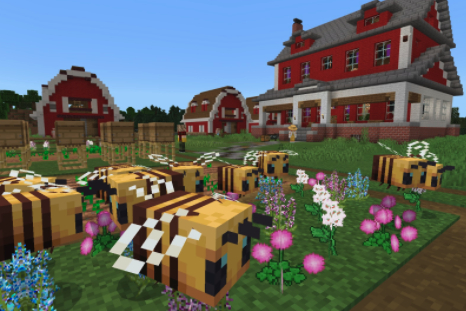
Direct students to load the attached Kids and Bees Minecraft world file. Have them visit the Beetopia area and tell them to meet bee guide Alejandro, who will show their characters the “Bumble Bee Garden.” Here they will learn many fun facts about the fascinating world of our bumble bees! Ask students to take notes and photos along the way for use during the classroom component of the lesson.
Break students back into their pairs or threes and direct them back to the map at bumblebeewatch.org. This time, set the filters to your state, your county, “Verified” status, and colour coding by species. If a good selection of bee species has been identified close to your school, ask students to zoom in on the school’s location; otherwise use the whole county or, if no bees have been logged in your county, include nearby counties or the whole state
Please download the teacher's guide for the complete lesson.
Total time - 55-100 minutes
This lesson will enable students to:
Explain that different species of bumble bee prefer different habitats
List and identify two of the common bumble bee species in their region
Observe and take comprehensive field notes about bumble bees in their natural habitat
Check out the Tips & Tricks video playlist that will help you and your students better use Minecraft: Education Edition in the classroom:
https://youtube.com/playlist?list=PLkh9rrdH-ARER03ojhFYtmoFDVuACYJLa
More videos added periodically so make sure you check often for more content!
Click and watch the student pause and play video with your class, pausing and playing as needed. This will help your students understand how to navigate through this lesson and Minecraft world and complete the activities located within them. Enjoy!
Check out the YouTube link for your reference: https://youtu.be/JGqvIUH3Lvk
Student 'Pause & Play' Video
208-5 state a prediction and a hypothesis based on background information or an observed pattern of events
208-2 identify questions to investigate arising from practical problems and issues
209-1 carry out procedures controlling the major variables
211-2 communicate questions, ideas, intentions, plans, and results, using lists, notes in point form, sentences, data tables, graphs, drawings, oral language, and other means
211-5 defend a given position on an issue or problem on the basis of their findings