
Loading…
Loading…
In this lesson, students will integrate Minecraft Education activities to supplement your Science units on ecosystems, habitats, or biodiversity.
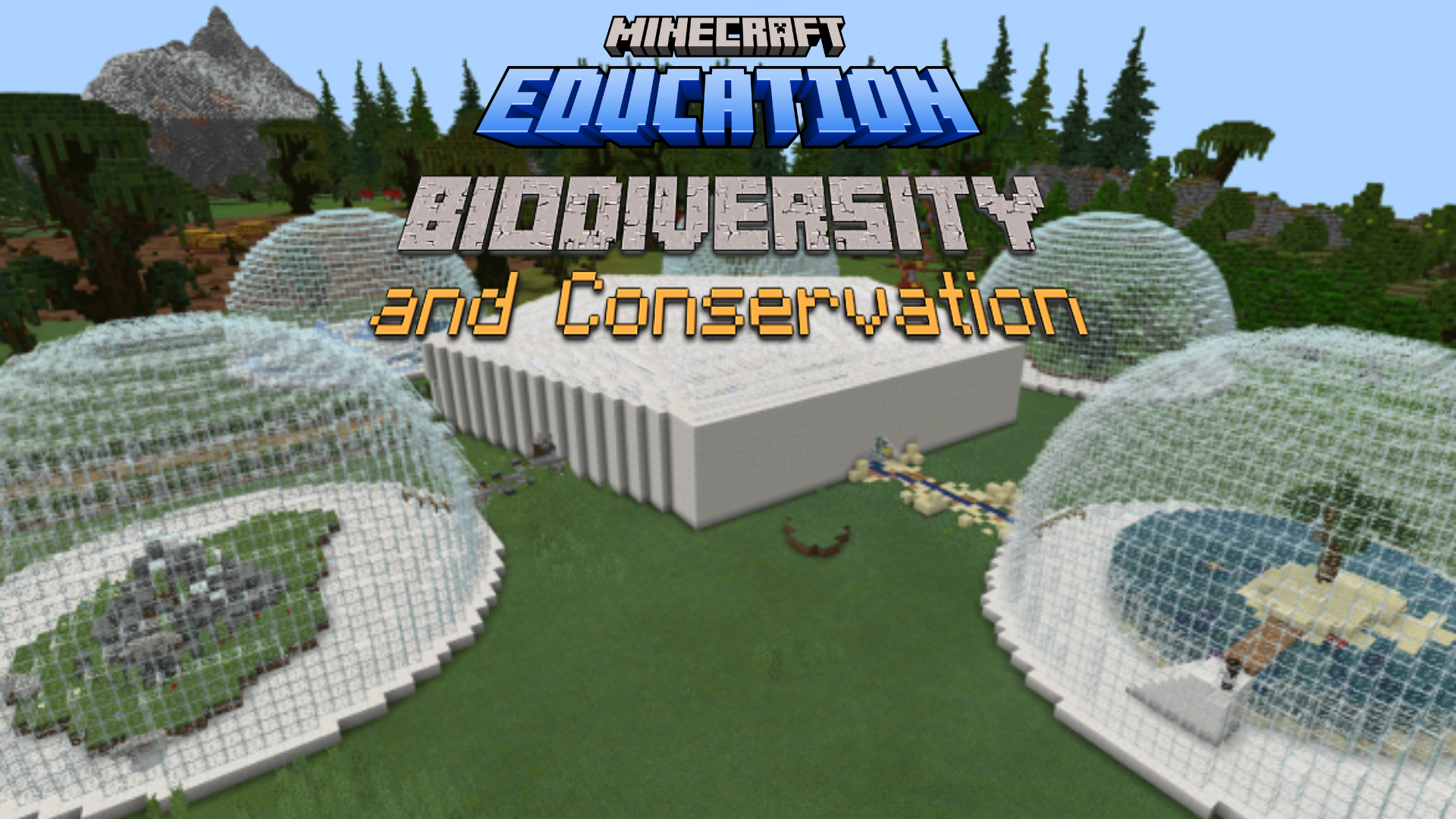
This Logics Academy Lesson, designed for Grade 4 to 6 teachers, will help you integrate Minecraft: Education Edition activities to supplement your Science units on ecosystems, habitats, or biodiversity. Additionally, these activities will pair well with your study of UN Sustainable Development Goals 11-15. These activities are general enough that they will fit with science or social studies topics that deal with conservation issues yet are specific enough that they will meet curricular objectives as well.
Our team of Logics Academy educators will help guide you and your students through each of the activities, providing options for differentiation and student reflection and sharing, leaving room for you to determine your own assessment techniques. The activities are designed for Grade 4 to 6 classes, but can easily be adapted for other grade levels by modifying the level of difficulty of the tasks.
➔ Extinction! Safari
➔ Endangered Species Biodiversity Lab
➔ Biome Exploration, Documenting Native Species
➔ Causes of Biodiversity Loss
➔ What can we do to Maintain Biodiversity?
Plan to begin your study of ecology the way you always have and then when the timing is right for you, add a dash of Logics Academy Lesson to your lesson plan. You may choose to sprinkle the activities throughout the unit, or save them all until the end. That’s totally up to you.
It is recommended, however, that the activities are completed in order as they build upon each other, but if you don’t have time for all 5, no problem! The earlier activities use Minecraft as a conduit for research and exploration of species and habitat; the last 3 activities will have students building and modifying existing Minecraft biomes to show their knowledge of species, habitats and conservation.
Refer to the following detailed descriptions of each activity.
In this video students will meet the team of co-teachers that will be working with them throughout the Conservation Lessons and will learn more about each of the 5 activities that will be covered.
Introduction
Students understand genes, species and ecosystem as components of biodiversity
Students understand the relationships and interactions of biodiversity in an ecosystem (food webs and trophic pyramids)
Understand ecological niche - the role of a species and how it is adapted
Understand what an ecosystem and a biome are and how they function
Students learn about the concept of biodiversity
This project was developed in partnership with World Wildlife Fund. Explore an exciting new Minecraft world created by Naturebytes as well as three new lessons designed to help you teach about biodiversity and its importance to our planet's past and future.
What is biodiversity? Explore online.
What is the biodiversity crisis?
Can you describe the different types or components of biodiversity - genes, species, ecosystems, biomes and what do they do?
How does biodiversity function? What is the relationship between species, across ecosystems and how does energy flow between them.
All of life is connected through biodiversity and its relationships - what impact do you have on biodiversity?
This lesson will enable students to:
Demonstrate an appetite for understanding biodiversity and endangered species
Pay attention to detail when exploring a blend of information sources: text, video, NPCs, in-game species, biomes and displays
Appreciate the balance of biodiversity and the role that humans and they as individuals play
Use critical thinking to explore different themes across the labs and biomes and apply to their chosen biome, to complete the provided worksheet (see external resources) including:
Name of the keystone species
Habitat description
Food chain/web and labelled trophic diagram
Ecological niche
Species adaptations
Benefits of the species and the biome
World biome map with each lab biome and your local biome located
Create a description of how your local ecosystem works
Understand how biodiversity processes and relationship work on a global scale and an ability to apply these concepts to themselves and their local environment.
In this video students will tour through the Extinction Safari World and will explore animals that have been lost to extinction. Students will learn how to use the Minecraft Book and Quill and camera to document their findings, paying specific attention to the underlying causes of extinction. Students will find that animals have gone extinct due to some similar causes and that the rate of extinction is increasing. At the end of the lesson, students will download a PDF copy of their research about extinct animals.
Activity 1
Students will continue to tour the biodiversity world, specifically the “Bio-domes”. Students can tour and learn about the biomes that endangered species such as the Philippines Eagle live in, and what some of the threats are to their existence. Students will learn about slates (information boards) then add at least 3 slates per biome-dome to help improve awareness of some of the threats to the species in this lesson. Slates allow students to create quick information posts in their world for all to see.
Activity 2
Students will choose a biome template from the world library and document which species are native to that biome in Minecraft. Students will then try and match where in the real world the biome could possibly exist. Students will add samples of biodiversity not included in the default biome to make it more closely match it’s real world location. Through this activity students will have a deeper understanding of how biomes provide habitats and how species are connected to each other through their location. Student learning will be shared through the use of a board which can allow students to visually display their evidence for all to visitors to their world to see.
Activity 3
Students will be given a tour of the Extinction! Safari - Deforestation zone to show the effects of human habitation, and to formally introduce students to the 4 major causes of biodiversity loss - climate change, human activity and construction, invasive species, and pollution. After the video tour, students will make a copy and return to their previous biome world and show some impacts of human construction and how it can threaten and damage biodiversity in the area.
Activity 4
Students will learn about ways to offset and limit damage from human development and pollution, as well as promote habitat resettlement for species such as bees and butterflies to help encourage biodiversity. Students will return to the world that was damaged by human development and help create solutions to each of the major causes of biodiversity loss. Students will use all the skills they learned from earlier lessons, and also be introduced to NPCs (non-player characters) that they can create to inhabit their world. Using the npc students will share a weblink to a resource that helped educate them on protecting and nurturing biodiversity.
Activity 5
Take students on a field trip to a local conservation area, such as a nature reserve, botanical garden, or wildlife sanctuary. Encourage students to observe local biodiversity, habitats, and conservation efforts firsthand. Provide guided activities, such as species identification, habitat mapping, or nature journaling, to deepen their understanding of conservation principles.
Organize a community service project focused on biodiversity conservation. Students can collaborate to plan and implement initiatives such as tree planting, habitat restoration, or litter clean-up in local parks or green spaces. This hands-on experience allows students to make a positive impact on their environment while applying concepts learned in the Minecraft activities.
Invite a local biologist, ecologist, or conservationist to give a presentation to the class. The guest speaker can share their expertise on topics related to biodiversity, conservation, and environmental stewardship. Students can engage in Q&A sessions, discussions, or interactive activities to deepen their knowledge and gain insights from real-world practitioners.
Assign students a research project on endangered species, focusing on their habitats, threats, conservation status, and ongoing conservation efforts. Students can choose a specific species to investigate further and create presentations, posters, or written reports to share their findings with the class. Encourage students to explore local and global perspectives on endangered species conservation.
Task students with designing and implementing a biodiversity plan for the school campus. Students can conduct surveys to assess current biodiversity, identify areas for improvement, and propose strategies for enhancing habitat diversity and supporting local wildlife. This project encourages students to apply their knowledge of biodiversity and conservation principles to real-world contexts within their school community.
Criteria:
Research and Documentation Skills
Understanding of Extinction Causes
Use of Minecraft Tools and Features
Collaboration and Communication
Rating Scale:
4 (Excellent): Student thoroughly researched extinct animals, documented findings clearly, demonstrated deep understanding of extinction causes, effectively utilized Minecraft tools, and collaborated and communicated ideas effectively.
3 (Proficient): Student conducted adequate research, documented findings appropriately, showed understanding of extinction causes, used Minecraft tools with proficiency, and collaborated and communicated adequately.
2 (Developing): Student showed limited research and documentation skills, demonstrated basic understanding of extinction causes, used Minecraft tools with some difficulty, and had limited collaboration and communication.
1 (Emerging): Student's research and documentation were insufficient, lacked understanding of extinction causes, struggled with Minecraft tools, and had minimal collaboration and communication.
Criteria:
Information Presentation
Awareness of Endangered Species Threats
Creativity and Innovation
Digital Citizenship
Rating Scale:
4 (Excellent): Student presented information effectively, raised awareness about endangered species threats creatively, demonstrated innovative thinking, and exhibited responsible digital citizenship.
3 (Proficient): Student presented information adequately, addressed endangered species threats appropriately, showed some creativity and innovation, and exhibited acceptable digital citizenship.
2 (Developing): Student's information presentation lacked depth, awareness of endangered species threats was limited, showed little creativity or innovation, and demonstrated minimal understanding of digital citizenship.
1 (Emerging): Student's information presentation was inadequate, lacked awareness of endangered species threats, showed no creativity or innovation, and demonstrated poor digital citizenship.
Criteria:
Research and Mapping Skills
Understanding of Biomes and Species
Adaptation of Minecraft Biomes
Evidence Sharing
Rating Scale:
4 (Excellent): Student demonstrated advanced research and mapping skills, deep understanding of biomes and species, effectively adapted Minecraft biomes, and shared evidence clearly.
3 (Proficient): Student showed proficient research and mapping skills, understanding of biomes and species was adequate, adapted Minecraft biomes appropriately, and shared evidence adequately.
2 (Developing): Student's research and mapping skills were basic, understanding of biomes and species was limited, struggled with adapting Minecraft biomes, and evidence sharing was minimal.
1 (Emerging): Student's research and mapping skills were insufficient, lacked understanding of biomes and species, failed to adapt Minecraft biomes effectively, and evidence sharing was absent.
Criteria:
Knowledge of Biodiversity Loss Causes
Application of Learning
Integration of Minecraft Features
Critical Thinking
Rating Scale:
4 (Excellent): Student demonstrated comprehensive knowledge of biodiversity loss causes, applied learning effectively, integrated Minecraft features creatively, and exhibited advanced critical thinking skills.
3 (Proficient): Student showed solid understanding of biodiversity loss causes, applied learning appropriately, integrated Minecraft features with proficiency, and demonstrated acceptable critical thinking.
2 (Developing): Student's knowledge of biodiversity loss causes was limited, struggled with applying learning, had difficulty integrating Minecraft features, and exhibited minimal critical thinking.
1 (Emerging): Student lacked understanding of biodiversity loss causes, failed to apply learning effectively, did not integrate Minecraft features, and demonstrated no critical thinking.
Criteria:
Solution Development
Application of Conservation Strategies
NPC Creation and Use
Resource Sharing
Rating Scale:
4 (Excellent): Student developed innovative solutions, applied conservation strategies effectively, created and used NPCs with creativity, and shared resources comprehensively.
3 (Proficient): Student developed viable solutions, applied conservation strategies appropriately, used NPCs proficiently, and shared resources adequately.
2 (Developing): Student's solutions lacked innovation, struggled with applying conservation strategies, had difficulty with NPCs, and shared resources minimally.
1 (Emerging): Student's solutions were ineffective, failed to apply conservation strategies, did not use NPCs, and shared no resources.
Link to World File:
NGSS Standard: 5-LS2-1 (Grade 5)Develop a model to describe the movement of matter among plants, animals, decomposers, and the environment.
NGSS Standard: 3-LS4-3 (Grade 3)Construct an argument with evidence that in a particular habitat some organisms can survive well, some survive less well, and some cannot survive at all.
NGSS Standard: MS-LS2-4 (Grade 6-8)Construct an argument supported by empirical evidence that changes to physical or biological components of an ecosystem affect populations.
NGSS Standard: MS-ESS3-3 (Grade 6-8)Apply scientific principles to design a method for monitoring and minimizing a human impact on the environment.
NGSS Standard: MS-ESS3-4 (Grade 6-8)Construct an argument supported by evidence for how increases in human population and per-capita consumption of natural resources impact Earth's systems.
ISTE Standard: Knowledge ConstructorStudents will research extinct animals using various websites, demonstrating the ability to locate and evaluate information for accuracy and relevance.
ISTE Standard: Creative CommunicatorStudents will create informational slates within the Minecraft world to raise awareness about endangered species and threats to biodiversity, demonstrating effective communication skills.
ISTE Standard: Global CollaboratorStudents will collaborate with peers to explore biomes in Minecraft, conduct research on native species, and share their findings through digital platforms, fostering global connections and collaboration.
ISTE Standard: Digital CitizenStudents will learn about the impacts of human activity on biodiversity, recognizing their role as digital citizens in addressing environmental issues through responsible online behavior and information sharing.
ISTE Standard: Innovative DesignerStudents will brainstorm and implement solutions to mitigate biodiversity loss in the Minecraft world, demonstrating innovative thinking and problem-solving skills in a digital environment.
Curriculum Document: Alberta Program of Studies, Science (2007)
Key Outcomes: Grade 6: Unit D - Trees and Forests; Grade 7: Unit B - Heat and Temperature; Grade 8: Unit A - Mixtures and Solutions
Curriculum Document: Science Grade 6-7-8 (2016)
Key Outcomes: Grade 6: Life Science - Biodiversity, Earth Science - Evidence of Earth's Changes; Grade 7: Life Science - Biodiversity, Physical Science - Heat; Grade 8: Life Science - Cells and Systems, Earth Science - Water Systems
Curriculum Document: Manitoba Education and Training, Science (2000)
Key Outcomes: Grade 6: Cluster 1 - Diversity of Living Things, Cluster 4 - Soils in the Environment; Grade 7: Cluster 1 - Interactions within Ecosystems, Cluster 4 - Heat in the Environment; Grade 8: Cluster 1 - Cells and Systems, Cluster 4 - Water Systems on Earth
Curriculum Document: New Brunswick Science Curriculum (2017)
Key Outcomes: Grade 6: Life Science - Biodiversity, Earth and Space Science - Heat in the Environment; Grade 7: Life Science - Biodiversity, Physical Science - Heat; Grade 8: Life Science - Cells and Systems, Earth and Space Science - Water Systems
Curriculum Document: New Brunswick and Prince Edward Island Science Curriculum (2017)
Key Outcomes: Grade 6: Life Science - Biodiversity, Earth and Space Science - Heat in the Environment; Grade 7: Life Science - Biodiversity, Physical Science - Heat; Grade 8: Life Science - Cells and Systems, Earth and Space Science - Water Systems
Curriculum Document: Science Grade 6-8 (2016)
Key Outcomes: Grade 6: Unit 1 - Biodiversity, Unit 2 - Heat; Grade 7: Unit 1 - Biodiversity, Unit 2 - Heat; Grade 8: Unit 1 - Cells and Systems, Unit 2 - Water Systems
Curriculum Document: Science Grade 6-8 (2019)
Key Outcomes: Grade 6: Life Science - Biodiversity, Earth and Space Science - Heat; Grade 7: Life Science - Biodiversity, Physical Science - Heat; Grade 8: Life Science - Cells and Systems, Earth and Space Science - Water Systems
Curriculum Document: Ontario Curriculum, Grades 1-8: Science and Technology (2007)
Key Outcomes: Grade 6: Understanding Life Systems - Biodiversity, Understanding Earth and Space Systems - Heat in the Environment; Grade 7: Understanding Life Systems - Interactions in the Environment, Understanding Matter and Energy - Heat in the Environment; Grade 8: Understanding Life Systems - Cells, Understanding Earth and Space Systems - Water Systems
Curriculum Document: Quebec Education Program (QEP) Science and Technology (2007)
Key Outcomes: Grade 6: Diversity of Living Things, Energy; Grade 7: Diversity of Living Things, Earth and Space; Grade 8: Systems and Matter, Material World
Curriculum Document: Saskatchewan Curriculum - Science 6-8 (2010)
Key Outcomes: Grade 6: Life Science - Diversity of Living Things, Physical Science - Heat; Grade 7: Life Science - Interactions within Ecosystems, Physical Science - Heat; Grade 8: Life Science - Cells and Systems, Earth and Space Science - Water Systems