
Loading…
Loading…
In this lesson, students will explore three impactful parts of Canadian History (the Canadian Pacific Railway, Viola Desmond, and the Truth and Reconciliation Commission).
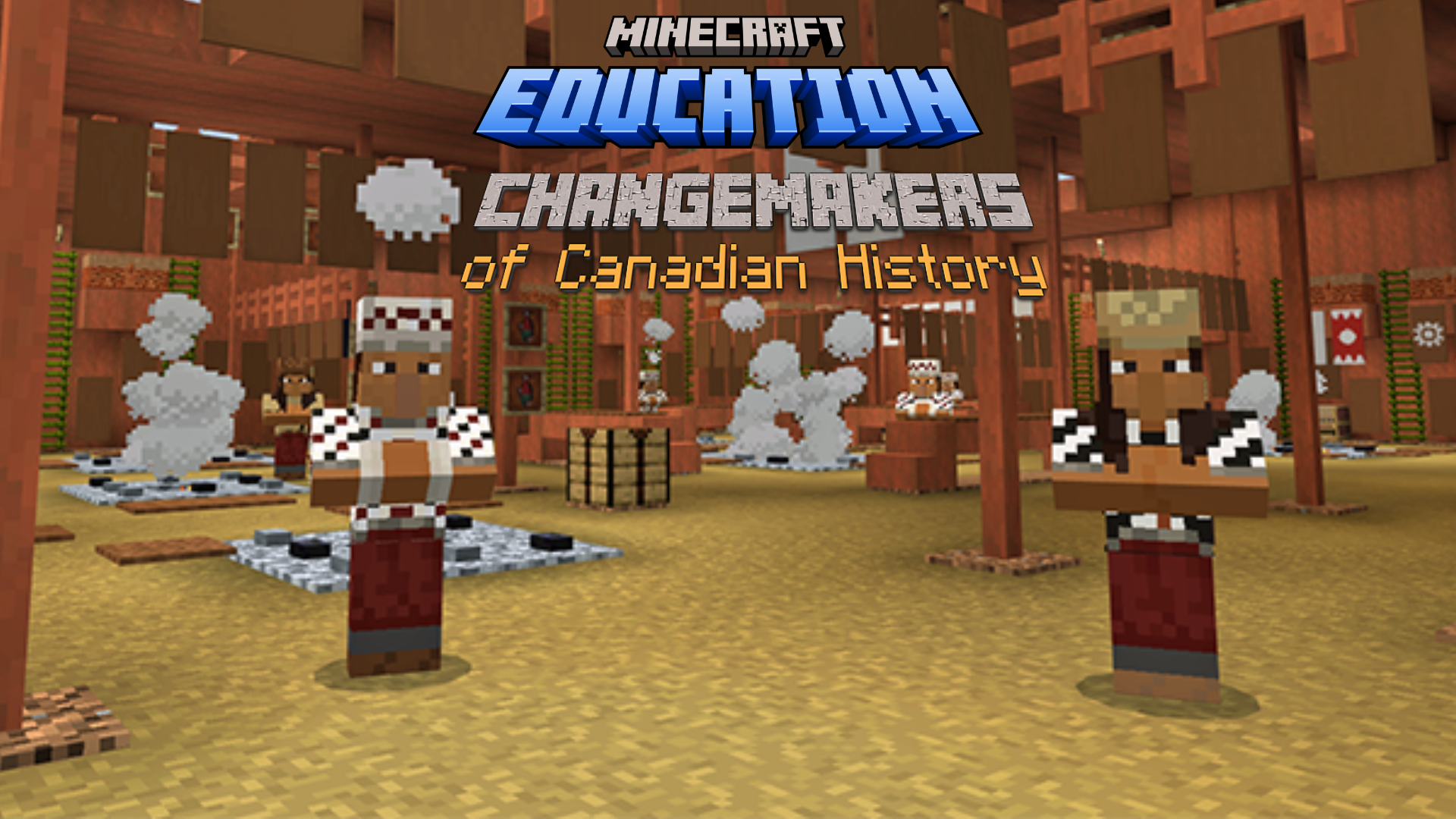
This Logics Academy Lesson, designed for Grade 4-8, will bring changemakers of Canadian History to life with Minecraft: Education. You and your students will explore three impactful parts of Canadian History (the Canadian Pacific Railway, Viola Desmond, and the Truth and Reconciliation Commission). After exploring the impact of these events, students will have the opportunity to research present-day changemakers, then consider how they may leave their own mark on Canadian history with an exciting design challenge. This Lesson has a focus on builds and creativity and would be a great supplement to teachers looking to develop how their students see themselves as part of Canadian History.
➔ The Canadian Pacific Railway
➔ Viola Desmond
➔ The Truth and Reconciliation Commission
➔ Modern Changemakers
➔ Seeing Ourselves as Changemakers
This series of lessons would be a great challenge for a Social Studies or History class or would be a valuable addition to a class studying a broad scope of Canadian History. Consider spending time with your students developing background knowledge on the subjects presented in order to boost their creativity and builds in Minecraft: Education. Educators should also consider time for collaboration and sharing as their students work through the series.
It is recommended that the activities are completed in order as they build upon each other, but if you don’t have time for all 5, no problem! Perhaps consider using the later activities as Extensions, even after the formal unit has been completed. Refer to the following pages for a detailed description of each activity.
In this video, students will meet the team of co-teachers that will be working with them throughout the project. Students will also learn more about each of the 5 activities that will be covered.
Introduction
Historical Understanding: Students will demonstrate an understanding of key historical events, including the establishment of the Canadian Pacific Railway, the activism of Viola Desmond, and the impact of the Truth and Reconciliation Commission, by analyzing primary and secondary sources and constructing historical narratives.
Critical Thinking: Students will develop critical thinking skills by evaluating the significance of historical events and contemporary issues, such as the contributions of modern changemakers in Canada, and considering diverse perspectives to draw informed conclusions.
Empathy and Perspective-taking: Students will cultivate empathy and perspective-taking skills by engaging with the experiences of individuals affected by historical injustices, such as residential school survivors, and by reflecting on their own potential as agents of positive change in Canadian society.
Ethical Reasoning: Students will demonstrate ethical reasoning skills by examining the ethical dimensions of historical and contemporary issues, including questions of justice, accountability, and responsibility in promoting reconciliation, social justice, and sustainability.
Creative Problem-solving: Students will develop creative problem-solving skills by designing and implementing innovative projects and initiatives, such as building monuments in Minecraft to represent future visions for reconciliation and social change, and by collaborating with peers to address real-world challenges in their communities.
In this activity, students will learn about the history, building, and impact of the Canadian Pacific Railway. They will begin their work in Minecraft: Education by building a settlement on a new “Block of Grass” world. Students will then research an important settlement along the Canadian Pacific Railway and use that research to describe their Minecraft: Education build. Students will then be challenged to “build” the railway by learning the /fill command and adding Redstone to move their train. The lesson wraps up with an invitation to reflect the importance of the CP Rail and its impact in a class discussion.
Activity 1
Through the lens of equity, students will learn about Viola Desmond. They will be invited to build a theatre for their settlement and consider how they might show that their build was accessible and equitable using signs and specific features of their build. Students are then invited to consider what they can learn from Viola Desmond and create a piece of pixel art to represent an important person or character trait to the development of Canadian Society.
Activity 2
In this video, students will hear a brief introduction to the Truth and Reconciliation Commission's work in response to Canada’s Residential School System. Then, in the spirit of Call to Action #68, students are invited to build a monument depicting the future of the Canadian Government’s relationship with Indigienous Peoples. Teachers should create an opportunity to brainstorm with their students before they begin this build. Students will then be challenged to use an agent to code a walk around their monument. This will be challenging for students new to coding, so educators should use their discretion with this piece of the task. You might choose to scaffold this by coding together, completing the steps in person before coding, or copying Coulter’s Code. Students are then invited to share their monuments with their class.
Activity 3
In this video, we take a look at modern change makers in Canada. Students will begin to synthesize the qualities of changemakers. They will begin by brainstorming a list of possible research subjects. If educators are looking to scaffold this process for younger students or save time, it might be advisable to choose one or two subjects for their class and research together. Students will then spawn an NPC to represent their figure and write a journal entry with advice to future leaders. To conclude, students are invited to identify commonalities between the figures they have researched.
Activity 4
With this final activity, students will synthesize their historical learning, their research on modern changemakers, and their own skills and interests to consider how they might make their own impact on Canadian history. Students are invited to prototype a build that would show their vision for the future. They are then encouraged to describe their build through NPCs in their settlement reacting to the new build. Educators are encouraged to facilitate brainstorming and the creative process here. It may also be advisable to have students work in teams.
Activity 5
Directions for Educators: Have students collaborate to create an interactive historical timeline showcasing key events related to Canadian history and social change. Students can research and curate information about historical milestones, such as the establishment of the Canadian Pacific Railway, Viola Desmond's activism, and the Truth and Reconciliation Commission. Encourage students to incorporate multimedia elements, such as videos, photos, and audio recordings, to bring each event to life. Display the timeline in the classroom or school hallway for others to explore.
Directions for Educators: Task students with researching and profiling local changemakers in their community who have made significant contributions to social justice, environmental sustainability, or cultural diversity. Students can conduct interviews, gather testimonials, and collect information about the impact of these individuals or organizations. Then, facilitate a class discussion where students share their findings and brainstorm ways to honor and celebrate the work of these changemakers, such as organizing a community event or creating a digital showcase.
Directions for Educators: Encourage students to express their understanding of historical and contemporary changemakers through artistic and literary forms. Provide opportunities for students to create artwork, poetry, short stories, or multimedia presentations inspired by the stories of Canadian changemakers, both past and present. Encourage students to reflect on the themes of empathy, resilience, and social justice in their creative works. Showcase their creations in a classroom gallery or publish them in a digital anthology.
Directions for Educators: Engage students in service learning projects that address local or global issues related to the themes of the activities. Guide students through the process of identifying community needs, designing action plans, and implementing projects that contribute to positive social change. Examples of service projects may include organizing a fundraising campaign for Indigenous education initiatives, volunteering at a local shelter or food bank, or advocating for environmental conservation efforts. Encourage students to reflect on their experiences and the impact of their actions on individuals and communities.
Directions for Educators: Introduce students to virtual reality technology and challenge them to create immersive historical experiences related to Canadian history and social change. Students can use VR platforms to design virtual tours of significant historical sites, such as residential schools, civil rights landmarks, or cultural heritage sites. Encourage students to incorporate audio narration, interactive elements, and historical artifacts to enhance the authenticity of their virtual experiences. Host a VR showcase where students can share their projects with classmates and the wider school community.
ISTE Standard: Knowledge Constructor
Students research the history and impact of the Canadian Pacific Railway to inform their Minecraft build, demonstrating the ability to locate, evaluate, and use information effectively.
ISTE Standard: Creative Communicator
Students express their understanding of equity and inclusion by designing and building a theatre in Minecraft, utilizing specific features and signage to demonstrate accessibility and equity.
ISTE Standard: Computational Thinker
Students engage in computational thinking by coding an agent to walk around their monument, demonstrating problem-solving skills and algorithmic thinking.
ISTE Standard: Global Collaborator
Students collaborate to research and identify modern changemakers, demonstrating the ability to work effectively and respectfully with diverse teams.
ISTE Standard: Innovative Designer
Students use their historical learning and research on modern changemakers to prototype a build representing their vision for the future in Minecraft, fostering creativity, innovation, and problem-solving skills.
Historical Thinking Concepts:
Evidence: Students gather evidence from historical sources about the Canadian Pacific Railway, such as documents, photographs, and maps, to understand its construction, impact, and significance.
Historical Significance: Students evaluate the significance of the Canadian Pacific Railway in shaping Canada's development, economy, and identity, considering its role in connecting the country from coast to coast.
Continuity and Change: Students analyze how the construction of the Canadian Pacific Railway brought about changes in transportation, settlement patterns, and Indigenous relations in Canada, while also considering continuities in economic and political structures.
Cause and Consequence: Students explore the reasons for building the Canadian Pacific Railway, including economic, political, and social factors, as well as the consequences of its construction for Indigenous peoples, immigrants, and the environment.
Historical Perspectives: Students consider different historical perspectives on the Canadian Pacific Railway, including those of government officials, railway workers, Indigenous peoples, and settlers, to understand how diverse groups experienced and interpreted its construction.
Ethical Dimensions: Students examine the ethical implications of building the Canadian Pacific Railway, including its impact on Indigenous lands and communities, labor practices, and environmental sustainability, and reflect on the responsibilities of historical actors.
Historical Empathy: Students develop empathy for the experiences of individuals involved in the construction of the Canadian Pacific Railway, including workers, engineers, Indigenous peoples, and government officials, by considering their perspectives and motivations within their historical context.
Historical Thinking Concepts:
Evidence: Students analyze primary sources and historical accounts related to Viola Desmond's life and activism, including newspaper articles, legal documents, and personal narratives, to understand her significance in Canadian history.
Historical Significance: Students evaluate the significance of Viola Desmond's actions in challenging racial segregation and discrimination in Canada, considering her impact on civil rights, legal reform, and public awareness.
Continuity and Change: Students examine the historical context of racial segregation and discrimination in Canada during Viola Desmond's time, considering continuities in systemic inequalities and changes in attitudes and policies over time.
Cause and Consequence: Students explore the factors that led Viola Desmond to challenge racial segregation at the Roseland Theatre in New Glasgow, Nova Scotia, as well as the consequences of her arrest and activism for herself and future civil rights movements.
Historical Perspectives: Students consider different perspectives on Viola Desmond's actions and their significance, including those of African Canadian communities, civil rights activists, government officials, and the legal system, to understand how her story has been interpreted and remembered over time.
Ethical Dimensions: Students examine the ethical implications of racial segregation and discrimination in Canada, as well as Viola Desmond's resistance to injustice, considering questions of equality, justice, and human rights.
Historical Empathy: Students develop empathy for Viola Desmond and others who faced discrimination and injustice, by considering their experiences, challenges, and motivations within their historical context, and reflecting on the importance of empathy in understanding the past and present.
Historical Thinking Concepts:
Evidence: Students engage with primary and secondary sources related to the Truth and Reconciliation Commission (TRC) and Canada's Residential School System, including TRC reports, survivor testimonies, and historical documents, to understand the historical context and significance of Indigenous residential schools.
Historical Significance: Students evaluate the significance of the TRC's work in addressing the legacy of residential schools, promoting reconciliation, and advancing Indigenous rights and perspectives in Canada.
Continuity and Change: Students analyze the continuity of colonial policies and practices that led to the establishment of residential schools, as well as changes in public awareness, government policies, and Indigenous activism that contributed to the creation of the TRC and its Calls to Action.
Cause and Consequence: Students explore the causes and consequences of Canada's Residential School System, including the impacts on Indigenous communities, cultures, and intergenerational trauma, as well as the long-term effects of colonialism and cultural genocide.
Historical Perspectives: Students consider diverse perspectives on the history of residential schools and the TRC's efforts at reconciliation, including those of survivors, Indigenous communities, government officials, educators, and the wider Canadian public, to understand different interpretations and responses to this history.
Ethical Dimensions: Students examine the ethical dimensions of reconciliation and justice in the context of Canada's history of colonization and Indigenous rights, considering questions of accountability, responsibility, and healing for individuals, communities, and society as a whole.
Historical Empathy: Students develop empathy for the experiences of residential school survivors and Indigenous peoples affected by intergenerational trauma, by listening to their stories, acknowledging their perspectives, and reflecting on the importance of empathy in reconciliation and healing.
Historical Thinking Concepts:
Evidence: Students research and analyze primary and secondary sources about modern changemakers in Canada, including activists, leaders, and advocates for social, environmental, and political change, to understand their impact and contributions to Canadian society.
Historical Significance: Students evaluate the significance of modern changemakers in addressing contemporary challenges and advancing social justice, equity, and human rights in Canada, considering their influence on public policies, cultural attitudes, and grassroots movements.
Continuity and Change: Students examine the continuity of social and environmental issues faced by modern changemakers, such as inequality, discrimination, and environmental degradation, as well as changes in strategies, tactics, and alliances used to address these challenges over time.
Cause and Consequence: Students explore the causes and consequences of social change efforts led by modern changemakers, including the impacts on marginalized communities, government policies, and public awareness, as well as the long-term effects on Canadian society and democracy.
Historical Perspectives: Students consider diverse perspectives on the role of modern changemakers in Canadian history and society, including those of activists, policymakers, marginalized communities, and the wider public, to understand different interpretations and responses to social change efforts.
Ethical Dimensions: Students examine the ethical dimensions of social activism and advocacy in Canada, considering questions of justice, solidarity, and responsibility in addressing systemic inequalities and promoting human rights and dignity for all.
Historical Empathy: Students develop empathy for modern changemakers and the communities they represent, by understanding their motivations, challenges, and aspirations, and reflecting on the importance of empathy in supporting social justice and collective action.
Historical Thinking Concepts:
Evidence: Students draw on historical learning and research about past and present changemakers to inform their vision for the future, using evidence from primary and secondary sources to support their ideas and proposals for social change.
Historical Significance: Students reflect on the significance of their own potential as changemakers in Canadian history and society, considering how their actions and contributions can make a difference in addressing current challenges and shaping the future.
Continuity and Change: Students explore the continuity of social and environmental issues that persist in Canadian society, as well as changes in attitudes, values, and technologies that offer opportunities for positive change and innovation.
Cause and Consequence: Students examine the causes and consequences of historical and contemporary efforts to effect change in Canada, considering the impacts on individuals, communities, and institutions, as well as the long-term effects on Canadian identity and collective memory.
Historical Perspectives: Students consider different perspectives on the role of individuals and communities as agents of change in Canadian history and society, including those of activists, policymakers, educators, and future generations, to understand the complexities of social change and innovation.
Ethical Dimensions: Students reflect on the ethical dimensions of their own aspirations and actions as changemakers, considering questions of responsibility, integrity, and solidarity in promoting equity, justice, and sustainability in Canadian society and the world.
Historical Empathy: Students develop empathy for historical and contemporary changemakers, as well as the communities they represent, by understanding their motivations, challenges, and legacies, and by recognizing their own potential to contribute to positive change in the world.
Alberta (Grade 4-8 Social Studies Curriculum)
Students examine the historical significance of the Canadian Pacific Railway in shaping the development of Western Canada, including its impact on Indigenous peoples, settlers, and the economy.
They analyze primary and secondary sources related to the construction and impact of the railway, demonstrating their ability to evaluate historical evidence and interpret historical events.
British Columbia (Grade 4-8 Social Studies Curriculum)
Students investigate the role of the Canadian Pacific Railway in connecting Canada from coast to coast, including its economic, social, and environmental impacts on Indigenous communities and settler societies.
They evaluate the significance of the railway in facilitating trade, transportation, and communication across the country, considering its legacy in shaping Canadian identity and development.
Ontario (Grade 4-8 Social Studies Curriculum)
Students explore the historical context and consequences of the Canadian Pacific Railway's construction, including its role in promoting westward expansion, immigration, and economic growth in Canada.
They analyze primary sources, such as photographs, maps, and documents, to understand the perspectives of different groups involved in the railway's development and to assess its long-term effects on Canadian society.
New Brunswick (Grade 4-8 Social Studies Curriculum)
Students examine the impact of the Canadian Pacific Railway on the development of Canada, including its role in facilitating settlement, trade, and communication across the country.
They analyze primary sources and historical narratives to understand the challenges and opportunities associated with the construction and operation of the railway, considering its significance in Canadian history and identity.
Quebec (Grade 4-8 Social Studies Curriculum)
Students investigate the significance of the Canadian Pacific Railway in connecting Quebec to the rest of Canada, including its economic, social, and cultural impacts on the province.
They analyze primary sources and historical accounts to understand the contributions of Quebecois workers and communities to the construction and expansion of the railway network, considering its role in shaping regional development and identity.
Alberta (Grade 4-8 Social Studies Curriculum)
Students investigate the significance of Viola Desmond's activism in challenging racial segregation and discrimination in Canada, including her impact on civil rights and social justice movements.
They analyze primary sources, such as newspaper articles and legal documents, to understand the context and consequences of Desmond's actions and to evaluate her legacy in Canadian history.
British Columbia (Grade 4-8 Social Studies Curriculum)
Students explore the contributions of Viola Desmond to the struggle for racial equality and human rights in Canada, including her role in raising awareness about systemic discrimination and injustice.
They evaluate the significance of Desmond's actions in challenging discriminatory practices and promoting social change, considering her influence on future generations and the ongoing pursuit of equity and inclusion.
Ontario (Grade 4-8 Social Studies Curriculum)
Students analyze the historical context and impact of Viola Desmond's actions in resisting racial segregation and discrimination in Canada, including her legal challenge and public advocacy efforts.
They examine primary sources, such as court transcripts and personal accounts, to understand the complexities of Desmond's story and to evaluate her role as a catalyst for change in Canadian society.
New Brunswick (Grade 4-8 Social Studies Curriculum)
Students investigate the significance of Viola Desmond's actions in challenging racial discrimination and promoting civil rights in Canada, including her role as a pioneer of social change.
They analyze primary sources and historical narratives to understand the context and consequences of Desmond's activism, considering her impact on Canadian society and the ongoing struggle for equity and justice.
Quebec (Grade 4-8 Social Studies Curriculum)
Students explore the contributions of Viola Desmond to the advancement of human rights and social justice in Canada, including her efforts to challenge racial discrimination and promote equality.
They analyze primary sources and historical accounts to understand the significance of Desmond's actions in the context of Quebec's history and multicultural identity, considering her influence on Quebecois perspectives and activism.
Alberta (Grade 4-8 Social Studies Curriculum)
Students examine the historical context and significance of the Truth and Reconciliation Commission (TRC) in addressing the legacy of residential schools and advancing Indigenous rights and perspectives in Canada.
They analyze primary and secondary sources, including TRC reports and survivor testimonies, to understand the causes and consequences of Canada's Residential School System and the ongoing process of reconciliation.
British Columbia (Grade 4-8 Social Studies Curriculum)
Students investigate the history and impact of the Truth and Reconciliation Commission (TRC) in addressing the legacy of residential schools and promoting Indigenous rights and reconciliation in Canada.
They analyze primary sources, such as TRC documents and survivor narratives, to understand the historical context and significance of the TRC's work, considering its implications for Canadian society and identity.
Ontario (Grade 4-8 Social Studies Curriculum)
Students explore the history and significance of the Truth and Reconciliation Commission (TRC) in responding to Canada's Residential School System and promoting healing, justice, and reconciliation for Indigenous peoples.
They analyze primary and secondary sources, including TRC reports and multimedia resources, to understand the causes and consequences of residential schools and the TRC's Calls to Action, considering their implications for Canadian history and citizenship.
New Brunswick (Grade 4-8 Social Studies Curriculum)
Students investigate the impact of the Truth and Reconciliation Commission (TRC) on addressing the historical injustices of Canada's Residential School System and promoting reconciliation with Indigenous peoples.
They analyze primary sources and TRC testimonies to understand the experiences of residential school survivors and the ongoing efforts to acknowledge and redress the harms of colonization and cultural genocide.
Quebec (Grade 4-8 Social Studies Curriculum)
Students examine the significance of the Truth and Reconciliation Commission (TRC) in addressing the historical injustices of Canada's Residential School System and promoting awareness, healing, and reconciliation.
They analyze primary and secondary sources, including TRC reports and survivor testimonies, to understand the impact of residential schools on Indigenous communities and the importance of acknowledging and learning from this history.
Alberta (Grade 4-8 Social Studies Curriculum)
Students investigate the contributions of modern changemakers in Canada, including activists, leaders, and advocates for social, environmental, and political change.
They analyze primary and secondary sources to understand the significance of contemporary movements and initiatives in addressing systemic inequalities and promoting human rights and dignity.
British Columbia (Grade 4-8 Social Studies Curriculum)
Students explore the role of modern changemakers in Canada, including their efforts to address social, environmental, and political challenges.
They evaluate the significance of grassroots movements and individual activism in shaping public policies, cultural attitudes, and community practices, considering their impact on Canadian society and identity.
Ontario (Grade 4-8 Social Studies Curriculum)
Students analyze the impact of modern changemakers in Canada, including their role in advocating for social justice, equity, and human rights.
They examine primary and secondary sources to understand the continuity of social and environmental issues faced by modern changemakers, as well as the changes in strategies and alliances used to address these challenges over time.
New Brunswick (Grade 4-8 Social Studies Curriculum)
Students investigate the significance of modern changemakers in Canada, including their contributions to addressing contemporary challenges and advancing social justice.
They analyze primary and secondary sources to understand the causes and consequences of social change efforts led by modern activists and leaders, considering their impact on Canadian society and democracy.
Quebec (Grade 4-8 Social Studies Curriculum)
Students explore the contributions of modern changemakers in Canada, including their efforts to promote social justice, environmental sustainability, and human rights.
They evaluate the significance of contemporary movements and initiatives in addressing systemic inequalities and advancing collective action for positive change, considering their implications for Quebecois identity and citizenship.
Alberta (Grade 4-8 Social Studies Curriculum)
Students reflect on their own potential as changemakers in Canadian society, considering how their actions and contributions can make a positive difference in addressing current challenges and shaping the future.
They develop creative proposals for social change initiatives, drawing on historical and contemporary examples to inform their vision and strategies for promoting equity, justice, and sustainability.
British Columbia (Grade 4-8 Social Studies Curriculum)
Students explore their role as agents of change in Canadian society, reflecting on their values, interests, and aspirations for contributing to positive social and environmental outcomes.
They develop innovative solutions to real-world problems, applying historical and contemporary knowledge to propose action plans and initiatives for addressing local and global challenges.
Ontario (Grade 4-8 Social Studies Curriculum)
Students consider their potential as changemakers in Canadian history and society, reflecting on the lessons learned from past and present activists, leaders, and advocates for social change.
They develop creative projects and initiatives to address issues of concern in their communities, applying historical thinking concepts and ethical principles to promote positive social action and civic engagement.
New Brunswick (Grade 4-8 Social Studies Curriculum)
Students reflect on their role as active citizens and changemakers in Canadian society, considering how their actions and decisions can impact their communities and the world.
They develop innovative ideas and proposals for addressing local and global challenges, drawing on historical and contemporary examples to inspire their vision for a better future.
Quebec (Grade 4-8 Social Studies Curriculum)
Students explore their potential as changemakers and responsible citizens in Quebec and Canadian society, reflecting on their values, interests, and commitments to promoting equity, justice, and sustainability.
They develop creative projects and initiatives to address pressing issues in their communities, applying historical knowledge and critical thinking skills to envision a future guided by principles of social responsibility and collective well-being.