
Loading…
Loading…
In this lesson, students will learn how to integrate Minecraft Education activities to supplement the current Fractions & Decimals unit and show how coding can be integrated in math.
This Logics Academy Lesson, designed for Grade 4 to 6 teachers, will help you integrate Minecraft: Education Edition activities to supplement your current Fractions & Decimals unit and show how coding can be integrated in math. Our team of Logics Academy educators will help guide you and your students through each of the activities, providing options for student reflection and sharing, leaving room for you to determine your own assessment techniques. Although this set of activities is designed for Grade 4 to 6 classes, it can be adapted for other grade levels by modifying the level of difficulty of the tasks.
➔ Crafting Fractions (Fractions as Division)
➔ 3D Fractions (Fractions on a number line)
➔ Fraction Garden (Relating fractions & decimals)
➔ Fraction Farm (Adding & Subtracting decimals)
➔ Minecraft Marathon (Equivalent fractions)
Plan to begin your fractions and decimals math unit the way you always have and then when the timing is right for you, add a dash of Logics Academy Lesson to your lesson plan and learning activities. You may choose to sprinkle the activities throughout your math unit or save them all until the end. That’s totally up to you, and the beauty of this lesson collection.
It is recommended, however, that the math activities are completed in order as they build upon each other in both skill and understanding, but if you don’t have time for all 5, no problem! Perhaps consider using the later activities as Extensions, even after your fractions unit has been completed.
Refer to the following pages for a detailed description of each activity.
Suggested Materials (in addition to M:EE): none
In this video, students will meet the team of co-teachers that will be working with them to explore the math concepts of fractions and decimals with Minecraft Education. Students will also learn more about each of the 5 activities that will be covered in this unit.
Fractions and Decimals Introduction
Suggested Materials (in addition to M:EE): Microsoft Word or Pencil and Paper for math strategies
https://education.minecraft.net/en-us/lessons/crafting-fractions-2
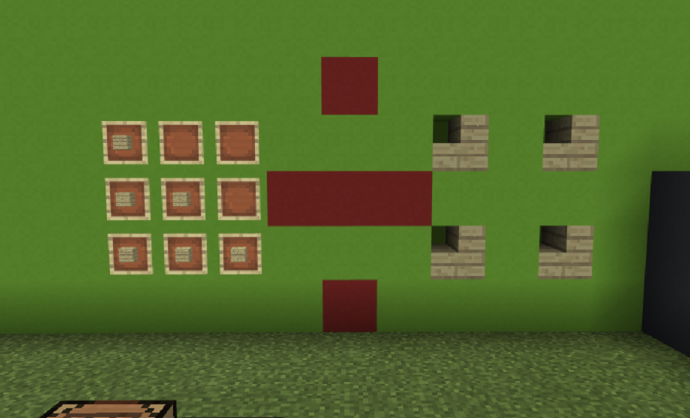
In this video, students will explore fractions as division and visual representations of fractions. In this lesson, students will enter a Minecraft Education world where they will observe crafting recipes and write them as fractions in order to escape. Students will also encounter a performance task at the end to extend their thinking! Try out the six crafting fraction word problems and see how you do!
CCSS.MATH.CONTENT.5.NF.B.3 Interpret a fraction as division of the numerator by the denominator (a/b = a ÷ b). Solve word problems involving division of whole numbers leading to answers in the form of fractions or mixed numbers, e.g., by using visual fraction models or equations to represent the problem.
CCSS.Math.Content.5.NF.B.7.c Solve real world problems involving division of unit fractions by non-zero whole numbers and division of whole numbers by unit fractions, e.g., by using visual fraction models and equations to represent the problem.
Explore these ideas with your class:
1) What are equivalent fractions?
2) How are equivalent fractions related?
3) Are fractions division problems, explain why or why not?
To begin, students will load the attached single player Minecraft world "Crafting Fractions".
Creating Fractions From Crafting Recipes Students will enter the world in single player mode and identify fraction out of crafting recipes.
Make Your Escape Performance Task Students will need to use their knowledge of fractions and division to figure out how many logs of wood will be needed to craft 18 ladders. Then students will make their escape over the wall.
1) The student was able to create fractions after observing crafting recipes.
2) The student was able to explain the relationship between division and fractions.
3) The student was able to use crafting recipes to figure out how many logs of wood will they need to create 18 ladders.
Direct Link: https://aka.ms/craftingfractions
Activity 1
Suggested Materials (in addition to M:EE): Microsoft Word or Pencil and Paper for math strategies
Some Minecraft Coding Background Knowledge Is Encouraged But Not Required
https://education.minecraft.net/en-us/lessons/3-d-fractions
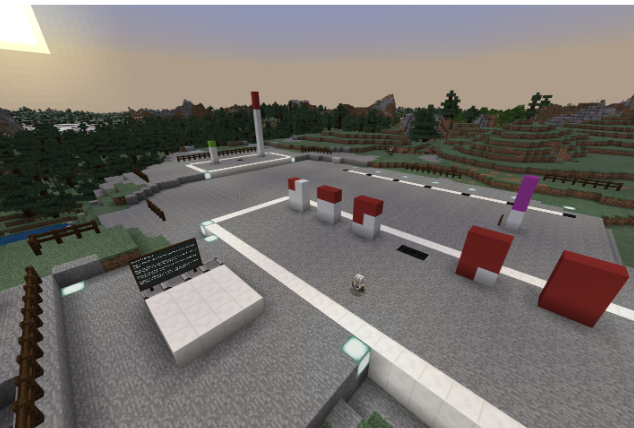
In this video, students will work through coding principles to program their agent to create and order unit fractions on a number line. No previous knowledge is required in coding, but if need be feel free to show students one of Minecraft’s coding tutorials. Students may also choose to manually build their number line fractions with the blocks available in their inventory, keeping in mind a darker colour for the numerator and a lighter colour for the unit fraction. Come and enjoy understanding fractions through 3-dimensional representations and coding!
After this lesson students are welcome to continue with the other two challenges located in this 3D fraction world!
Students will understand how to set active inventory slots.
Students will understand a fraction is a number on a number line. (CCSS.MATH.CONTENT.3.NF.A.2)
Students will understand two fractions as equivalent and compare fractions by reasoning about their size. (CCSS.MATH.CONTENT.3.NF.A.3)
Students will understand how to write multiple chat commands.
Students will understand how to use their agent to build columns.
Before beginning, students should have some familiarity and basic understanding of how to create chat commands and agent movement. Agents orientate themselves with respect to the player. Agents can execute a variety of tasks. Fractions can be visually represented in Minecraft by colors, textures, and behaviors in three-dimensions.
Students will complete three activities to demonstrate their understanding of fractions as part of a whole, fractions as a number on a number line, and be able to recognize equivalent fractions given a model. It is suggested that students work in pairs to complete all three activities. Note that throughout this lesson, blocks representing the numerator are darker (shaded) blocks. When students build their own fractions, ask them to keep with this rule for consistency and clarity. 1. Students will use their agent to build the missing fraction in the sequence 1/6, 2/6 . . . 6/6. Students should locate the two black blocks that identify the location for 4/6, then write 2-3 chat commands to instruct the agent to build the fraction. Use the agent commands teleport to player and turn left or right so that the agent faces one of the black blocks. Students should place several white concrete blocks in the agent’s inventory slot 1 and several red concrete blocks in the agent’s slot 2. Create a chat command that instructs the agent to place 3 blocks vertically, switching inventory slots after placing the first block. Students should work together and experiment with their code to find a solution, but they will likely need the following agent commands:
agent [place on move] <true>
agent move [forward] by (num)
agent move [up] by (num)
agent set active slot (num – where 1 represents white and 2 red)
agent move [up] by (num)
The builder will create a single column, 3 blocks high, with 1 white and 2 red blocks. Students that have a more advanced grasp of agent movement can add commands to this stack that instructs the agent to build the second column from the top down. Otherwise, have students create an additional chat command to build the second column in similar fashion to the first, from the bottom up. Note that this new command requires that they change the active inventory slot back to one. 2. The next activity builds upon the first. Instruct students that they will be using similar commands to create a number line that marks the locations of the fractions 1/7, 2/7 . . . 7/7. Have students inspect the model of vertically stacked blocks. The model represents 3/5. Students will need to be clear on the difference between numerator and denominator and reminded that they should provide visual contrast between these when placing blocks, with darker blocks (numerator) placed on the top of the fraction. Place each fraction column in order on top of each black block on the number line. More advanced students may be able to code their agent to place multiple columns in a sequence. 3. The final activity requires that students inspect the two columns and identify what fraction each represents. They are then to determine what the missing (equivalent) fraction is and instruct their agent to build it on top of the black block.
Students will demonstrate their understanding of agent movement by building three-dimensional representations of fractions. Player agents will build a model that represents 4/6. Player agents will build a number line representing the fractions 1/7 through 7/7. Students will determine an equivalent fraction between ¼ and 3/12 and instruct their agents to build it. Students should be able to answer the following questions:
How can a player agent be used to build fractions?
What was the most difficult fraction to construct? Why was it difficult?
Can you predict what fraction might come next in the sequence 1/4, 2/8, 3/12 . . . ?
Direct Link: https://education.minecraft.net/lessonsupportfiles/Fractions.zip
Activity 2
Suggested Materials (in addition to M:EE): Microsoft Word or Pencil and Paper for math strategies
World File Suggestion: Blocks of Grass Template World or "Flat World"
In this video, students will explore the relationships between fractions and decimals by building their own fraction garden. Through the power of Minecraft Education Edition, students will build a 10 x 10 garden space to demonstrate their understanding of decimals and fractions. Check out the many crops, flowers, and plant life available in the Minecraft inventory to boost your garden diversity and showcase your knowledge. Be sure to check out the garden example and be creative with your own design and fractions!
Activity 3
Suggested Materials (in addition to M:EE): Microsoft Word or Pencil and Paper for math strategies
https://education.minecraft.net/en-us/lessons/fraction-farms
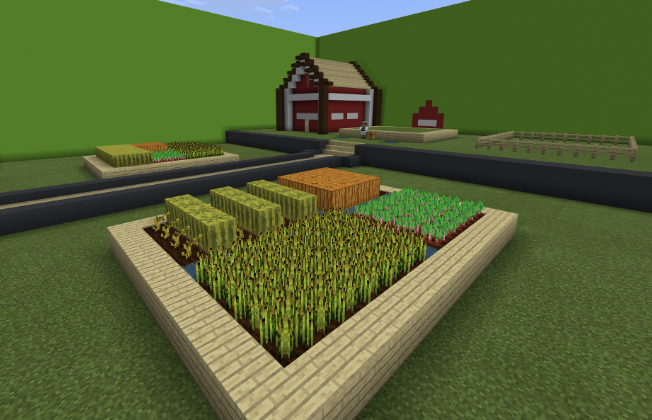
In this video, students will explore math models of addition and subtraction problems with fractions as they observe and explore in this fraction farm world. After students have solved the fraction warm-up problems to unlock the door, they will enter a new space where they can help Old MacDonald to create and design a plan for a farm in Minecraft using their knowledge about fractions. Come and explore how Minecraft can solidify fraction concepts for addition and subtraction with your students!
CCSS.MATH.CONTENT.5.NF.A.2 Solve word problems involving addition and subtraction of fractions referring to the same whole, including cases of unlike denominators, e.g., by using visual fraction models or equations to represent the problem. Use benchmark fractions and number sense of fractions to estimate mentally and assess the reasonableness of answers.
CCSS.MATH.CONTENT.5.NF.A.1 Add and subtract fractions with unlike denominators (including mixed numbers) by replacing given fractions with equivalent fractions in such a way as to produce an equivalent sum or difference of fractions with like denominators.
Explore these ideas with your class:
1) How do we add and subtract fractions?
2) What is an equivalent fractions?
3) How do we add and subtract fractions with different denominator?
4) What real world situations could adding and subtracting with fractions useful?
5) Teach the algorithm for adding and subtracting with unlike denominators.
To begin, students will load the attached single player Minecraft world "Fraction World".
1) Observe Math Models Students will enter a single player world and observe math models visualizing the addition and subtraction of fractions with unlike denominators. There are help videos included in the NPCs that will connect the math models to the algorithm. Once students understand how to use the math models, they should enter the next room.
2) Math Mode - Problem Room Students will complete and solve problems that involve adding and subtracting with fractions. They will document their work by taking a picture in their portfolio.
3) Performance Task - Old McDonald Had a Farm Students will go into the third room to meet Old MacDonald and see his plans for a new farm. They will analyze his plan for the farm to determine if the plan will work or not. Next they will create their own plan then build their plan in Minecraft to prove their math is correct.
1) The student was able to build and explain math models that represent addition and subtraction with fractions with different denominators.
2) The student was able to use fractions to analyze a plan to divide up the farmland.
Direct Link: https://aka.ms/FractionFarm
Activity 4
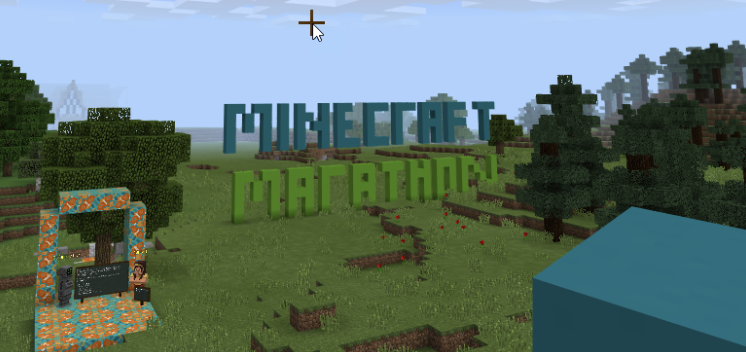
Suggested Materials (in addition to M:EE): Microsoft Word or Pencil and Paper for math strategies
https://education.minecraft.net/en-us/lessons/minecraft-marathon-3
In this video students will express, model, and explain the equivalence between fractions with denominators of 10 and 100. Students will explore and create with decimals and fractions with denominators of 10 and 100 to help Jack design a variety of outdoor living spaces! After this lesson students can continue on in the Minecraft Marathon world to the other challenges through the teleporter to demonstrate their learning of fraction and decimal concepts taught throughout this unit.
Understand decimal notation for fractions and compare decimal fractions Use decimal notation to represent fractions Express, model and explain the equivalence between fractions with denominators of 10 and 100 Use equivalent fractions to add two fractions with denominators of 10 and 100 Represent tenths and hundredths with models, making connections between fractions and decimals.
This is an exploration/investigation lesson where students do not receive direct instruction from the teacher but explore the concept by solving tasks that are scaffolded to help understand the concept. There is a rubric at the end of the lesson that can be used as an exit ticket. Welcome to the Minecraft Marathon! Here is your objective:
1. Complete 3 Minecraft related challenges using your knowledge of fractions and decimals. The rollercoaster challenge is optional.
2. Create and build your own Minecraft challenge. Document your steps using the in-game camera and portfolio.
3. Submit your final portfolio with pictures of each of the challenges.
You can find the student activities and rubric in the RESOURCE section for Activity 5.
Or, Find it here directly: http://bit.ly/MEEmarathon
These expectations are included in the student document. Mathematical Concepts: 4 - Explanation shows a complete understanding of the mathematical concepts used to solve the problem. 3 - Explanation shows substantial understanding of the mathematical concepts used to solve the problem. 2 - Explanation shows some understanding of the mathematical concepts needed to solve the problem. 1 - Explanation shows a very limited understanding of the underlying concepts needed to solve the problems OR is not written. Mathematical Errors: 4 - 90-100% of the solutions have no mathematical errors. 3 - Almost all (85-89%) of the solutions have not mathematical errors. 2 - Most (75-84%) of the solutions have no mathematical errors. 1 - More than 75% of the solutions have mathematical errors. On Your Own Problem: 4 - Includes all components expected of the problem and built a model to accurately represent the problem. 3 - Includes most of the components expected and built a model to represent the problem. 2 - Includes some of the components expected and/or built a model that somewhat represents the problem. 1 - Problem is not understandable and/or the model does not represent the problem. Minecraft Models: 4 - Models are clear and greatly show the learner's understanding of the concept. 3 - Models are clear and show the learner's understanding of the concept. 2 - Models somewhat show the learner's understanding of the concept. 1 - Models do not accurately show the learner's understanding of the concept. Working with Others: 4 - Student was an engaged partner, listening to suggestions of others, and working cooperatively throughout the lesson. 3 - Student was an engaged partner but had trouble listening to others and/or working cooperatively. 2 - Student cooperated with others, but needed prompting to stay on task. 1 - Student did not work effectively with others.
Direct Link: https://education.minecraft.net/lessonsworldfile/9697130410768699-Minecraft%20Marathon.mcworld
Activity 5
Real-world Fraction and Decimal Problems: Provide students with real-world scenarios involving fractions and decimals, such as recipes, budgeting, or measurements. Have students solve these problems independently or in groups, encouraging them to apply the concepts learned in Minecraft to practical situations.
Fraction and Decimal Manipulatives: Use physical manipulatives like fraction bars, decimal grids, or fraction circles to reinforce understanding. Students can manipulate these tools to represent fractions and decimals visually, helping them develop a concrete understanding of the concepts.
Math Games: Engage students in interactive math games that focus on fractions and decimals. Games like fraction bingo, decimal card games, or online math games can make learning more enjoyable while reinforcing key skills.
Fraction and Decimal Art Projects: Incorporate art into math by having students create visual representations of fractions and decimals. For example, students can design fraction or decimal murals, where each section represents a different fraction or decimal value.
Fraction and Decimal Challenges: Present students with challenging math problems or puzzles that require them to apply their knowledge of fractions and decimals creatively. Encourage students to think critically and problem-solve as they work through these challenges.
Fraction and Decimal Writing Prompts: Integrate writing into math by providing students with writing prompts related to fractions and decimals. For example, students could write explanations of how to convert between fractions and decimals, or they could create stories involving fractions and decimals as characters.
Mathematical Investigations: Assign open-ended mathematical investigations that allow students to explore fractions and decimals in depth. For example, students could investigate patterns in recurring decimals, explore relationships between equivalent fractions, or analyze real-world data involving fractions and decimals.
Peer Teaching: Encourage students to become peer teachers by having them explain concepts related to fractions and decimals to their classmates. This not only reinforces their own understanding but also helps solidify learning through teaching others.
Math Journals: Have students keep math journals where they reflect on their learning experiences with fractions and decimals. Students can write about challenges they faced, strategies they used to overcome them, and connections they made between different concepts.
Mathematical Literature: Integrate children's literature with math by reading books that feature fractions and decimals as themes. After reading, engage students in discussions or activities that relate the mathematical concepts in the book to their own understanding of fractions and decimals.
Understanding of Fractions as Division:
4: Student demonstrates a clear understanding of how fractions represent division and applies it accurately in Minecraft.
3: Student shows a good understanding of fractions as division but may make minor errors in application.
2: Student demonstrates partial understanding of fractions as division but struggles with accurate application.
1: Student has difficulty understanding fractions as division and struggles to apply the concept accurately.
Problem-Solving Skills:
4: Student effectively solves the crafting fraction word problems and extends their thinking with the performance task.
3: Student demonstrates good problem-solving skills and attempts the performance task with moderate success.
2: Student struggles with some of the crafting fraction word problems and may require assistance with the performance task.
1: Student has difficulty solving the crafting fraction word problems and does not attempt the performance task effectively.
Mathematical Communication:
4: Student clearly communicates their mathematical thinking and strategies used to solve the problems.
3: Student communicates mathematical ideas adequately but may lack clarity in explanation.
2: Student's mathematical communication is limited, making it difficult to understand their thinking.
1: Student struggles to communicate mathematical ideas effectively, leading to confusion.
Understanding of Fractions on a Number Line:
4: Student demonstrates a thorough understanding of representing fractions on a number line and accurately codes the agent to create and order unit fractions.
3: Student shows a good understanding of fractions on a number line but may encounter some challenges with coding the agent.
2: Student demonstrates partial understanding of fractions on a number line and struggles with coding the agent effectively.
1: Student has difficulty understanding fractions on a number line and struggles to code the agent appropriately.
Coding Skills:
4: Student effectively utilizes coding principles to program the agent and create and order unit fractions on the number line.
3: Student demonstrates good coding skills and successfully programs the agent, with minor errors.
2: Student shows some proficiency in coding but encounters significant challenges in programming the agent accurately.
1: Student has limited coding skills and struggles to program the agent effectively.
Mathematical Creativity:
4: Student creatively explores and represents fractions in three-dimensional space, showcasing innovative approaches.
3: Student demonstrates some creativity in representing fractions but may lack depth or originality in their designs.
2: Student's representation of fractions lacks creativity and originality, relying on basic approaches.
1: Student demonstrates little to no creativity in representing fractions in three-dimensional space.
Understanding of Fractions and Decimals:
4: Student demonstrates a deep understanding of the relationship between fractions and decimals and effectively applies this knowledge to design a fraction garden.
3: Student shows a good understanding of the relationship between fractions and decimals but may make minor errors in their application.
2: Student demonstrates partial understanding of the relationship between fractions and decimals and struggles with accurate application in the garden design.
1: Student has difficulty understanding the relationship between fractions and decimals, leading to inaccuracies in the garden design.
Creative Design and Representation:
4: Student creatively designs a fraction garden that effectively showcases their understanding of fractions and decimals, using diverse elements from Minecraft.
3: Student demonstrates creativity in designing the fraction garden but may rely on standard designs or lack variety in their choices.
2: Student's garden design lacks creativity and originality, with limited use of Minecraft elements to represent fractions and decimals.
1: Student's fraction garden design is simplistic and lacks creativity, with minimal representation of fractions and decimals.
Mathematical Precision:
4: Student accurately represents fractions and decimals in the garden design, with precise placement and clear labeling of elements.
3: Student's representation of fractions and decimals in the garden design is mostly accurate but may contain minor inconsistencies or labeling errors.
2: Student's garden design contains several inaccuracies or inconsistencies in the representation of fractions and decimals.
1: Student struggles to accurately represent fractions and decimals in the garden design, leading to confusion or misunderstanding.
Application of Addition and Subtraction with Decimals:
4: Student demonstrates a thorough understanding of addition and subtraction with decimals and applies this knowledge effectively in designing the fraction farm.
3: Student shows a good understanding of addition and subtraction with decimals but may encounter minor errors in their application.
2: Student demonstrates partial understanding of addition and subtraction with decimals and struggles with accurate application in the fraction farm design.
1: Student has difficulty understanding addition and subtraction with decimals, leading to inaccuracies in the fraction farm design.
Problem-Solving Skills:
4: Student effectively solves the fraction warm-up problems and applies problem-solving strategies to design the fraction farm with Old MacDonald.
3: Student demonstrates good problem-solving skills and attempts to apply strategies to design the fraction farm, with moderate success.
2: Student struggles with some of the fraction warm-up problems and may require assistance in applying problem-solving strategies to design the fraction farm.
1: Student has difficulty solving the fraction warm-up problems and does not effectively apply problem-solving strategies to design the fraction farm.
Mathematical Communication:
4: Student clearly communicates their mathematical thinking and strategies used in solving the fraction warm-up problems and designing the fraction farm.
3: Student communicates mathematical ideas adequately but may lack clarity in explanation or organization.
2: Student's mathematical communication is limited, making it difficult to understand their thinking or strategies.
1: Student struggles to communicate mathematical ideas effectively, leading to confusion or misunderstanding.
Understanding of Equivalent Fractions and Decimals:
4: Student demonstrates a deep understanding of equivalent fractions and decimals and effectively expresses, models, and explains their equivalence in Minecraft.
3: Student shows a good understanding of equivalent fractions and decimals but may encounter minor errors in expressing their equivalence.
2: Student demonstrates partial understanding of equivalent fractions and decimals and struggles to express their equivalence accurately in Minecraft.
1: Student has difficulty understanding equivalent fractions and decimals, leading to inaccuracies in their expression.
Mathematical Modelling and Expression:
4: Student effectively models and expresses equivalent fractions and decimals in Minecraft, using a variety of representations and strategies.
3: Student demonstrates adequate modeling and expression of equivalent fractions and decimals but may rely on standard representations or strategies.
2: Student's modeling and expression of equivalent fractions and decimals lack depth or variety, with limited use of representations or strategies.
1: Student struggles to model and express equivalent fractions and decimals effectively, relying on basic representations or strategies.
Mathematical Reflection:
4: Student reflects on their learning of equivalent fractions and decimals in Minecraft, identifying connections and insights gained from the experience.
3: Student demonstrates some reflection on their learning of equivalent fractions and decimals but may lack depth or specificity in their insights.
2: Student's reflection on their learning is limited, with minimal identification of connections or insights gained from the experience.
1: Student struggles to reflect on their learning of equivalent fractions and decimals effectively, with little to no identification of connections or insights.
ISTE Standard: Computational Thinker (4b) - Students break problems into component parts, extract key information, and develop descriptive models to understand complex systems or facilitate problem-solving.
ISTE Standard: Creative Communicator (6a) - Students choose the appropriate platforms and tools for creating and publishing authentic work, including Minecraft, to represent mathematical concepts effectively.
ISTE Standard: Computational Thinker (5a) - Students formulate problem definitions suited for technology-assisted methods such as Minecraft, to explore and model complex systems and issues.
ISTE Standard: Computational Thinker (5b) - Students collect data or identify relevant data sets, using digital tools, to answer questions or solve problems, aligning with the coding aspects of this activity.
ISTE Standard: Knowledge Constructor (3a) - Students curate information from digital resources, including Minecraft, to construct knowledge and solve problems related to fractions and decimals.
ISTE Standard: Creative Communicator (6a) - Students design and develop digital artifacts, such as the fraction garden in Minecraft, to express mathematical understanding and creativity.
ISTE Standard: Computational Thinker (5a) - Students formulate problem definitions suited for technology-assisted methods, like Minecraft, to explore and model mathematical concepts related to adding and subtracting decimals.
ISTE Standard: Global Collaborator (7a) - Students use digital tools, like Minecraft, to connect with learners from various cultural backgrounds, sharing and exchanging ideas about fraction and decimal operations.
ISTE Standard: Computational Thinker (5a) - Students develop precise step-by-step instructions for coding or creating Minecraft structures to demonstrate understanding of equivalent fractions.
ISTE Standard: Innovative Designer (4a) - Students use Minecraft as a platform to design innovative solutions to complex problems related to equivalent fractions, showing creativity and ingenuity in their designs.
CCSS.Math.Content.5.NF.B.3 - Interpret a fraction as division of the numerator by the denominator (a/b = a ÷ b). Solve word problems involving division of whole numbers leading to answers in the form of fractions or mixed numbers.
CCSS.Math.Content.4.NF.B.3 - Understand a fraction as a point on the number line. Represent fractions on a number line diagram.
CCSS.Math.Content.4.NF.C.6 - Use decimal notation for fractions with denominators 10 or 100.
CCSS.Math.Content.4.NF.C.5 - Express a fraction with denominator 10 as an equivalent fraction with denominator 100.
CCSS.Math.Content.5.NBT.A.3 - Read, write, and compare decimals to thousandths.
CCSS.Math.Content.5.NBT.B.7 - Add, subtract, multiply, and divide decimals to hundredths, using concrete models or drawings and strategies based on place value, properties of operations, and/or the relationship between addition and subtraction; relate the strategy to a written method and explain the reasoning used.
CCSS.Math.Content.4.NF.A.1 - Explain why a fraction a/b is equivalent to a fraction (n × a)/(n × b) by using visual fraction models, with attention to how the number and size of the parts differ even though the two fractions themselves are the same size. Use this principle to recognize and generate equivalent fractions.
Crafting with Fractions (Fractions as Division):
Grade 6: Number Sense and Numeration (NS1.3) - Represent and describe relationships between fractions and decimals to thousandths.
3D Fractions (Fractions on a Number Line):
Grade 4: Number Sense and Numeration (NS2.3) - Identify benchmarks for halves, fourths, and tenths on a number line, and use them to estimate, compare, and order fractions.
Fraction Garden (Relating Fractions & Decimals):
Grade 5: Number Sense and Numeration (NS3.3) - Represent, compare, and order fractions and decimals to hundredths, including mixed numbers and improper fractions.
Fraction Farm (Adding & Subtracting Decimals):
Grade 6: Number Sense and Numeration (NS4.3) - Demonstrate an understanding of addition and subtraction of decimals to thousandths.
Minecraft Marathon (Equivalent Fractions):
Grade 5: Number Sense and Numeration (NS5.2) - Represent equivalent fractions, using concrete materials, drawings, and symbols (e.g., 1/2 = 2/4 = 0.5).
Crafting with Fractions (Fractions as Division):
Grade 4-6: Number (Number Sense and Numeration) - Demonstrate an understanding of division of fractions and decimals.
3D Fractions (Fractions on a Number Line):
Grade 4-6: Number (Number Sense and Numeration) - Represent fractions and decimals on a number line.
Fraction Garden (Relating Fractions & Decimals):
Grade 4-6: Number (Number Sense and Numeration) - Relate fractions to decimals and vice versa.
Fraction Farm (Adding & Subtracting Decimals):
Grade 4-6: Number (Number Sense and Numeration) - Add and subtract decimals.
Minecraft Marathon (Equivalent Fractions):
Grade 4-6: Number (Number Sense and Numeration) - Understand equivalent fractions.
Crafting with Fractions (Fractions as Division):
Grade 4-6: Number (Number Operations) - Understand division of fractions and decimals.
3D Fractions (Fractions on a Number Line):
Grade 4-6: Number (Number Operations) - Represent fractions and decimals on a number line.
Fraction Garden (Relating Fractions & Decimals):
Grade 4-6: Number (Number Operations) - Relate fractions to decimals and vice versa.
Fraction Farm (Adding & Subtracting Decimals):
Grade 4-6: Number (Number Operations) - Add and subtract decimals.
Minecraft Marathon (Equivalent Fractions):
Grade 4-6: Number (Number Operations) - Understand equivalent fractions.
Crafting with Fractions (Fractions as Division):
Grade 4-6: Mathematics (Arithmetic) - Understand division of fractions and decimals.
3D Fractions (Fractions on a Number Line):
Grade 4-6: Mathematics (Arithmetic) - Represent fractions and decimals on a number line.
Fraction Garden (Relating Fractions & Decimals):
Grade 4-6: Mathematics (Arithmetic) - Relate fractions to decimals and vice versa.
Fraction Farm (Adding & Subtracting Decimals):
Grade 4-6: Mathematics (Arithmetic) - Add and subtract decimals.
Minecraft Marathon (Equivalent Fractions):
Grade 4-6: Mathematics (Arithmetic) - Understand equivalent fractions.
Crafting with Fractions (Fractions as Division):
Grade 4-6: Number (Number Operations) - Understand division of fractions and decimals.
3D Fractions (Fractions on a Number Line):
Grade 4-6: Number (Number Operations) - Represent fractions and decimals on a number line.
Fraction Garden (Relating Fractions & Decimals):
Grade 4-6: Number (Number Operations) - Relate fractions to decimals and vice versa.
Fraction Farm (Adding & Subtracting Decimals):
Grade 4-6: Number (Number Operations) - Add and subtract decimals.
Minecraft Marathon (Equivalent Fractions):
Grade 4-6: Number (Number Operations) - Understand equivalent fractions.
Crafting with Fractions (Fractions as Division):
Grade 4-6: Number (Number Sense and Numeration) - Demonstrate an understanding of division of fractions and decimals.
3D Fractions (Fractions on a Number Line):
Grade 4-6: Number (Number Sense and Numeration) - Represent fractions and decimals on a number line.
Fraction Garden (Relating Fractions & Decimals):
Grade 4-6: Number (Number Sense and Numeration) - Relate fractions to decimals and vice versa.
Fraction Farm (Adding & Subtracting Decimals):
Grade 4-6: Number (Number Sense and Numeration) - Add and subtract decimals.
Minecraft Marathon (Equivalent Fractions):
Grade 4-6: Number (Number Sense and Numeration) - Understand equivalent fractions.