
Loading…
Loading…
In this lesson, students will learn how to integrate Minecraft Education activities to supplement your current Human Body unit.
This Logics Academy Lesson will help you integrate Minecraft: Education Edition activities to supplement your current Human Body unit. Students will specifically learn about the various Human Body systems, how plant and animal cells are similar and different and how everything is connected together in order to help us survive. Our team of Logics Academy educators will help guide you and your students through each of the activities, providing options for student reflection and sharing, leaving room for you to determine your own assessment techniques. Although this set of activities is designed for Grade 5-8 classes, it can be adapted for other grade levels by modifying the level of difficulty of the tasks.
1) The Amazing Human Body
2) The Human Eye
3) The Circulatory System
4) The Heart Chamber
5) Cells
Plan to begin your Human Body unit the way you always have and then when the timing is right for you, add a dash of this Logics Academy Lesson to your lesson plan and learning activities. You may choose to sprinkle the activities throughout your Human Body unit or save them all until the end. That’s totally up to you, and the beauty of this lesson collection.
It is recommended, however, that the Human Body activities inside this Lesson are completed in order as they build upon each other in both skill and understanding, but if you don’t have time for all 5, no problem! Perhaps consider using the later activities as extensions, even after your Human Body unit has been completed.
Suggested Materials (in addition to M:EE): none
In this video, students will meet the team of co-teachers that will be working with them to explore the Human Body with Minecraft Education. Students will learn more about each of the 5 activities that will be covered in this unit.
Human Body Crate Lesson 1
Suggested Materials (in addition to M:EE): Microsoft Word or Pencil and Paper for design thinking and research
https://education.minecraft.net/en-us/lessons/human-body-organs
https://human.biodigital.com/login?returnUrl=/explore
https://www.britannica.com/science/human-body
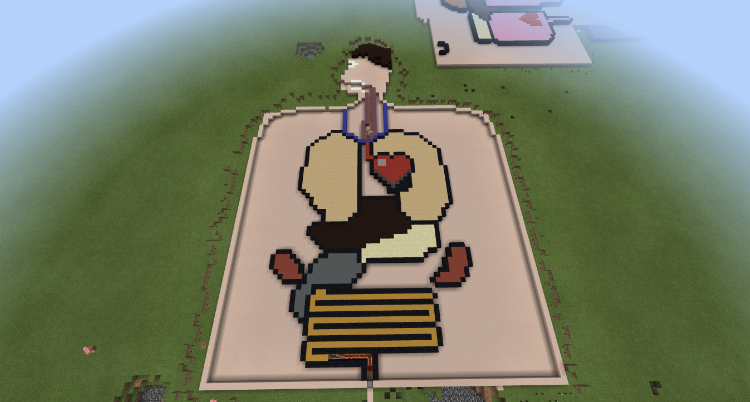
This lesson may take a little longer as students will have to do some research beforehand and build time may vary depending on students skill levels with Minecraft: Education Edition. In this video, students will start their investigation about the human body and building in Minecraft: Education Edition. Using the Blocks of Grass world and their own research on the Human Body, students will be able to research, design and then build a working system of the human body. In this lesson, students will specifically learn how to construct the human body, what systems are in the human body and how to add this information into their build through NPCs, blackboards and signs. Students are encouraged to use the links above to research the different systems of the human body in order to record information and make their own human body in Minecraft: Education Edition. Note: This is the beginning of the build and will take the whole unit to complete. After each lesson, students will come back to this build to add to their human body.
Learns the organ names and functions
Learns the organ shapes and colors
Finds out the major systems on human body
Creates visual representation of human body and organ systems
Increases communication and collaboration skills
It will be good to start with a little brainstorming about the human body and organs to find out your students level of knowledge. After that, have students do some online research.
https://human.biodigital.com/index.html
When they are finished with doing their research it is time to use the website above to make some comprehensive analysis about the human body and organs.
This website also provides nice videos and 3 models about the human body: http://teachmeanatomy.info/3d-model/
Students first need to create the outer surface of the human body. After that they will build each organ collaboratively and use "signs" or "NPCs" to tell each organ's function. Using an "NPC" is preferred because by using them, students can provide outside links to create meaningful connections between websites and Minecraft objects. Also when they are building the heart they can use rails to represent the vessels carrying blood. It is important for them to visualize the circulatory system.
Students can use the camera tool in Minecraft to create a digital portfolio of their work and create Office Mixes that explains details. Also they can use free web site builders to demonstrate their work.
Human Body Crate Lesson 1
Suggested Materials (in addition to M:EE): Microsoft Word or Pencil and Paper for design thinking and research
https://education.minecraft.net/en-us/worlds/the-human-eye
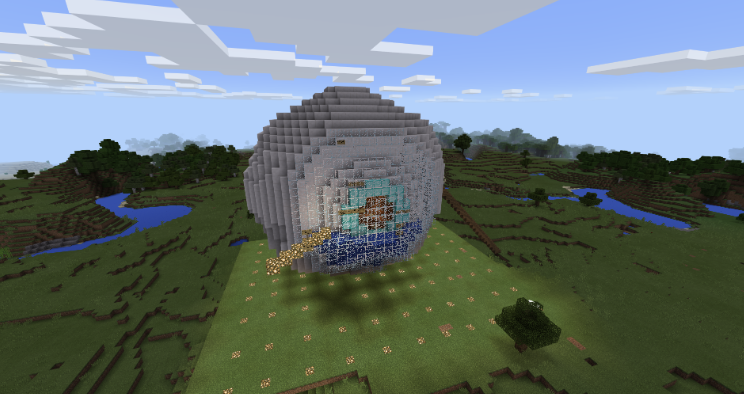
Understanding various systems in the human body and how they are connected to one another is an important concept to learn. In this video, students will be learning about the human eye, which is part of the nervous system and how it works within the human body. Students will have the opportunity to use Minecraft Education Edition to walk inside of an eyeball and see how it works. Students will investigate each part of the eye and make notes on what they observe and find, using the camera and book and quill. Students will also learn what blocks are helpful for their own design. Once they are done they can add their own Human eye to the human body project file they started in lesson 1.
Can you see the possibilities?
To cover content standards such as "Explain how the human eye sees objects and colors in terms of wavelengths" educators have students create models of the human eye. Not only can you use this world as inspiration, but think about how groups of students can create the digestive system or other parts or organs of the human body to bring biology to life.
Direct Link: http://bit.ly/meeeye
Human Body Crate Lesson 2
Suggested Materials (in addition to M:EE): Microsoft Word or Pencil and Paper for design thinking
https://education.minecraft.net/en-us/lessons/circulatory-system
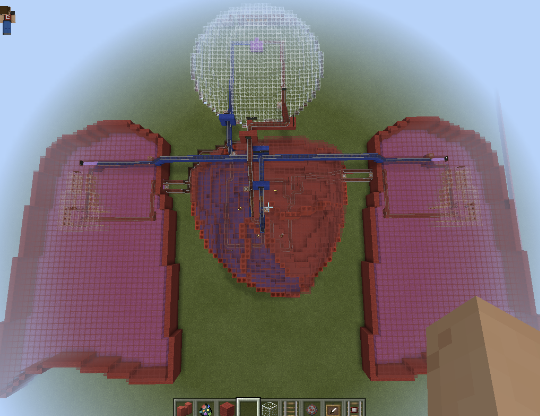
In this video, students will be learning about the different parts of the circulatory system. When they first enter the world students will see a birds-eye view of the circulatory system and be able to explore the vast network inside of our body. Because the world is quite large and there is a lot of information, it may benefit students if they are working in pairs but they can work on their own. Students will investigate each part of the circulatory system (heart, lungs, and veins) and make notes on what they observe and find. Students will also learn how to use NPCs to teleport people around their projects. Once they are done exploring the world students can add their information to their human body project file, incorporating all that they have been learning about.
Benchmark SC.5.4.1 Describe the structures of the human body and how they work together to sustain life (Hawaii State Standard)
What is the purpose of the circulatory system? What are the major structures of the circulatory system? How do those structures play a role in the functioning of the circulatory system?
1) Students should divide into teams. Within each team, individual students should be assigned with learning about one particular part of the circulatory system; for example, the Right Half of the Heart, the Left Half of the Heart, the Alveoli, or the Capillary Exchange. 2) Students should be given a set amount of time to explore and research their particular part of the circulatory system. 3) Students should meet and share what they have individually learned. Students are then to collaborate together to produce a real-world product that can demonstrate their understanding, whether it be a poster, or a sculpture, or whatever else they can imagine. 4) Students then present their product to the class and their teacher. They must describe each part of their product, and how it participates in the circulatory system. All students must present. Students must make sure that they answer the guiding questions.
The constructed product of student teams should meet the following expectations: 1) The product and presentation answers the guiding questions. 2) The product and presentation clearly reflects the structures of the circulatory system. 3) The product and presentation clearly shows the flow of blood through the circulatory system. 4) The product is aesthetically pleasing. Teachers may design their own rubrics using these criteria and others.
Direct Link: https://education.minecraft.net/lessonsworldfile/8251379263113169-Circulatory%20System.mcworld
Human Body Crate Lesson 3
Suggested Materials (in addition to M:EE): Microsoft Word or Pencil and Paper for design thinking and research
https://education.minecraft.net/en-us/lessons/heart-chambers
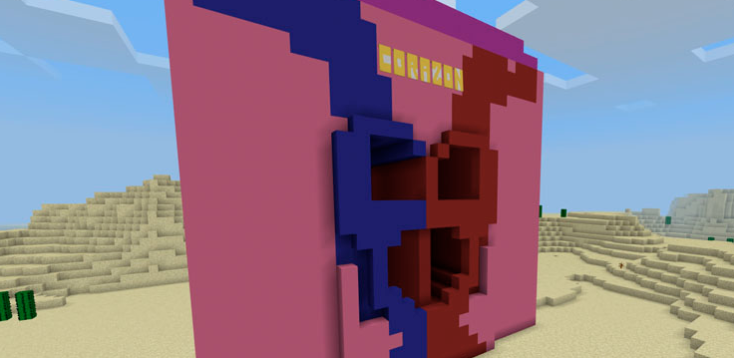
In this video, students will explore the heart by playing a game. In the game, students will travel through the heart answering questions. The heart has two different pathways. Students can start with one pathway and then when finished can go through the next one. In this lesson, they will also explore advanced functions of NPC players (adding videos, teleporting and giving items) to add a better experience in their human body world. Students will also be encouraged to discuss how the heart is connected to the circulatory system and how it relates to the other components of the human body. As well as, adding all they have learned to their own Human Body project file.
Identify the different parts of the heart*Download World File Below*
Students can play a game in which they are going to travel through the heart, answering some question. There are two paths in the heart, one for each side of it. At the end of it, students can go back to the start or try the other path, to review all the heart parts.
Students can visit the different heart parts. Students can review their knowledge about heart parts in a race.
Students should answer the different question to keep going through the heart chambers. They can play the game individually or with a partner. At the end of the review they can try to build their one heart with different questions, so other classmates can play it and keep learning.
Direct Link: https://education.minecraft.net/lessonsworldfile/08394216392928411-Heart.mcworld
Human body Crate Lesson 4
Suggested Materials (in addition to M:EE): Microsoft Word or Pencil and Paper for math strategies
https://education.minecraft.net/en-us/lessons/eukaryotic-cells
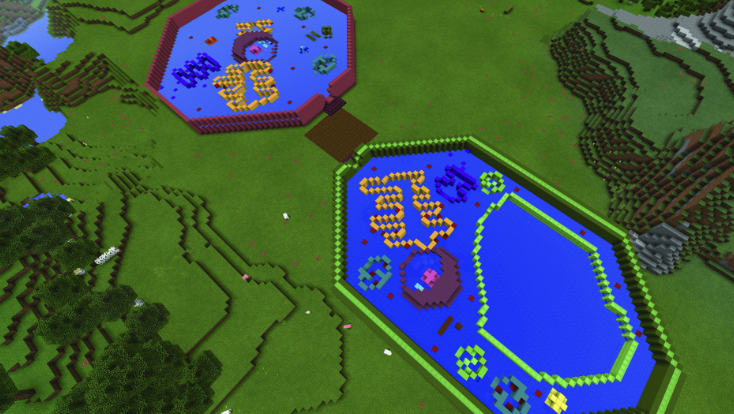
In this final lesson, students will explore the microscopic world of cells. Students will explore the cells and try to identify the different organelles. Then build your own cells. Working through this world will motivate the students to know more about the cells by exploring them and studying them. Finally, students will be able to create their own cells using the information they have learned in this world.
Identify cell organelles
Differentiate between animal and plant cells
Explore the cells and try to identify the different organelles. Then build your own cells. Motivate the students to know more about the cells exploring them and after study them, create a new one.
Take a boat and explore the cells.
Take photos of each organelle.
Research and identify the organelles, writing a few lines about it in the portfolio.
Create your own cell.
Students should take pictures of each one of the organelles and try to identify it, writing in the portfolio their characteristics. After that, the teacher can correct the portfolios and make groups so each group build their own cell. When they finish they can present the cell to their classmate or make a game so the other groups have to guess what cell they build.
Direct Link: https://education.minecraft.net/lessonsworldfile/9309292032893870-Eukaryotic%20cells.mcworld
Human Body Crate Lesson 5
Interactive Anatomy Models: Organize a visit to a local science museum or utilize virtual resources to explore interactive anatomy models. Students can engage with life-sized models of the human body, dissect virtual specimens, and interact with hands-on exhibits to reinforce their understanding of human anatomy and physiology.
Dissection Labs: Coordinate a dissection lab session where students can dissect real or simulated specimens, such as pig hearts or cow eyes. This hands-on experience allows students to observe the structures of organs firsthand, reinforcing their knowledge of the circulatory system, eye anatomy, and cellular structures.
Health Fair Projects: Assign students to research and create health fair projects focusing on different aspects of human health and wellness. Topics can include nutrition, exercise, disease prevention, and mental health. Students can present their projects to the class or school community, fostering communication skills and reinforcing the importance of maintaining a healthy lifestyle.
Medical Career Exploration: Invite guest speakers or organize field trips to medical facilities to introduce students to various careers in healthcare. Professionals such as doctors, nurses, surgeons, and medical researchers can share their experiences and expertise, inspiring students to pursue careers in science and medicine.
STEM Challenges: Design STEM challenges related to human body systems, such as building a model circulatory system using household materials or designing a prosthetic limb. These hands-on challenges encourage critical thinking, problem-solving, and creativity while reinforcing concepts learned in the Human Body unit.
Understanding of Human Body Systems:
4: Demonstrates a deep understanding of human body systems, accurately representing their structure and function.
3: Shows a good understanding of human body systems, with mostly accurate representation of structure and function.
2: Shows some understanding of human body systems, with basic representation of structure and function.
1: Demonstrates limited understanding of human body systems, with inaccurate or incomplete representation.
Creativity and Design:
4: Creatively designs and constructs a detailed and accurate model of the human body, incorporating various systems and organs effectively.
3: Designs and constructs a model of the human body with some creativity and attention to detail, representing systems and organs adequately.
2: Designs and constructs a basic model of the human body, with limited creativity and detail in representing systems and organs.
1: Constructs a rudimentary model of the human body, lacking creativity and detail in representing systems and organs.
Understanding of Human Eye Anatomy:
4: Demonstrates a thorough understanding of human eye anatomy, accurately identifying and describing its parts and functions.
3: Shows a good understanding of human eye anatomy, identifying most parts and describing their functions adequately.
2: Shows some understanding of human eye anatomy, identifying basic parts with limited description of functions.
1: Demonstrates limited understanding of human eye anatomy, with inaccurate identification and minimal description of functions.
Observation and Analysis:
4: Effectively observes and analyzes the structure and function of the human eye in Minecraft, documenting findings accurately and insightfully.
3: Observes and analyzes the human eye structure and function adequately in Minecraft, documenting findings with some accuracy and insight.
2: Demonstrates basic observation and analysis of the human eye in Minecraft, with limited documentation of findings and insights.
1: Shows limited ability to observe and analyze the human eye in Minecraft, with minimal documentation of findings and insights.
Understanding of Circulatory System Components:
4: Demonstrates a comprehensive understanding of the circulatory system components, accurately identifying and explaining the roles of the heart, lungs, and veins.
3: Shows a solid understanding of the circulatory system components, identifying and explaining the roles of most components with clarity.
2: Shows some understanding of the circulatory system components, identifying basic components with limited explanation of their roles.
1: Demonstrates limited understanding of the circulatory system components, with inaccurate identification and minimal explanation of roles.
Exploration and Collaboration:
4: Actively explores the Minecraft world of the circulatory system, collaborating effectively with peers to investigate and document findings thoroughly.
3: Engages in exploration of the circulatory system world, collaborating with peers to investigate and document findings adequately.
2: Participates in exploration of the circulatory system world, with limited collaboration and documentation of findings.
1: Shows minimal engagement in exploration of the circulatory system world, lacking collaboration and documentation of findings.
Knowledge of Heart Structure and Function:
4: Demonstrates a deep understanding of heart structure and function, accurately describing its chambers and pathways with detailed explanations.
3: Shows a good understanding of heart structure and function, describing chambers and pathways with clarity and accuracy.
2: Demonstrates some understanding of heart structure and function, providing basic descriptions of chambers and pathways.
1: Demonstrates limited understanding of heart structure and function, with inaccurate or incomplete descriptions.
Gameplay and Integration:
4: Engages effectively with the Minecraft game to explore the heart chambers, integrating knowledge of the circulatory system seamlessly into gameplay and discussions.
3: Engages adequately with the Minecraft game to explore the heart chambers, integrating some knowledge of the circulatory system into gameplay and discussions.
2: Participates in Minecraft gameplay to explore the heart chambers, with limited integration of circulatory system knowledge into gameplay and discussions.
1: Shows minimal engagement in Minecraft gameplay to explore the heart chambers, lacking integration of circulatory system knowledge.
Understanding of Cell Structure:
4: Demonstrates a comprehensive understanding of cell structure, accurately identifying and describing organelles and their functions with detailed explanations.
3: Shows a solid understanding of cell structure, identifying and describing organelles and their functions with clarity and accuracy.
2: Demonstrates some understanding of cell structure, providing basic identification and description of organelles and their functions.
1: Demonstrates limited understanding of cell structure, with inaccurate or incomplete identification and description.
Building and Inquiry:
4: Actively engages in building and exploring cell structures in Minecraft, posing insightful inquiries and hypotheses about cell functions and interactions.
3: Engages in building and exploring cell structures in Minecraft, asking relevant questions and forming hypotheses about cell functions and interactions.
2: Participates in building and exploring cell structures in Minecraft, with limited questioning and hypothesis formation about cell functions and interactions.
1: Shows minimal engagement in building and exploring cell structures in Minecraft, lacking questioning and hypothesis formation about cell functions and interactions.
ISTE Standard 3: Knowledge Constructor: Students will use digital tools to gather, evaluate, and synthesize information about the human body systems, demonstrating their understanding through the construction of a working model in Minecraft.
ISTE Standard 4: Innovative Designer: Students will use technology to create, innovate, and problem-solve as they design and build a virtual human body, incorporating accurate anatomical details and functional systems.
ISTE Standard 6: Creative Communicator: Students will use digital tools to convey information about the structure and function of the human eye, including observations and findings, through documentation within Minecraft Education Edition and other media.
ISTE Standard 7: Global Collaborator: Students may collaborate with peers to discuss their findings and observations about the human eye, sharing insights and learning experiences using digital communication tools.
ISTE Standard 3: Knowledge Constructor: Students will research and explore the circulatory system in Minecraft, gathering information, making observations, and documenting their findings to deepen their understanding of how the heart, lungs, and veins function.
ISTE Standard 5: Computational Thinker: Students will use computational thinking skills to navigate and explore the circulatory system world in Minecraft, analyzing complex systems and identifying relationships between different components.
ISTE Standard 1: Empowered Learner: Students will take ownership of their learning as they explore the heart chamber in Minecraft, actively engaging in a game-based learning experience to deepen their understanding of how the heart functions.
ISTE Standard 2: Digital Citizen: Students will demonstrate responsible and ethical behavior as they interact with NPCs and utilize advanced functions within Minecraft Education Edition to enhance their learning experience.
ISTE Standard 4: Innovative Designer: Students will apply their understanding of eukaryotic cells to design and create their own cells within Minecraft Education Edition, using digital tools to represent organelles and cellular structures accurately.
ISTE Standard 6: Creative Communicator: Students will communicate their understanding of cellular biology by sharing their virtual cell creations with peers, explaining the functions of different organelles and how they contribute to cellular processes.
NGSS Standard: MS-LS1-3. Use argument supported by evidence for how the body is a system of interacting subsystems composed of groups of cells.
NGSS Standard: MS-LS1-8. Gather and synthesize information that sensory receptors respond to stimuli by sending messages to the brain for immediate behavior or storage as memories.
NGSS Standard: MS-LS1-8. Gather and synthesize information that sensory receptors respond to stimuli by sending messages to the brain for immediate behavior or storage as memories.
NGSS Standard: MS-LS1-1. Conduct an investigation to provide evidence that living things are made of cells, either one cell or many different numbers and types of cells.
NGSS Standard: MS-LS1-3. Use argument supported by evidence for how the body is a system of interacting subsystems composed of groups of cells.
NGSS Standard: MS-LS1-8. Gather and synthesize information that sensory receptors respond to stimuli by sending messages to the brain for immediate behavior or storage as memories.
NGSS Standard: MS-LS1-3. Use argument supported by evidence for how the body is a system of interacting subsystems composed of groups of cells.
NGSS Standard: MS-LS1-8. Gather and synthesize information that sensory receptors respond to stimuli by sending messages to the brain for immediate behavior or storage as memories.
NGSS Standard: MS-LS1-1. Conduct an investigation to provide evidence that living things are made of cells, either one cell or many different numbers and types of cells.
NGSS Standard: MS-LS1-2. Develop and use a model to describe the function of a cell as a whole and ways parts of cells contribute to the function.
Strand: Understanding Life Systems
Specific Expectations: Analyze the role of cells in the human body and relate this to various systems, such as the circulatory and digestive systems.
Unit: Interactions within Ecosystems
Specific Outcomes: Describe the structure and function of the human body, including organs and systems like the circulatory system.
Big Idea: Multicellular organisms have organ systems that enable them to survive and interact within their environment.
Learning Standards: Describe the structure and function of the human body systems, including the circulatory and respiratory systems.
Competency: Investigate the human body and its functions, including the structure and function of various systems like the circulatory and respiratory systems.
Cluster: Diversity of Living Things
Learning Outcome: Describe the structures and functions of human body systems, including the circulatory and respiratory systems.
Strand: Diversity of Living Things
Specific Learning Outcome: Investigate the structure and function of human body systems, including the circulatory and respiratory systems.
Unit: Structures and Systems
Learning Objective: Explore the organization and function of human body systems, including the circulatory and respiratory systems.
Strand: Life Systems
Learning Expectation: Investigate the structure and function of human body systems, including the circulatory and respiratory systems.
Strand: Life Science
Specific Learning Outcome: Investigate the structure and function of human body systems, including the circulatory and respiratory systems, to understand how organisms survive and interact with their environment.
Strand: Life Science
Specific Learning Outcome: Explore the organization and function of human body systems, including the circulatory and respiratory systems, to understand how living organisms maintain homeostasis and respond to stimuli.
Strand: Life Science
Specific Learning Outcome: Analyze the interdependence of human body systems, including the circulatory and respiratory systems, to explain how organisms respond to internal and external factors and maintain health.