
Loading…
Loading…
Investigate the effects of outer space on seed germination with your class. Tomatosphere™ is a hands-on program that builds scientific inquiry and experimentation skills.
Canadian Grade 4 to Grade 10 Educators – Investigate the effects of outer space on seed germination with your class. Tomatosphere™ is a hands-on program that builds scientific inquiry and experimentation skills.
In the Tomatosphere™ Adventure Minecraft Education experience, students will explore three labs focusing on aspects of the plant cell and photosynthesis. Each of these labs are related to the overall mission of growing tomatoes beyond Earth. After receiving rewards in the form of Mars resources throughout the experience, students will travel to Mars aboard a spaceship and terraform the poles before creating a tomato greenhouse on the surface of the red planet.
Tomatosphere Adventure Fly by Promo Video (EN)
Tomatosphere Adventure Educator Walk through Video Updated (EN)
Rational: Each of the three initial labs introduce students to photosynthesis and how plant cells operate. This lab focuses on environmental conditions necessary for crop growth in Minecraft. This translates very well into the real world but the distinct differences should be noted and discussed with students.
The importance of light and liquid water, along with other factors, are explored in the first lab. Students plant tomato seeds in various situations to try and determine which factors impact plant growth. The first five gardens are prescribed and the last allows for an additional student-chosen variable.
Students will take the tomato seeds and the hoe from the scientists and after hoeing the earth they'll plant the seeds in each garden. Students will pause at each garden after planting to see how fast the plants grow and make notes of which conditions seem favourable. This is important information to know when they build their eventual greenhouse on Mars.
Hint: If a protective glass dome works just as well as open air does, on Mars the obvious choice would be to use the protective dome.
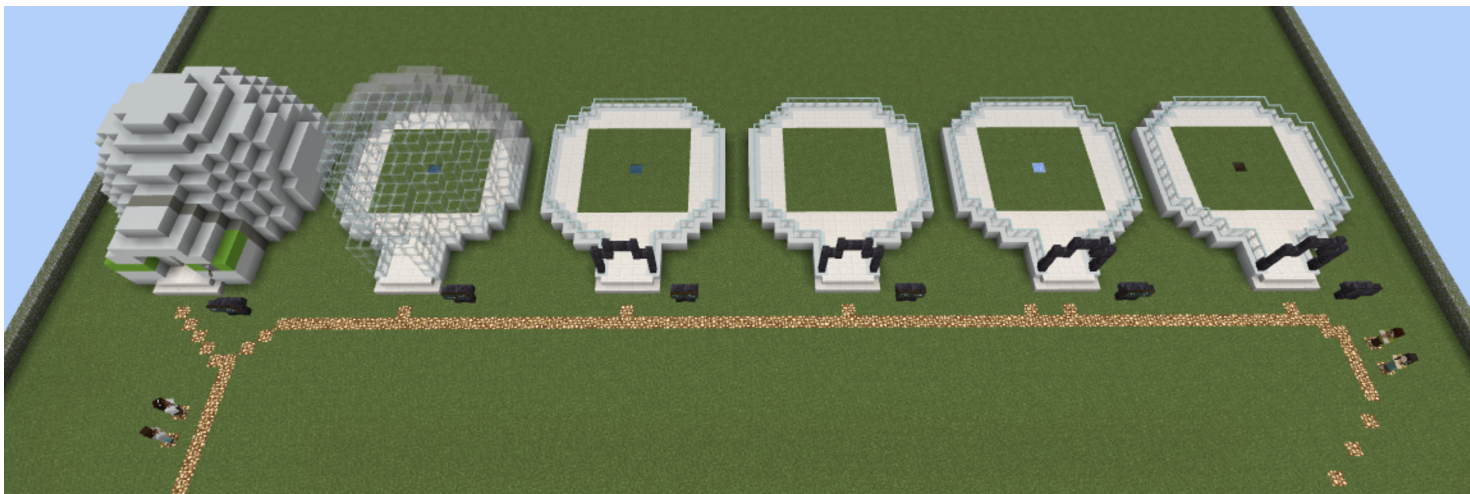
Garden 1: No light
Garden 2: Glass & Stained Class
Garden 3: Open Air
Garden 4: No Water
Garden 5: Ice (Frozen Water)
Garden 6: Student Choice (mud or other options)
Rewards in the form of Mars resources are awarded at the end of the first lab. Make sure students collect the rewards after each lab to be prepared for the mission on Mars later in the game. They will need to walk up to the Non-Player Characters (NPCs) and interact with them to claim the rewards.
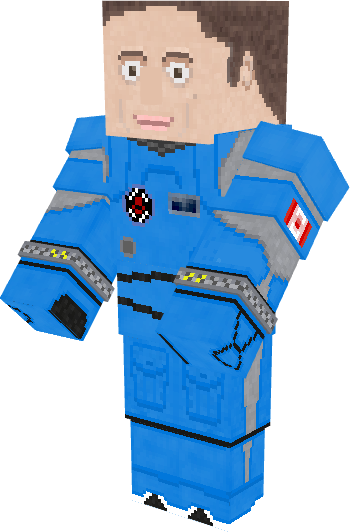
Bonus: Meet Canadian Astronaut Joshua Kutryk
Links Relevant to Lab 1:
Joshua Kutryk: This or that?: https://www.youtube.com/watch?v=ln0n-ovpUHQ
CSA astronaut Joshua Kutryk: a story of determination: https://www.youtube.com/watch?v=KVbBEDo9iiM
The next Canadian on the International Space Station: https://www.youtube.com/watch?v=zcqN2T0QxR0
The second photosynthesis lab asks students to build a simple machine that produces sugar when sunlight is present. Students will be asked to place certain Minecraft items in certain locations. When everything is placed in the clearly indicated locations, sugar should be expelled by the dropper when the player turns the world from night to day using the provided buttons.
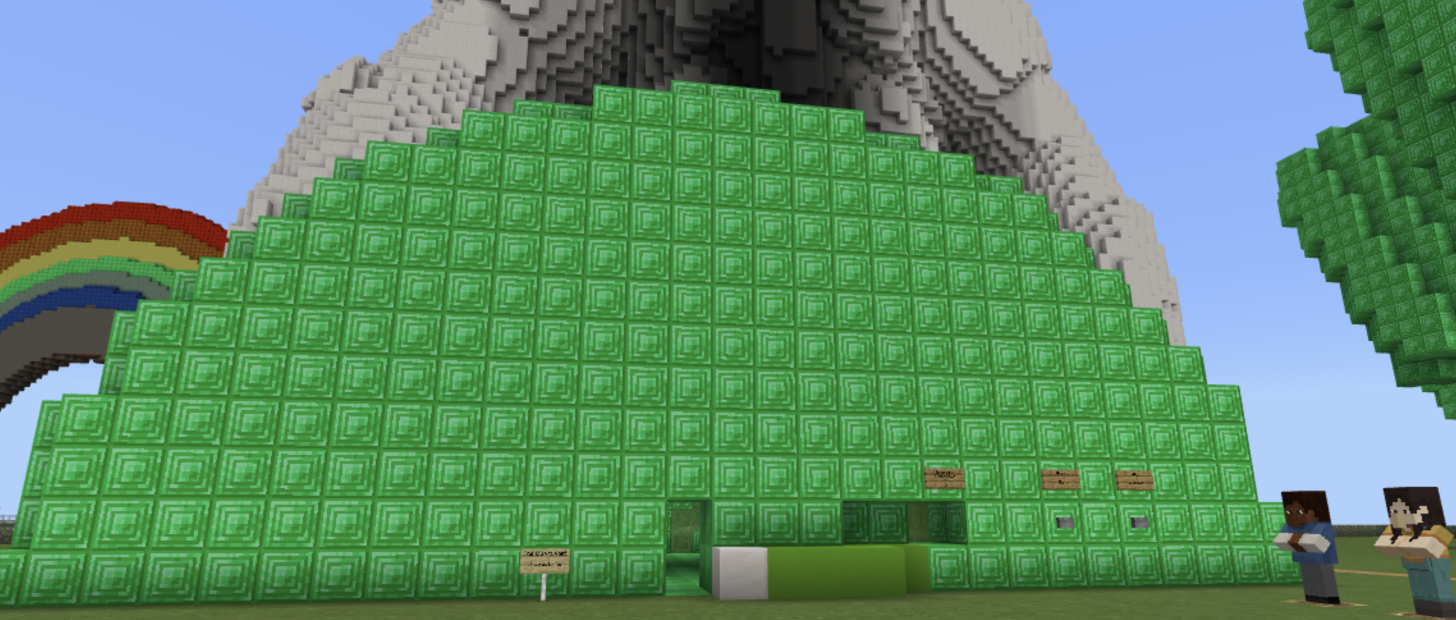
Hint: The NPC Scientists provide fast hints that will indicate where students should place each item from the chest as they build their photosynthesis simple machine. There is also an Educator Support Video that can support this further for your own use.
This second lab involves building a simple machine in Minecraft Education for the purpose of simulating photosynthesis.
It also introduces the chemical formulas for all of the compounds involved in photosynthesis, making a connection to chemistry. Students can walk around these large depictions of the chemical compounds and should be able to communicate the chemical equation for photosynthesis in a simple way.
Rewards in the forms of Mars resources are awarded at the end of the second lab. Students should gather these along with all other resources for use on Mars.
Relevant Links for Lab 2:
The third lab focuses on plant biology and the labelling of organelles in the plant cell. One cell organelle is missing, and students are asked to determine which organelle it is and rebuild it.
Hint: It’s the same organelle that was featured in the previous Lab 2. An organelle is a sub-cellular structure that has one or more specific jobs to perform in the cell.
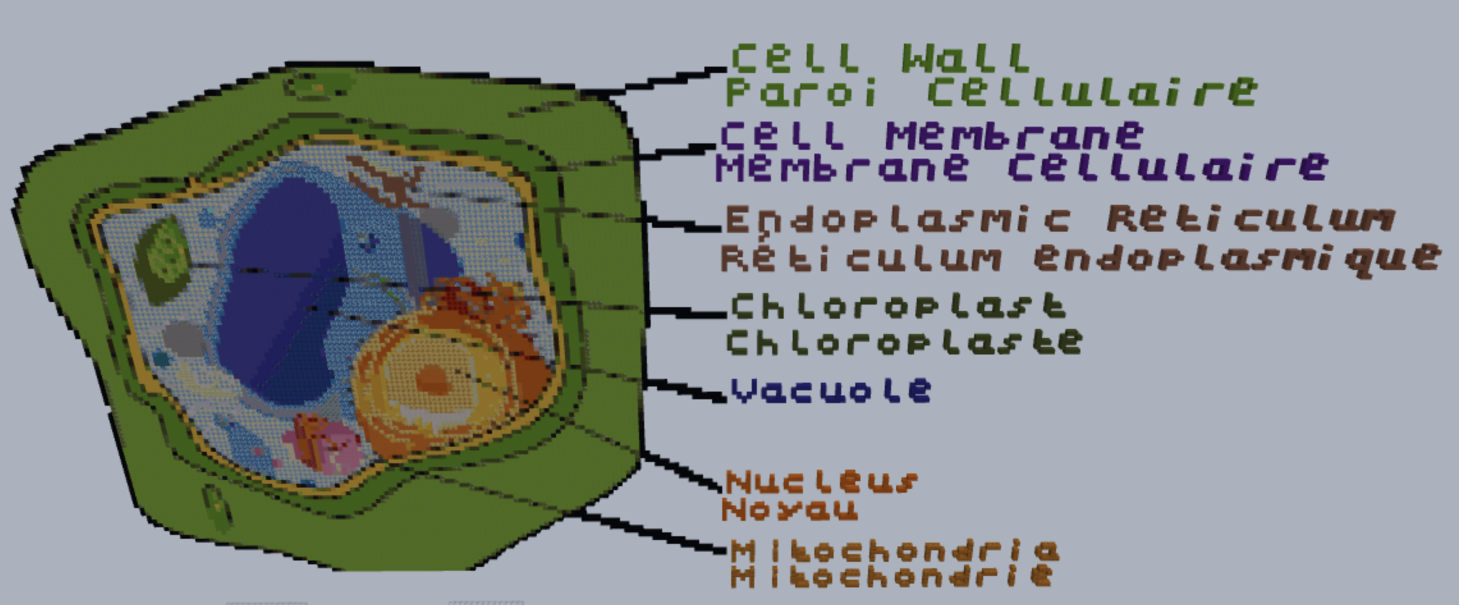
Students have two tasks in this lab. The first is to use the 2D map in the sky to help them determine which 3D organelle is which and add the organelle names to the provided signs.
The second task is to identify the missing organelle and build it within the 3D model. Students can meet the scientists down in the cell and build the organelle on the indicated space.
Rewards in the form of Mars resources are awarded at the end of the third lab inside the 3D model at the chloroplast build site.
Answer: The missing organelle is the Chloroplast. It's the same organelle from Lab 2 so if students struggle to build the organelle you can remind them that they just built a model of a chloroplast in the last lab. There is an Educator Video that may offer more support if this seems partially unclear.
These three labs precede preparing for Mars in the Mars Lab. Students should be carrying many resources for Mars and some are essential for success on Mars. More resources are coming in the Mars Lab so it's an important time to suggest resources organizing and keeping track of what students have earned so far.
Rewards in the form of Mars resources are awarded at the end of the third lab inside the 3D model at the chloroplast build site.
Relevant Links for Lab 3:
Plant Cell Structures and Functions: https://letstalkscience.ca/educational-resources/backgrounders/plant-cell-structures-and-functions
After the completion of the three introductory photosynthesis labs, students journey into the Mars Lab. Here they will complete a series of quiz questions and activities and receive a valuable Mars resource for each correct response. Students will also practice turning Martian sand into glass as this will aid them in building their tomato greenhouse on Mars. After completing the Mars Lab activities, students exit the back of the tomato to find one last earthly build challenge.
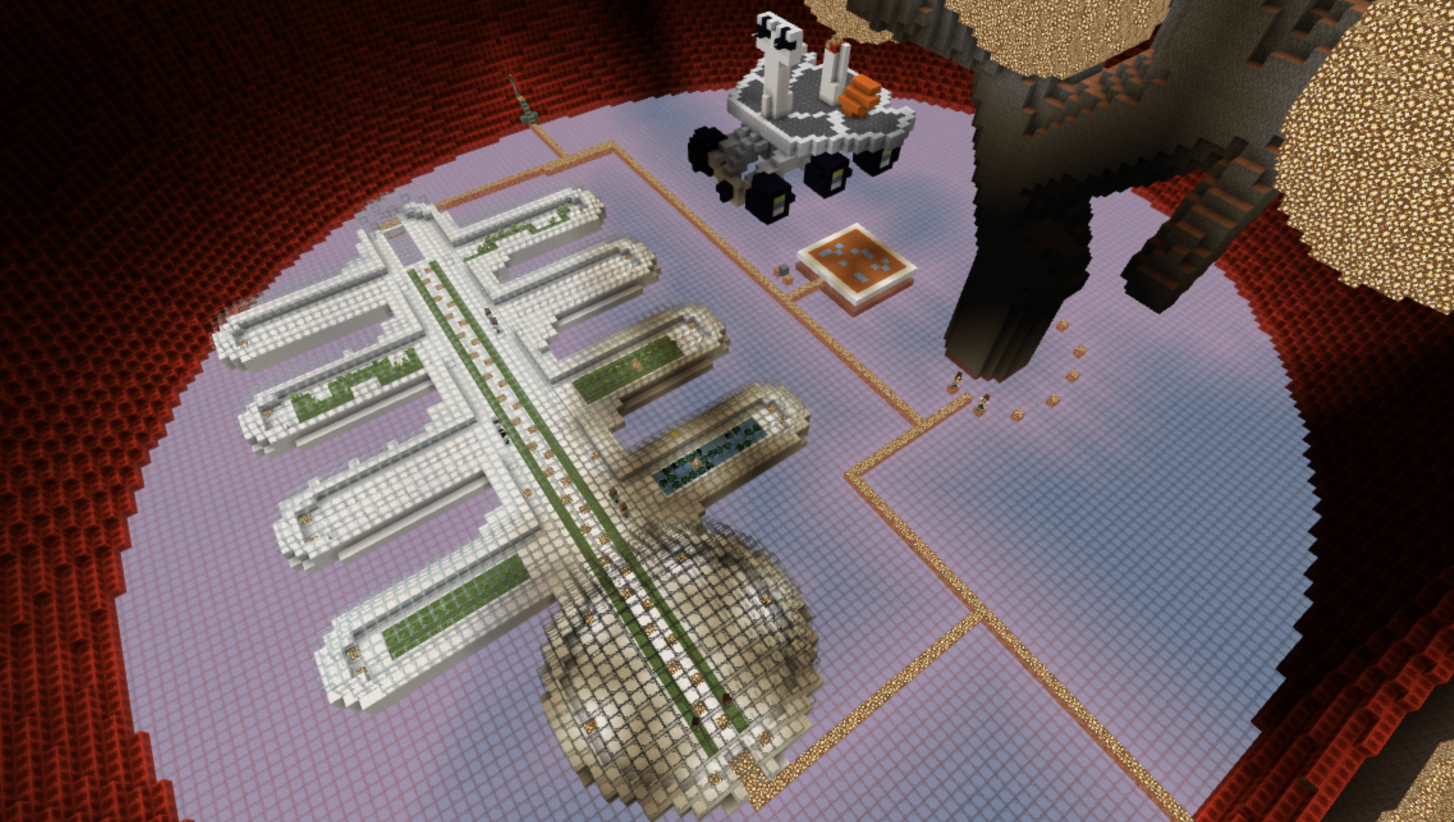
Station 1: The Greenhouse Quiz Series
Answers to quiz questions in order of occurrence:
Question 1: Which of these factors do plants need to grow on Mars?
Water
Light
Nutrients
All of the Above (Answer)
Question 2: What type of storm happens often on Mars?
Rain Storms
Fire Storms
Dust Storms (Answer)
Question 3: Do plants need space in the ground to grow?
No
Yes (Answer)
Question 4: What can you build on Mars to provide the best growing conditions for your Mars crop?
Car
Swimming Pool
Greenhouse (Answer)
Tunnel
Station 2: Turning Sand to Glass
Students will be gifted fuel and sand by the NPCs and get a chance to practice using a furnace to turn sand into glass. They should put the red sand in the top spot and fuel in the bottom furnace place. This will produce glass on the right and students can claim back all of the materials, including the fuel and sand. There is an Educator Video offering more support if needed.
Station 3: Don't Miss the NPCs By the Big Tree
These NPCs standing next to the big tree will offer additional Mars rewards. Do not miss them.
Hint: Students are likely functioning with almost an entirely full inventory now. You can remind them if they are carrying resources that they don't believe will be needed on Mars they can drop them using the Q key. It is highly likely that nearly all resources are important so this should be done sparingly.
Easter Egg 1 Hint: Joshua's Easter Egg is located at -85, 1, -27, behind the tree where Nicole and Mylene NPCs are, where an NPC will share the “This or that” link to students.
Station 4: Launch Pad
On the launch pad students will have one last earthly challenge. This build challenge will ask them to build their vision of a crop harvesting robot for the surface of Mars. They will be converted into Creative Mode with access to Minecraft's full inventory for the build. Will their robot take humanoid form? The form of a spider or insect? This is a completely creative tasks and any build design here should be celebrated.
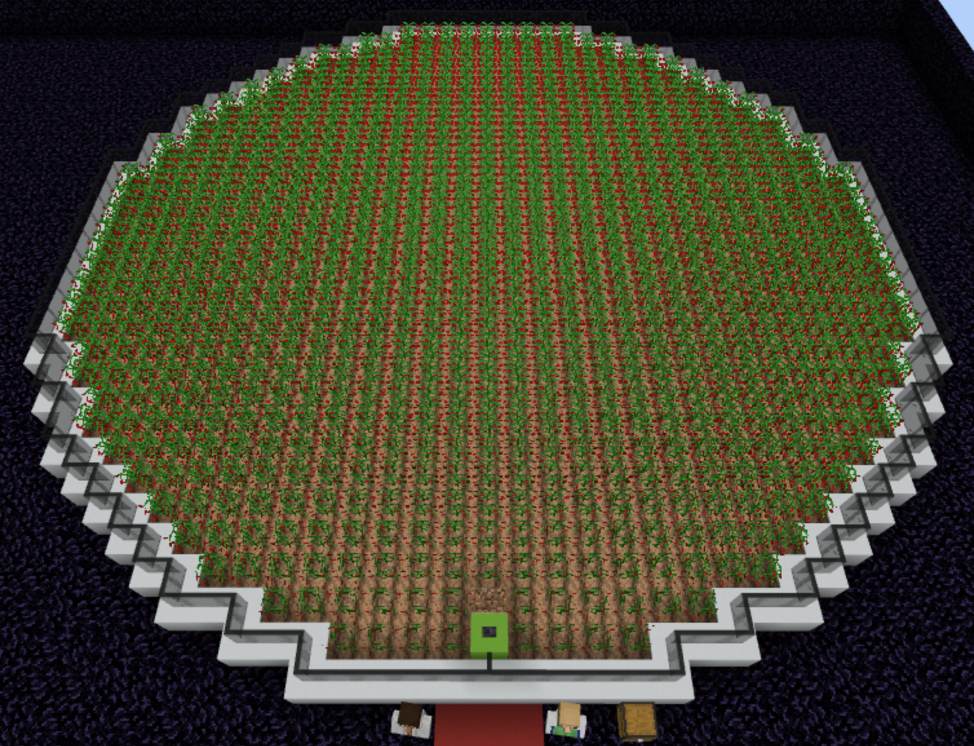
Tip: Students SHOULD transfer all their valuable belongings and Mars resources to the provided chest before entering. They can then take them back from the chest following the robot build. This is essential if they wish to keep their resources for Mars. If time is a constraint this is a completely optional part of Tomatosphere™ Adventure and can be skipped.
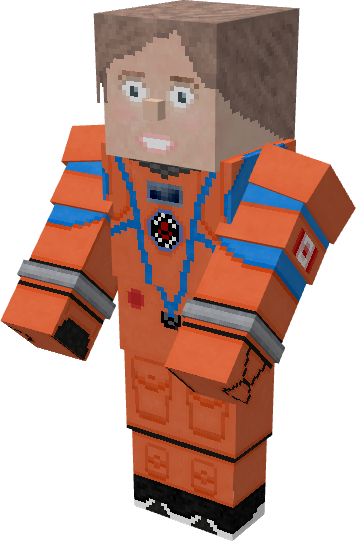
Bonus: Meet Canadian Astronaut Jenni Gibbons
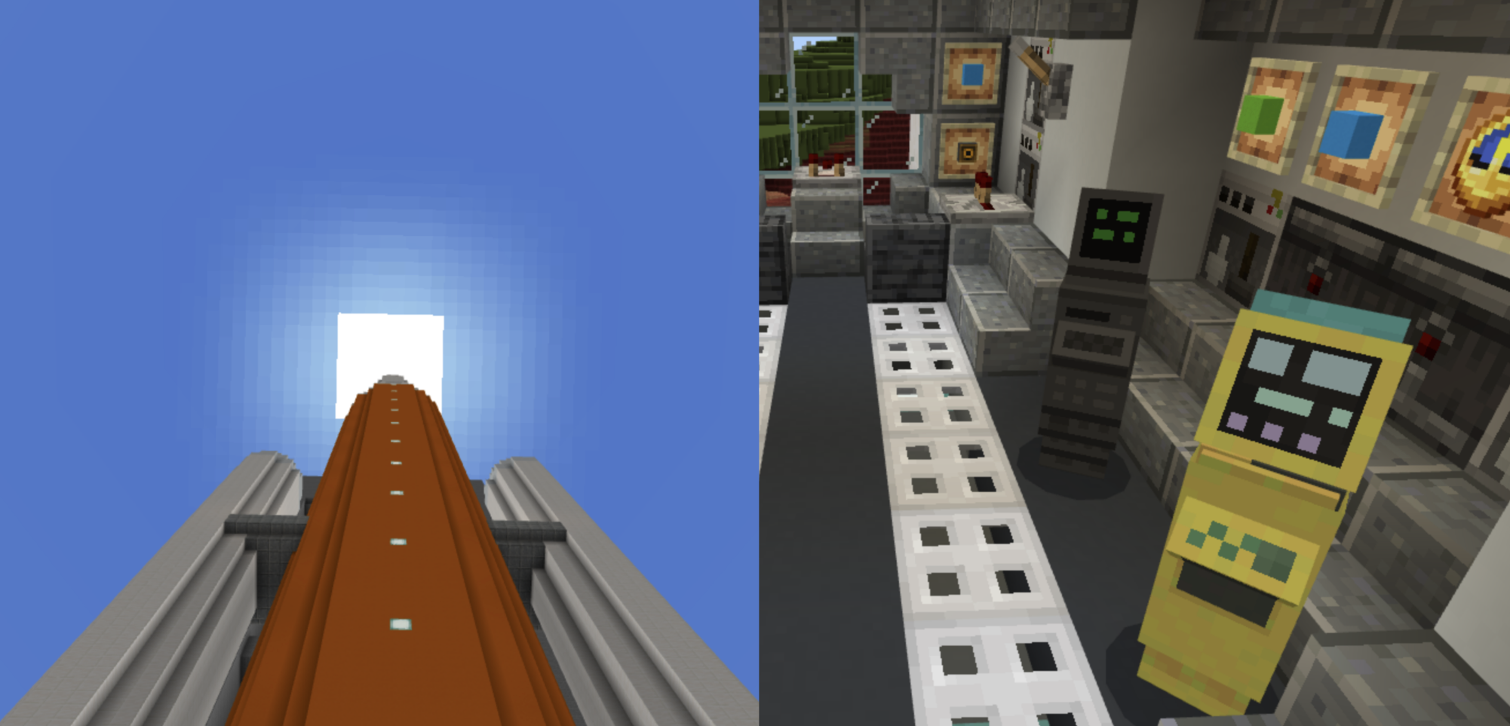
Students are then ready to board the Space Launch System (SLS) and travel to Mars. They can board the SLS spacecraft and use the NPC robots to blast off to Mars!
Relevant Links for Mars Lab:
Light on Mars: https://letstalkscience.ca/educational-resources/backgrounders/light-on-mars
Earth vs. Mars: https://letstalkscience.ca/educational-resources/backgrounders/earth-vs-mars
Needs of Plants: https://letstalkscience.ca/educational-resources/backgrounders/needs-plants
Vlog 7: Preparing to splash down in the Pacific Ocean: https://www.asc-csa.gc.ca/eng/multimedia/search/video/18914?search=jeremy+hansen
Tim and Jenni discuss Mars: https://www.asc-csa.gc.ca/eng/multimedia/search/video/18360?search=Mars%2Btim%2Bhaltigin
Distances between Earth and the International Space Station, the Moon and Mars – infographic: https://www.asc-csa.gc.ca/eng/multimedia/search/image/17245?search=Mars&type=1
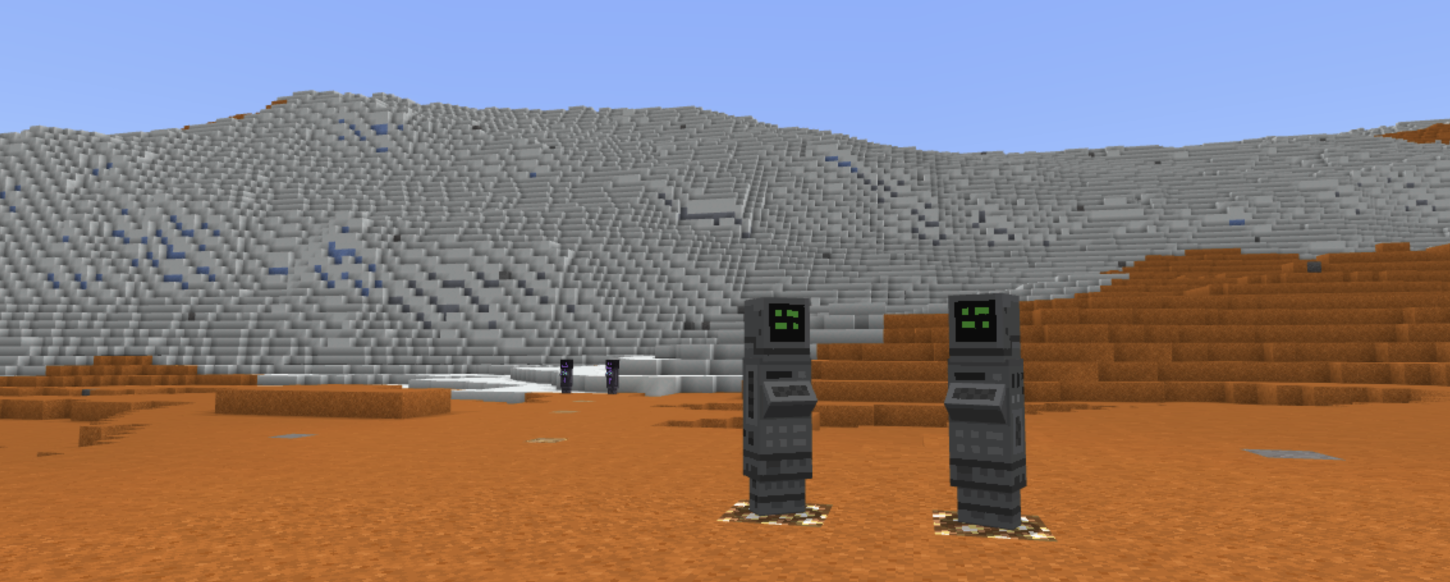
Hopefully students are wearing their spacesuit skins! This Mars Challenge has two phases. Terraforming the planet by melting ice using sand to heat the surface is the first task. Then building a greenhouse and growing tomatoes on Mars is the last task.
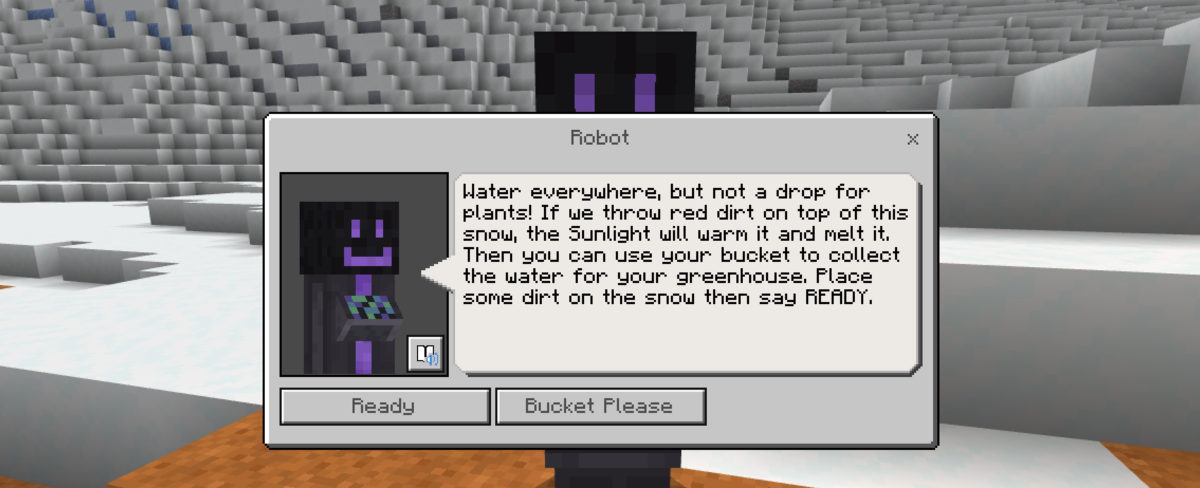
Terraforming: Students are asked to place a few sand blocks on top of the snow and ice at the Martian polar region to aid in its melting. Once they indicate to the robots that they are ready (button), the melted water can then be collected using the buckets they brought with them and used to establish a greenhouse on Mars.
Greenhouse:
Step 1: Students will turn Martian sand into glass using the furnace and fuel.
Step 2: They will use the quartz blocks, iron door, button, and glass to construct a greenhouse.
Step 3: Students will place some grass down in the greenhouse and fill a central hole with water (melted ice) from a bucket. They will hoe the grass and plant tomato seeds. Students will successfully grow and harvest tomatoes.
Step 4: Taking these tomatoes to the Mars Bots will result in a reward and end this Let’s Talk Science Minecraft Education Tomatosphere™ Adventure.
Easter Egg 2 Hint: The Mars Easter Egg is located at -1198, 115, 1098, turn 180 degrees when you land on Mars and go forward until you find stairs leading down to the NPCs sharing the “Planet Mars in Numbers” infographic link.
Relevant Links for Mars Challenge:
Planet Mars in numbers - Infographic: https://www.asc-csa.gc.ca/eng/multimedia/search/image/4982?search=Mars
- Life Sciences: Understanding ecosystems and the interactions between living and non-living components.
- Earth and Space Sciences: Exploring the Earth's place in the universe, including planetary conditions and space exploration.
- Grade 4: Plant Growth and Changes (Plant Needs and Conditions).
- Grade 5: Wetland Ecosystems (Plant Functions).
- Grade 6: Sky Science (Space Exploration).
- Grade 7: Plants for Food and Fibre (Photosynthesis, Plant Biology).
- Grade 8: Light and Optical Systems (Importance of Light).
- Grade 4: Habitats and Communities (Interactions within ecosystems).
- Grade 5: Physical and Chemical Changes (Chemical formulas).
- Grade 7: Interactions within Ecosystems (Photosynthesis, Plant Cells).
- Grade 8: Water Systems on Earth (Water's importance).
- Grade 4: Habitats and Communities.
- Grade 5: Properties of and Changes in Substances.
- Grade 6: Diversity of Living Things (Plant Biology).
- Grade 7: Interactions within Ecosystems.
- Grade 8: Water Systems.
- Grade 4: Habitats and Communities.
- Grade 5: Properties of and Changes in Matter.
- Grade 6: Biodiversity.
- Grade 7: Interactions in the Environment (Photosynthesis).
- Grade 8: Water Systems.
- Science and Technology: The Living World (Photosynthesis, Plant Biology).
- The Earth and Space (Space Exploration, Terraforming).
- Grade 4:Properties and Uses of Earth Materials (Holistic Curriculum 2024)
- Grade 5: Living and Technological Systems (Holistic Curriculum 2024)
- Grade 6: Wayfinding - Making Sense of Your World (Holistic Curriculum 2024)
- Grade 7: Earth’s Surface Processes (Holistic Curriculum 2024)
- Grade 8: Beyond Earth (Holistic Curriculum 2024)
- Grade 4: Habitats and Communities.
- Grade 5: Properties and Changes in Matter.
- Grade 6: Diversity of Living Things.
- Grade 7: Interactions in the Environment.
- Grade 8: Water Systems.
- Grade 4: Habitats and Communities.
- Grade 5: Properties of and Changes in Matter.
- Grade 6: Diversity of Living Things.
- Grade 7: Interactions in the Environment.
- Grade 8: Water Systems.
- Grade 4: Habitats and Communities.
- Grade 5: Properties and Changes in Matter.
- Grade 6: Diversity of Living Things.
- Grade 7: Interactions in the Environment.
- Grade 8: Water Systems.
- Align closely with provincial curricula, particularly British Columbia and Alberta.
- Emphasis on local ecosystems and environmental stewardship.