
Loading…
Loading…
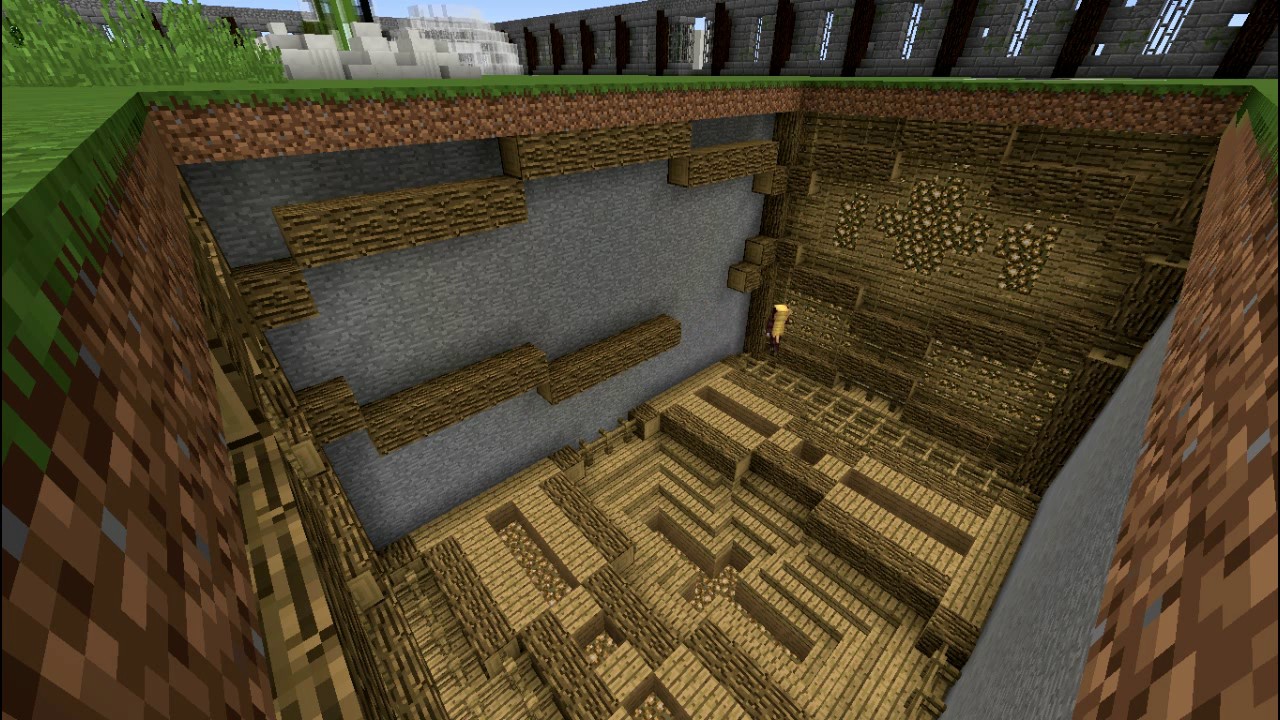
In this lesson, students will simulate an archeological dig site by collecting and documenting artifacts. Students will inference possible explanations of civilization characteristics based on artifacts found and discover the common characteristics of a civilization.
Welcome to this Minecraft: Education Edition lesson! Before you begin, take a few moments to let us know your thoughts or feedback on how we can improve this lesson in order to better enhance the learning experience that is delivered in your classroom!
Click here or follow the form below to complete the feedback survey once you've completed this lesson. Thank you!
Click and watch this teacher preparation video to help you understand how to teach this lesson.
Here is a YouTube link of the teacher video for your reference: https://youtu.be/qBHZIVfiRc4
Start Here: Teacher Preparation Video
Students simulate an archeological dig site
Students will collect and document artifacts
Students inference possible explanations of civilization characteristics based on artifacts found.
Collaboration
Critical Thinking
Inferencing / Analyzing
How do we make inferences based on artifacts found
The science of archeology including relative dating, grids, and delicate excavation techniques.
The common characteristics of a civilization.
Students will gain pre-requisite knowledge by through an Introduction to Archaeology Activity.
Students will explore the excavation site grid in Minecraft
Students will use the Camera and Book and Quill to take pictures, record their findings, and make inferences about the artifacts and what they meant to the civilization they are exploring.
Students will create a Wakelet and include their Discovery and Inferencing Book (pdf), find examples of Archeology today (social media posts, YouTube videos), and include a Flipgrid reflection of what they learned about archeology and the civilization they explored.
Student Example - https://wakelet.com/wake/e8Er107ieCRo42_ck1A5D
Students share discovered artifacts and inferences on what they found
Students reflect on the characteristics of a civilization and importance of archaeology
Students perform the work of an archaeologist
Check out the Tips & Tricks video playlist that will help you and your students better use Minecraft: Education Edition in the classroom:
https://youtube.com/playlist?list=PLkh9rrdH-ARER03ojhFYtmoFDVuACYJLa
More videos added periodically so make sure you check often for more
Click and watch the student pause and play video with your class, pausing and playing as needed. This will help your students understand how to navigate through this lesson and Minecraft world and complete the activities located within them. Enjoy!
Check out the YouTube link for your reference: https://youtu.be/n72mGYt8rBA
Student 'Pause & Play' Video
Curricular Competencies
Use Social Studies inquiry processes and skills to — ask questions; gather, interpret, and analyze ideas; and communicate findings and decisions
Assess the significance of people, places, events, or developments at particular times and places (significance)
Identify what the creators of accounts, narratives, maps, or texts have determined is significant (significance)
Assess the credibility of multiple sources and the adequacy of evidence used to justify conclusions (evidence)
Characterize different time periods in history, including periods of progress and decline, and identify key turning points that marked periods of change (continuity and change)
Determine which causes most influenced particular decisions, actions, or events, and assess their short- and long-term consequences (cause and consequence)
Explain different perspectives on past or present people, places, issues, or events, and compare the values, worldviews, and beliefs of human cultures and societies in different times and places (perspective)
Make ethical judgments about past events, decisions, or actions, and assess the limitations of drawing direct lessons from the past (ethical judgment)
Content
anthropological origins of humans
human responses to particular geographic challenges and opportunities, including climates, landforms, and natural resources
features and characteristics of civilizations and factors that lead to their rise and fall
origins, core beliefs, narratives, practices, and influences of religions, including at least one indigenous to the Americas
scientific, philosophical, and technological developments
interactions and exchanges between past civilizations and cultures, including conflict, peace, trade, expansion, and migration
social, political, legal, governmental, and economic systems and structures, including at least one indigenous to the Americas
Specific Outcomes: Values and Attitudes
Students will:
5.1.1 - value Canada's physical geography and natural environment:
appreciate the variety and abundance of natural resources in Canada
Economics and Resources| The Land: Places and People
appreciate the diversity of geographic phenomena in Canada
The Land: Places and People
appreciate the environmental significance of national parks and protected areas in Canada
Economics and Resources | The Land: Places and People
appreciate how the land sustains communities and the diverse ways that people have of living with the land
Global Connections | The Land: Places and People
appreciate the influence of the natural environment on the growth and development of Canada
The Land: Places and People
demonstrate care and concern for the environment through their choices and actions
Global Connections | The Land: Places and People
appreciate the geographic vastness of Canada
The Land: Places and People
Specific Outcomes: Knowledge and Understanding
Students will:
5.1.2 - examine, critically, the physical geography of Canada by exploring and reflecting upon the following questions and issues:
What are the major geographical regions, landforms and bodies of water in Canada?
The Land: Places and People
How do landforms, bodies of water and natural resources affect the quality of life in Canada?
The Land: Places and People
How have natural disasters and severe weather been part of Canada's physical geography?
The Land: Places and People | Time, Continuity and Change
What are the differences and similarities among the geographical regions of Canada?
The Land: Places and People
How is the geographical region they live in different from other regions of Canada?
The Land: Places and People
What are the factors that determine climate in the diverse geographical regions of Canada (e.g., latitude, water, mountains)?
The Land: Places and People
How are Canada's national parks and protected areas important to the sustainability of Canada's natural environment?
A2.6 communicate the results of their inquiries, using appropriate vocabulary
A3.5 describe significant events or developments in the history of two or more First Nations, Métis, and/or Inuit communities in Canada
DR9.1
Examine the challenges involved in obtaining information about societies of the past.
Indicators for this outcome
(a)Analyze the advantages and disadvantages of oral accounts as sources of information about historical events.
(b)Describe the role of archaeology in obtaining information about societies of the past.
(c)Explain various technologies used in archaeology (e.g., shovels, brushes, carbon dating, GPS cartography, satellite imagery).
(d)Present results obtained and techniques used in ongoing archaeological digs (e.g., Wanuskewin, Eagle Creek; Point-à Callières, Montréal; Pompéi, Italy; Dufferine Terrace, Québec City; Fort Temiscaming, Québec; Ahu o rongo, Easter Island).
(e)Investigate the role of literature, visual arts, music, newspapers, photographs, and other artifacts in obtaining information about past societies.
(f)Recognize the dynamic nature of historical knowledge by identifying examples of changes occurring in the interpretation of history as a result of new information uncovered or acknowledged.
Cluster 1 - World History: Societies of the Past Understanding Societies Past and Present
8.1.1 What Is a World View?
KI-005 Explain the concept of world view.
KI-006 Describe influences that create differences in world views. Examples: culture, time, place, cross-cultural interactions, media, governance...
VI-004 Be willing to consider differing world views.
8.1.2 Origins of Human Societies
KI-010 Relate various stories and theories of the origin and development of human life.
KI-011 Identify the characteristics, advantages, and disadvantages of a hunter-gatherer way of life.
KI-012 Describe the development of agrarian societies and explain how they differed from hunter-gatherer societies. Examples: food surplus, movement from nomadic to sedentary, division of labour, growth of villages and cities...
8.1.3 Societies and Civilizations
KI-007 Compare and contrast the concepts of society and civilization.
KI-008 Give reasons why societies may stay the same or change over time. Examples: culture, education, trade, power, war...
KI-009 Describe ways in which societies organize, maintain, and perpetuate themselves. Examples: physical survival, education, culture...
KL-022 Give examples of the influence of the natural environment on the development of societies.
VL-008 Appreciate the importance of sustaining the natural environment for future societies
8.1.4 Knowing the Past
KH-027 Identify various sources of historical evidence and information and explain how each enhances understanding of the past. Include: archeology, artifacts, literature, art, music, biographies, journals, photographs, oral histories.
KH-028 Explain the importance of knowing the past and understanding history
Agricultural territory - B. Agricultural territory subject to natural hazards
4. Issues affecting an agricultural territory or territories subject to natural hazards:
b: Explains the relationship between human actions and the creation of an artificial risk in the agricultural territory studied (e.g. in the Canadian prairies, pesticides and fertilizers can pollute waterways; in the Sahel, digging wells for herds combined with overgrazing can deplete groundwater resources; in Bangladesh, cutting mangroves has destabilized the shorelines of the territory, making river banks more vulnerable to cyclones)
Overall Outcomes
Unit One: Introduction 5.1.1 Develop an understanding of how we learn about the past
The following artefacts have been found at an archaeological dig: iron nail, pipe stem, gold coin, arrowhead, letter, map. How will these artefacts help you learn about the past in this particular area?
Unit 2: Economic Empowerment
7.2.1 Analyze how commodities that lead to economic empowerment have changed
7.2.2 Investigate the various ways that economic systems empower or disempower people
7.2.3 Identify and analyze trends that could impact future economic empowerment
Unit 1 - Introduction: History as a Lens to the Past
Specific Curriculum Outcomes
SCO 1.1 The student will be expected to demonstrate an understanding and appreciation of history
1.1.1 Identify historical sources (e.g., art, documents, photos, stories, artifacts, and music) in their own community. (K)
1.1.2 Examine how historical sources (e.g., art, documents, photos, stories, artifacts, and music) are windows into the past. (A) 1.1.3 Develop a working definition of history. (A)
1.1.4 Distinguish between individual past and collective history. (K)
1.1.5 Explain that history is open to interpretation. (K)
1.1.6 Explain that historians are guided by rules of evidence. (K)
Unit 2 - World Cultures
Students will be expected to:
6.2.1 examine how traditions influence culture in a selected cultural region
6.2.2 describe how government influences culture in a selected country
6.2.3 explain how economic systems influence cultures
Specific Outcomes: Values and Attitudes
Students will:
5.1.1 - value Canada's physical geography and natural environment:
appreciate the variety and abundance of natural resources in Canada
Economics and Resources| The Land: Places and People
appreciate the diversity of geographic phenomena in Canada
The Land: Places and People
appreciate the environmental significance of national parks and protected areas in Canada
Economics and Resources | The Land: Places and People
appreciate how the land sustains communities and the diverse ways that people have of living with the land
Global Connections | The Land: Places and People
appreciate the influence of the natural environment on the growth and development of Canada
The Land: Places and People
demonstrate care and concern for the environment through their choices and actions
Global Connections | The Land: Places and People
appreciate the geographic vastness of Canada
The Land: Places and People
Specific Outcomes: Knowledge and Understanding
Students will:
5.1.2 - examine, critically, the physical geography of Canada by exploring and reflecting upon the following questions and issues:
What are the major geographical regions, landforms and bodies of water in Canada?
The Land: Places and People
How do landforms, bodies of water and natural resources affect the quality of life in Canada?
The Land: Places and People
How have natural disasters and severe weather been part of Canada's physical geography?
The Land: Places and People | Time, Continuity and Change
What are the differences and similarities among the geographical regions of Canada?
The Land: Places and People
How is the geographical region they live in different from other regions of Canada?
The Land: Places and People
What are the factors that determine climate in the diverse geographical regions of Canada (e.g., latitude, water, mountains)?
The Land: Places and People
How are Canada's national parks and protected areas important to the sustainability of Canada's natural environment?
Specific Outcomes: Values and Attitudes
Students will:
5.1.1 - value Canada's physical geography and natural environment:
appreciate the variety and abundance of natural resources in Canada
Economics and Resources| The Land: Places and People
appreciate the diversity of geographic phenomena in Canada
The Land: Places and People
appreciate the environmental significance of national parks and protected areas in Canada
Economics and Resources | The Land: Places and People
appreciate how the land sustains communities and the diverse ways that people have of living with the land
Global Connections | The Land: Places and People
appreciate the influence of the natural environment on the growth and development of Canada
The Land: Places and People
demonstrate care and concern for the environment through their choices and actions
Global Connections | The Land: Places and People
appreciate the geographic vastness of Canada
The Land: Places and People
Specific Outcomes: Knowledge and Understanding
Students will:
5.1.2 - examine, critically, the physical geography of Canada by exploring and reflecting upon the following questions and issues:
What are the major geographical regions, landforms and bodies of water in Canada?
The Land: Places and People
How do landforms, bodies of water and natural resources affect the quality of life in Canada?
The Land: Places and People
How have natural disasters and severe weather been part of Canada's physical geography?
The Land: Places and People | Time, Continuity and Change
What are the differences and similarities among the geographical regions of Canada?
The Land: Places and People
How is the geographical region they live in different from other regions of Canada?
The Land: Places and People
What are the factors that determine climate in the diverse geographical regions of Canada (e.g., latitude, water, mountains)?
The Land: Places and People
How are Canada's national parks and protected areas important to the sustainability of Canada's natural environment?
Curricular Competencies
Use Social Studies inquiry processes and skills to — ask questions; gather, interpret, and analyze ideas; and communicate findings and decisions
Assess the significance of people, places, events, or developments at particular times and places (significance)
Identify what the creators of accounts, narratives, maps, or texts have determined is significant (significance)
Assess the credibility of multiple sources and the adequacy of evidence used to justify conclusions (evidence)
Characterize different time periods in history, including periods of progress and decline, and identify key turning points that marked periods of change (continuity and change)
Determine which causes most influenced particular decisions, actions, or events, and assess their short- and long-term consequences (cause and consequence)
Explain different perspectives on past or present people, places, issues, or events, and compare the values, worldviews, and beliefs of human cultures and societies in different times and places (perspective)
Make ethical judgments about past events, decisions, or actions, and assess the limitations of drawing direct lessons from the past (ethical judgment)
Content
anthropological origins of humans
human responses to particular geographic challenges and opportunities, including climates, landforms, and natural resources
features and characteristics of civilizations and factors that lead to their rise and fall
origins, core beliefs, narratives, practices, and influences of religions, including at least one indigenous to the Americas
scientific, philosophical, and technological developments
interactions and exchanges between past civilizations and cultures, including conflict, peace, trade, expansion, and migration
social, political, legal, governmental, and economic systems and structures, including at least one indigenous to the Americas