
Loading…
Loading…
In this lesson, students will be introduced to the basics of mindfulness to help them understand the benefits and main concepts of this skill.
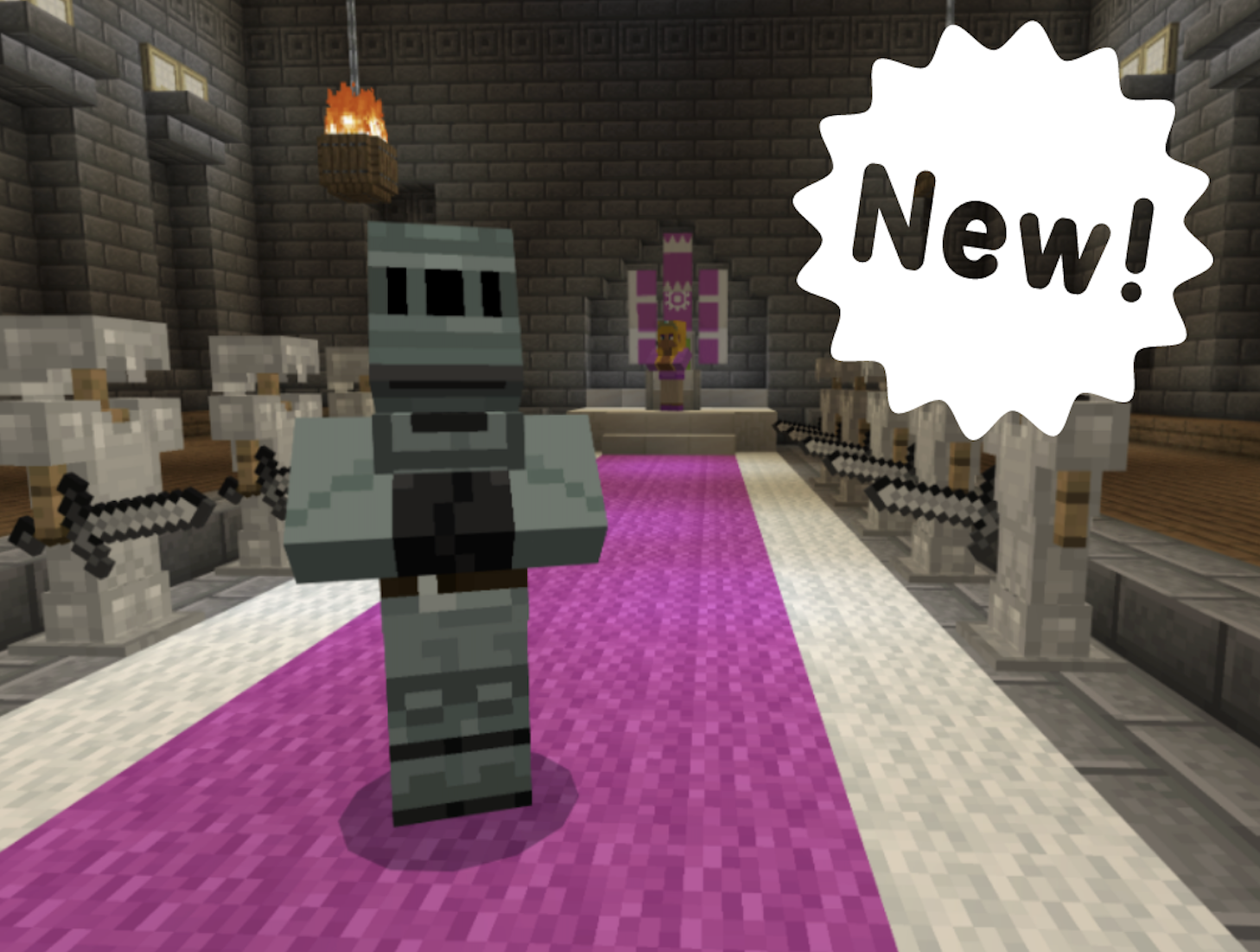
Welcome to this Minecraft: Education Edition lesson! Before you begin, take a few moments to let us know your thoughts or feedback on how we can improve this lesson in order to better enhance the learning experience that is delivered in your classroom!
Click here or follow the form below to complete the feedback survey once you've completed this lesson. Thank you!
Click and watch this teacher preparation video to help you understand how to teach this lesson. Here is a YouTube link of the teacher video for your reference: https://youtu.be/KFhpdTTA_To
Start Here: Teacher Preparation Video
SELF-AWARENESS: An individual has the ability to identify and name one’s emotions and their influence on behavior.
COPING SKILLS: An individual develops and demonstrates the ability to regulate emotions, thoughts and behaviors in context with people different than oneself.
SOCIAL MANAGEMENT: An individual has the ability to make safe and constructive choices about personal behavior and social interactions.
Character
How can mindfulness support both emotional and academic growth in students?
When practiced regularly, mindfulness can help to improve a students’ focus, emotional awareness, and emotional regulation.
How can educators help students establish a regular mindfulness practice?
Educators can help students understand the benefits and basic concepts of mindfulness, and encourage them to set aside a few minutes each day to practice. They can also set aside time at the start or end of their classroom periods for this.
Students will learn and practice the use of new vocabulary words shared at the beginning of the lesson (Approximate time: 15 min)
Students will complete pre-writing exercise by responding to the prompt: "How do you manage your emotions when you get upset by your experience at school?" (5 min)
Students will take part in a short classroom discussion on strategies they use when they need to self-regulate their emotions. (5 min)
Students will then go into the Mindful Knight world (see resources) and complete each of the four quests. (20 min)
Students will close the lesson by sharing their reflection with a partner in the classroom or by recording a Flipgrid video of their experience in the Mindful Knight world. (5 min)
Students will demonstrate understanding of mindfulness practices by completing a reflection entry in their portfolio in the game. Educators can review and respond to these reflection entries.
As an extension, educators can request feedback via Flipgrid on their students' reflections on mindfulness.
Washing State SEL Standards: https://schoolsoutwashington.org/policyadvocacy/social-emotional-learning/
Check out the Tips & Tricks video playlist that will help you and your students better use Minecraft: Education Edition in the classroom:
https://youtube.com/playlist?list=PLkh9rrdH-ARER03ojhFYtmoFDVuACYJLa
More videos added periodically so make sure you check often for more content!
Click and watch the student pause and play video with your class, pausing and playing as needed. This will help your students understand how to navigate through this lesson and Minecraft world and complete the activities located within them. Enjoy!
Check out the YouTube link for your reference: https://youtu.be/RMyKM5NKZyk
Student 'Pause & Play' Video
Identify needs and opportunities for designing, through exploration
Generate ideas from their experiences and interests
Add to others’ ideas
Choose an idea to pursue.
Making
Choose tools and materials
Make a product using known procedures or through modelling of others
Use trial and error to make changes, solve problems, or incorporate new ideas from self or others
Sharing
Decide on how and with whom to share their product
Demonstrate their product, tell the story of designing and making their product, and explain how their product contributes to the individual, family, community, and/or environment
Use personal preferences to evaluate the success of their design solutions
Reflect on their ability to work effectively both as individuals and collaboratively in a group
Use materials, tools, and technologies in a safe manner in both physical and digital environments
Develop their skills and add new ones through play and collaborative work
Explore the use of simple, available tools and technologies to extend their capabilities
Curricular Competencies
Develop mental math strategies and abilities to make sense of quantities
Use technology to explore mathematics
Understanding and solving
Develop, demonstrate, and apply mathematical understanding through play, inquiry, and problem solving
Content
Students are expected to know the following:
Describe and assess strategies for promoting mental well-being
Describe and assess strategies for managing problems related to mental well-being and substance use
Describe factors that positively influence mental well-being and self-identity
Describe and assess strategies for promoting mental well-being, for self and others
Describe and assess strategies for managing problems related to mental well-being and substance use, for others
Explore and describe how personal identities adapt and change in different settings and situations
Describe and assess strategies for promoting mental well-being, for self and others
Describe and assess strategies for managing problems related to mental well-being
Describe and assess strategies for promoting mental well-being, for self and others
Describe and assess strategies for managing problems related to mental well-being
Explore the impact of transition and change on identities
Describe and assess strategies for promoting mental well-being, for self and others
Describe and assess strategies for managing problems related to mental well-being
Understanding and Expressing Feelings
Students will:
R-4.1 recognize that individuals can have a positive and negative influence on the feelings of others
R-4.2 identify and use short-term strategies for managing feelings; e.g., dealing with excitement, anger, sadness, jealousy
R-4.3 recognize that management of positive/negative stress can affect health
Understanding and Expressing Feelings
Students will:
R-4.1 recognize that individuals can have a positive and negative influence on the feelings of others
R-4.2 identify and use short-term strategies for managing feelings; e.g., dealing with excitement, anger, sadness, jealousy
R-4.3 recognize that management of positive/negative stress can affect health
R-4.4 demonstrate respectful communication skills; e.g., describe behaviours that show respect for the feelings of others
Understanding and Expressing Feelings
Students will:
R-6.1 recognize that individuals can choose their own emotional reactions to events and thoughts
R-6.2 establish personal guidelines for expressing feelings; e.g., recognize feelings, choose appropriate time/place for expression, identify preferred ways of expressing feelings, and accept ownership of feelings
R-6.3 develop personal strategies for dealing with stress/change; e.g., using humour, relaxation, physical activity
R-6.4 identify, analyze and develop strategies to overcome barriers to communication
Understanding and Expressing Feelings
Students will:
R-7.1 analyze how thinking patterns influence feelings; e.g., positive thinking, all or nothing thinking, overgeneralization, perfectionism
R-7.3 identify sources of stress in relationships, and describe positive methods of dealing with such stressors; e.g., change, loss, discrimination, rejection
Understanding and Expressing Feelings
Students will:
R-8.1 describe characteristics of persistent negative feeling states; e.g., depression, mood disorders
R-8.4 analyze the effects of self-concept on personal communication
R-8.5 develop strategies for maintaining healthy relationships
Social-Emotional Learning Skills
A1. apply, to the best of their ability, a range of social-emotional learning skills as they acquire knowledge and skills in connection with the expectations in the Active Living, Movement Competence, and Healthy Living strands for this grade.
A1.1 apply skills that help them identify and manage emotions as they participate in learning experiences in health and physical education, in order to improve their ability to express their own feelings and understand and respond to the feelings of others
Social-Emotional Learning SkillsA1. apply, to the best of their ability, a range of social-emotional learning skills as they acquire knowledge and skills in connection with the expectations in the Active Living, Movement Competence, and Healthy Living strands for this grade.
A1.1 apply skills that help them identify and manage emotions as they participate in learning experiences in health and physical education, in order to improve their ability to express their own feelings and understand and respond to the feelings of others
Social-Emotional Learning Skills
A1. apply, to the best of their ability, a range of social-emotional learning skills as they acquire knowledge and skills in connection with the expectations in the Active Living, Movement Competence, and Healthy Living strands for this grade.
A1.2 apply skills that help them to recognize sources of stress and to cope with challenges, including help-seeking behaviours, as they participate in learning experiences in health and physical education, in order to support the development of personal resilience
Social-Emotional Learning SkillsA1. apply, to the best of their ability, a range of social-emotional learning skills as they acquire knowledge and skills in connection with the expectations in the Active Living, Movement Competence, and Healthy Living strands for this grade
A1.2 apply skills that help them to recognize sources of stress and to cope with challenges, including help-seeking behaviours, as they participate in learning experiences in health and physical education, in order to support the development of personal resilience
Social-Emotional Learning SkillsA1. apply, to the best of their ability, a range of social-emotional learning skills as they acquire knowledge and skills in connection with the expectations in the Active Living, Movement Competence, and Healthy Living strands for this grade.
A1.1 apply skills that help them identify and manage emotions as they participate in learning experiences in health and physical education, in order to improve their ability to express their own feelings and understand and respond to the feelings of others
USC4.6 - Assess healthy stress management strategies (e.g., relaxation skills, stress control skills, guided imagery, expressing feelings, exercising).
USC5.7 - Assess the importance of self-regulation and taking responsibility for one's actions.
USC6.4 - Assess and demonstrate strategies used to identify and make healthy decisions in stressful situations.
USC7.4 - Demonstrate a personalized and coherent understanding of the importance of nurturing harmony in relationships (with self, others, and the environment), and apply effective strategies to re/establish harmony when conflict arises.
USC8.1 - Analyze and establish effective strategies of support for purposes of helping others increase health-enhancing behaviours.
Knowledge Strand C: Mental-Emotional Development
K.4.4.C.1a Identify characteristics of and/or behaviours associated with different emotions (e.g., fear, helplessness, anger, affection, excitement, frustration, disappointment, enthusiasm...) in self and/or others
K.4.4.C.4a Identify the stress management skills (e.g., relaxation skills, stress control skills, positive thinking, guided imagery, use of humour, talking with others...) that may be useful in coping with stress
Knowledge Strand C: Mental-Emotional Development
K.4.5.B.3a Identify components (e.g., personal triggers, anger cues, hidden anger...) of anger management and strategies (e.g., be aware, back off, check out choices and consequences, decide and do...) for self control in different contexts
Knowledge Strand C: Mental-Emotional Development
K.4.6.C.1a Determine strategies for sharing and expressing feelings in appropriate ways (e.g., talking out conflicts with safe adult assistance, using self statements or self-talk for control, using active listening, participating in physical activities...)
K.4.6.C.4a Identify stress management strategies (e.g., using self-statements or self talk, talking to parents, keeping an anger self inventory, participating in physical activity, keeping a sense of humour...) for controlling anger in different situations (e.g., being called names, losing a game, being pressured by parents or peers...)
Knowledge Strand C: Mental-Emotional Development
K.4.7.B.3a Identify anger management skills (e.g., use self statements, participate in physical activities, write letters to express feelings...) as alternatives to aggression and violence “
K.4.7.B.3b Describe how conflict situations (i.e., change, new situations, negative group influences, dishonesty) affect personal behaviour and development (e.g., ability to adapt to new surroundings or routines, making new friends, coping with change, being assertive...)
Knowledge Strand C: Mental-Emotional Development
K.4.8.C.2 Explain how stress may have positive or negative consequences (e.g., fight or flight, productivity, illness...)
K.4.8.C.3 Examine the effects of stress (e.g., increased blood pressure, elevated heart rate, muscle soreness, nausea...) and relaxation (e.g., low blood pressure and heart rate...) on body systems (e.g., digestive, cardiovascular, endocrine...)
K.4.8.C.4a List healthy (e.g., seeking support from others and community resources, positive self talk, physical exercise...) and unhealthy (e.g., smoking, alcohol misuse, isolation, fighting...) strategies for dealing with stress and/or anxiety
Competency 3: To adopt a healthy, active lifestyle
F. Relaxation and stress management
3. Performs a few mental relaxation exercises (e.g. visualization)
Competency 3: To adopt a healthy, active lifestyle
F. Relaxation and stress management
4. Explains positive and negative forms of stress in his/her own words (e.g. response to a situation perceived as stressful or stimulating)
5. Names some sources of stress in everyday life (e.g. sports competition, conflict, exams, bullying)
6. Explains in his/her own words the importance of managing one’s stress (e.g. to better adapt to situations, have better self-control, develop better relations with others)
7. Names some stress management strategies (e.g. engaging in physical activity, laughing, performing relaxation exercises, playing with friends)
Competency 3: To adopt a healthy, active lifestyle
F. Relaxation and stress management
4. Explains positive and negative forms of stress in his/her own words (e.g. response to a situation perceived as stressful or stimulating)
5. Names some sources of stress in everyday life (e.g. sports competition, conflict, exams, bullying)
6. Explains in his/her own words the importance of managing one’s stress (e.g. to better adapt to situations, have better self-control, develop better relations with others)
7. Names some stress management strategies (e.g. engaging in physical activity, laughing, performing relaxation exercises, playing with friends)
Competency 3: To adopt a healthy, active lifestyle
F. Relaxation and stress management
5. Stress prevention and management (positive or negative) Names stressful situations that have an effect on his/her daily life (e.g. winning a competition, writing an exam)
a. E Names the physiological reactions associated with a stressful situation (e.g. increased heart rate, perspiration)
b. Names the repercussions of poor stress management for his/her health and well-being (e.g. anxiety, fatigue, sleep disturbances, depression)
c. Indicates strategies for relaxing (e.g. taking a warm bath, reading, exercising, using a relaxation technique)
Competency 3 – Adopts a healthy, active lifestyle
5. Stress prevention and management (positive or negative) Names stressful situations that have an effect on his/her daily life (e.g. winning a competition, writing an exam)
a. E Names the physiological reactions associated with a stressful situation (e.g. increased heart rate, perspiration)
b. Names the repercussions of poor stress management for his/her health and well-being (e.g. anxiety, fatigue, sleep disturbances, depression)
c. Indicates strategies for relaxing (e.g. taking a warm bath, reading, exercising, using a relaxation technique)
2.1 describe a range of emotions;
2.2 identify strategies for regulating emotional reactions.
2.3 recognize expression of feelings in others.
2.1 identify sources and signs of stress as well as ways to manage it;
2.2 demonstrate methods for regulating emotional reactions
1.3 Demonstrate knowledge of the importance of individual growth for oneself and others.
1.2 Each student will be expected to demonstrate the ability to plan, select, and practise skills that promote growth for oneself and others
1.4 Demonstrate behaviours that maintain responsible interpersonal relationships.
Demonstrate effective ways of communicating feelings and thoughts
4.2.2 Students will be expected to demonstrate an awareness of the link between positive self identity and making healthy decisions that affect relationships and care of self
1.3 Students will be expected to practise skills for managing stress in their lives
1.5 Students will be expected to identify and practise health enhancing ways to manage feelings
7.11 Students will be expected to demonstrate an understanding that mental health is an integral component of health, that there is no shame in expressing a need for mental health support, and to recognize safe people in their lives whom they can trust to help them.
8.6 Students will be expected to identify healthy and unhealthy relationships and demonstrate assertiveness skills to communicate thoughts and feelings within primary relationships.
(R-4.2) identify and use short-term strategies for managing anger
Discuss different strategies you could use to manage your feelings in each situation.
(R-5.1) Recognize that certain behaviours may mask underlying feelings
(R-5.2) Identify and use long-term strategies for managing feelings
(R-5.3) Recognize that stressors affect individuals differently, and outline ways individuals respond to stress
(R-6.1) Recognize that individuals can choose their own emotional reactions to events and thoughts
(R-6.2) Establish personal guidelines for expressing feelings
(R-6.3) Develop personal strategies for dealing with stress and change
(R-6.4) Identify, analyze, and develop strategies to overcome barriers to communication
(R-7.1) Analyze how thinking patterns influence feelings
(R-7.2) Demonstrate an understanding for short-term and long-term support for emotional concerns
(R-7.3) Identify sources of stress in relationships, and describe positive methods of dealing with such stressors
GCO: Students will develop effective interpersonal skills that demonstrate responsibility, respect, and caring in order to establish and maintain healthy interactions.
Choose a strategy for dealing with negative feelings, stress, depression, or a mood disorder. Illustrate on a mini-poster. Share and display in the class. (R.8.1)
Identify some of the factors which affect our feelings
Evaluate communication techniques used by self and peers
Understand the basic concept of self-efficacy and some factors which influence it,
Understand the interrelationship of physical and mental health, and general well-being,
identify different kinds of feelings and understand how they influence behaviour,
demonstrate appropriate ways to express a variety of emotions,
outline the steps to follow in dealing appropriately with a personal problem,
To be aware if appropriate easy of expressing feelings
To develop strategies for dealing with negative feelings
To recognize sources of stress in our lives
To consider positive ways of dealing with stress
To be aware of the types of stress and how the body responds to stress
To discuss ways of coping with stress and stressful situations.
Understanding and Expressing Feelings
Students will:
R-4.1 recognize that individuals can have a positive and negative influence on the feelings of others
R-4.2 identify and use short-term strategies for managing feelings; e.g., dealing with excitement, anger, sadness, jealousy
R-4.3 recognize that management of positive/negative stress can affect health
Understanding and Expressing Feelings
Students will:
R-4.1 recognize that individuals can have a positive and negative influence on the feelings of others
R-4.2 identify and use short-term strategies for managing feelings; e.g., dealing with excitement, anger, sadness, jealousy
R-4.3 recognize that management of positive/negative stress can affect health
R-4.4 demonstrate respectful communication skills; e.g., describe behaviours that show respect for the feelings of others
Understanding and Expressing Feelings
Students will:
R-6.1 recognize that individuals can choose their own emotional reactions to events and thoughts
R-6.2 establish personal guidelines for expressing feelings; e.g., recognize feelings, choose appropriate time/place for expression, identify preferred ways of expressing feelings, and accept ownership of feelings
R-6.3 develop personal strategies for dealing with stress/change; e.g., using humour, relaxation, physical activity
R-6.4 identify, analyze and develop strategies to overcome barriers to communication
Understanding and Expressing Feelings
Students will:
R-7.1 analyze how thinking patterns influence feelings; e.g., positive thinking, all or nothing thinking, overgeneralization, perfectionism
R-7.3 identify sources of stress in relationships, and describe positive methods of dealing with such stressors; e.g., change, loss, discrimination, rejection
Understanding and Expressing Feelings
Students will:
R-8.1 describe characteristics of persistent negative feeling states; e.g., depression, mood disorders
R-8.4 analyze the effects of self-concept on personal communication
R-8.5 develop strategies for maintaining healthy relationships
Understanding and Expressing Feelings
Students will:
R-4.1 recognize that individuals can have a positive and negative influence on the feelings of others
R-4.2 identify and use short-term strategies for managing feelings; e.g., dealing with excitement, anger, sadness, jealousy
R-4.3 recognize that management of positive/negative stress can affect health
Understanding and Expressing Feelings
Students will:
R-4.1 recognize that individuals can have a positive and negative influence on the feelings of others
R-4.2 identify and use short-term strategies for managing feelings; e.g., dealing with excitement, anger, sadness, jealousy
R-4.3 recognize that management of positive/negative stress can affect health
R-4.4 demonstrate respectful communication skills; e.g., describe behaviours that show respect for the feelings of others
Understanding and Expressing Feelings
Students will:
R-6.1 recognize that individuals can choose their own emotional reactions to events and thoughts
R-6.2 establish personal guidelines for expressing feelings; e.g., recognize feelings, choose appropriate time/place for expression, identify preferred ways of expressing feelings, and accept ownership of feelings
R-6.3 develop personal strategies for dealing with stress/change; e.g., using humour, relaxation, physical activity
R-6.4 identify, analyze and develop strategies to overcome barriers to communication
Understanding and Expressing Feelings
Students will:
R-7.1 analyze how thinking patterns influence feelings; e.g., positive thinking, all or nothing thinking, overgeneralization, perfectionism
R-7.3 identify sources of stress in relationships, and describe positive methods of dealing with such stressors; e.g., change, loss, discrimination, rejection
Understanding and Expressing Feelings
Students will:
R-8.1 describe characteristics of persistent negative feeling states; e.g., depression, mood disorders
R-8.4 analyze the effects of self-concept on personal communication
R-8.5 develop strategies for maintaining healthy relationships
Identify needs and opportunities for designing, through exploration
Generate ideas from their experiences and interests
Add to others’ ideas
Choose an idea to pursue.
Making
Choose tools and materials
Make a product using known procedures or through modelling of others
Use trial and error to make changes, solve problems, or incorporate new ideas from self or others
Sharing
Decide on how and with whom to share their product
Demonstrate their product, tell the story of designing and making their product, and explain how their product contributes to the individual, family, community, and/or environment
Use personal preferences to evaluate the success of their design solutions
Reflect on their ability to work effectively both as individuals and collaboratively in a group
Use materials, tools, and technologies in a safe manner in both physical and digital environments
Develop their skills and add new ones through play and collaborative work
Explore the use of simple, available tools and technologies to extend their capabilities
Curricular Competencies
Develop mental math strategies and abilities to make sense of quantities
Use technology to explore mathematics
Understanding and solving
Develop, demonstrate, and apply mathematical understanding through play, inquiry, and problem solving
Content
Students are expected to know the following:
Describe and assess strategies for promoting mental well-being
Describe and assess strategies for managing problems related to mental well-being and substance use
Describe factors that positively influence mental well-being and self-identity
Describe and assess strategies for promoting mental well-being, for self and others
Describe and assess strategies for managing problems related to mental well-being and substance use, for others
Explore and describe how personal identities adapt and change in different settings and situations
Describe and assess strategies for promoting mental well-being, for self and others
Describe and assess strategies for managing problems related to mental well-being
Describe and assess strategies for promoting mental well-being, for self and others
Describe and assess strategies for managing problems related to mental well-being
Explore the impact of transition and change on identities
Describe and assess strategies for promoting mental well-being, for self and others
Describe and assess strategies for managing problems related to mental well-being